

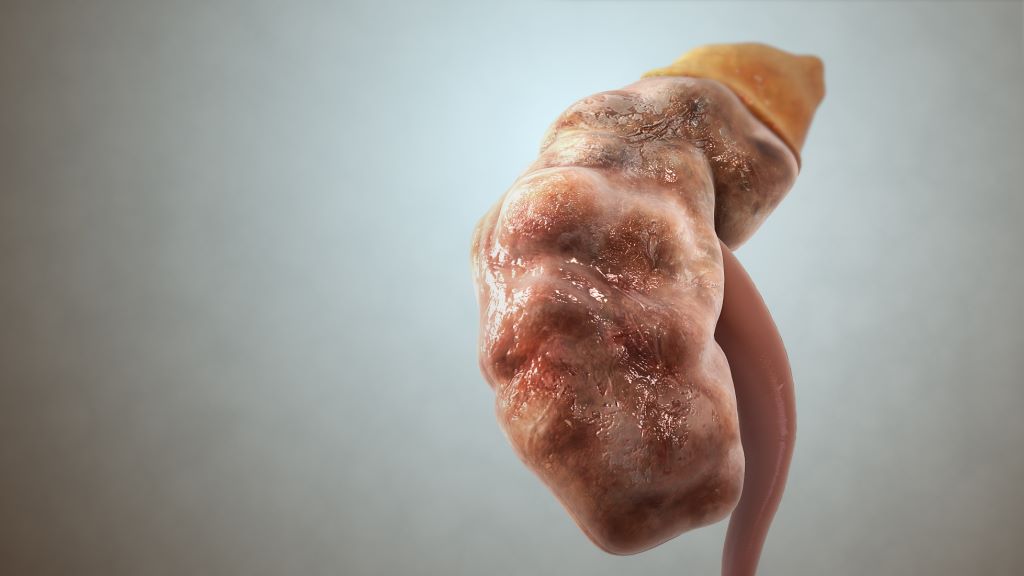
New research indicates that commonly used measures of kidney function largely underestimate the prevalence of chronic kidney disease (CKD) in patients with cancer. The findings were presented at American Society of Nephrology (ASN) Kidney Week 2026 October 22–25.
In 1200 adults with solid tumours, investigators compared measured glomerular filtration rate (mGFR), which directly measures kidney filtration rate using a specialised clearance marker, with commonly used estimated GFR (eGFR) values based on the blood proteins cystatin C and creatinine.
CKD prevalence rates based on mGFR, eGFR based on creatinine, and eGFR based on both creatinine and cystatin C were 18.9%, 10.2%, and 15.7%, respectively. Among those with mGFR of 45–59 ml/min/1.73 m² (indicating mild to moderate CKD), 72.1% had creatinine-based eGFR >60, suggesting that they had normal kidney function. Among those with mGFR <45 (indicating more advanced CKD), 52.5% had creatinine-based eGFR >45. Adding cystatin C to creatinine improved GFR discrepancy, but concordance remained poor.
These thresholds are especially important for decisions about drug eligibility and dose adjustments, as drug clearance rates often drop as kidney function declines. “The results suggest that errors in GFR estimation may contribute to exceeding toxicity in patients with cancer receiving anticancer therapy,” said corresponding author Veronica Torres Costa e Silva, MD, PhD, of the University of São Paulo Medical School, in Brazil. “I’ll give the example of cisplatin. Most recommendations state that patients with GFR of 45–60 ml/min/1.73m² should have a dose reduction of 25–50%, and those with GFR below 45 ml/min/1.73m² should not be considered eligible. This means that our patients are receiving exceedingly higher doses and having a higher frequency of toxicity because we are not capable of accurately assessing GFR and making accurate dose adjustments.”
Study: “Discrepancy in Glomerular Filtration Rate in Patients with Cancer”
Source: American Society of Nephrology
