Day: July 28, 2026

Brush-on Treatment Could Halt Cavities and Prevent Fillings

Photo by Hush Naidoo Jade Photography on Unsplash

Every year, untreated tooth decay sends thousands of young children to emergency departments for dental problems doctors can’t treat. Many eventually undergo surgery under general anaesthesia, while others endure pain and infection.

A simple, inexpensive liquid called silver diamine fluoride, or SDF, could spare many of those children. Applied to a cavity with a tiny sponge-tipped applicator in about a few second’s time per tooth, SDF arrests decay without drilling, shots or sedation.

Dentists have used SDF successfully for decades in many countries, and off label in the United States since 2014, when it was approved as a medical device to treat tooth sensitivity. However, it has lacked the large US population clinical trials for efficacy and safety that are needed for FDA approval as a drug to treat cavities.

Now, a University of Michigan-led clinical trial has produced that evidence.

Published in JAMA Pediatrics, the Phase III trial enrolled 830 children under age 6 who were recruited through dental offices, pediatric medical practices, Head Start and Early Head Start programs in Michigan, New York and Iowa.

Researchers found that 38% SDF arrested tooth decay in more than half of children’s affected baby teeth when treated at 6-month intervals. Unlike conventional treatment, which removes part of the tooth before placing a filling, SDF is simply painted onto the cavity.

“This is a very effective and safe treatment – even in children as young as 1,” said Margherita Fontana, professor of dentistry at the University of Michigan School of Dentistry and the study’s lead investigator.

Tooth decay is the most common chronic disease of childhood, affecting more than 40% of US children. Left untreated, cavities can cause severe pain, infection, difficulty eating and sleeping, missed school and repeated medical visits.

SDF may be especially valuable for very young children, older adults, people with developmental or physical disabilities, patients with severe dental anxiety, and others who cannot easily tolerate or access conventional dental treatment, Fontana said.

Its primary drawback is cosmetic, she said. The silver permanently darkens the decayed portion of the tooth.

“If we want more children and families to benefit from this treatment, we need rigorous evidence showing both that it works and that it’s safe. From a public health perspective, if we want broader implementation across the United States, including in medical settings, we need carefully collected data in U.S. populations, and we now have that,” Fontana said.

The study began in 2018 and progressed even with the challenges of the COVID-19 pandemic.

“In medicine, clinicians want high-quality evidence before changing practice,” Fontana said. “It is important to have data they can refer to because young children often see paediatricians years before they ever visit a dentist, broader acceptance could allow many more cavities to be treated while a referral to a dental home is successful, and before they become painful, infected or require surgery.”

The product used in this trial, Advantage Arrest 38% SDF, was provided by Elevate Oral Care.

Amr Moursi, professor of paediatric dentistry at New York University College of Dentistry, said the study provides important data for broadening use of SDF.

“Our results support FDA approval of SDF for managing arrest of tooth decay in young children. Removing SDF from off-label status would be an important innovation which could lead to increased utilisation by providers, enhanced payments by insurers and more consistent product quality,” said Moursi, a co-principal investigator on the study.

For some children, reapplying SDF every few months may be all that’s needed until the baby tooth naturally falls out. For adults, it may serve as a long-term treatment or as a bridge until restorative procedure is affordable or practical.

“For almost anyone, this can arrest the decay and stop the infection and the pain it causes,” Fontana said. “This could benefit many people.”

Source: University of Michigan
Drug Reduces the Risk of Developing Rheumatoid Arthritis, Clinical Trial Finds

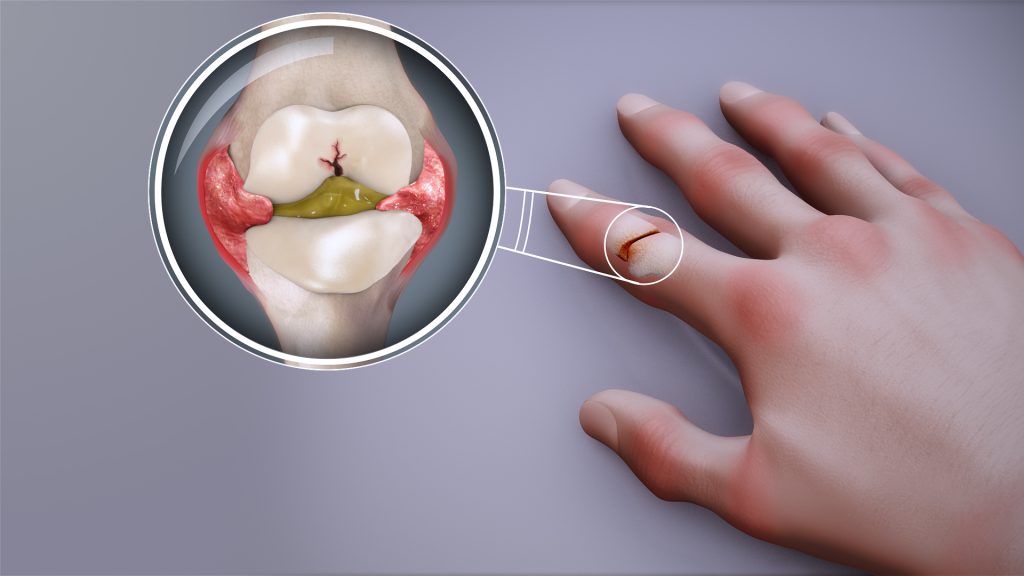
Rheumatoid arthritis. Credit: Scientific Animations CC4.0

A clinical trial led by researchers from Hospital Clínic de Barcelona, the August Pi i Sunyer Biomedical Research Institute (IDIBAPS) and The Institute for Advanced Chemistry of Catalonia (IQAC-CSIC) has compared the effectiveness of abatacept and hydroxychloroquine in preventing the development of rheumatoid arthritis in patients with palindromic rheumatism, an autoimmune disease that progresses to arthritis in approximately half of all patients. The trial was conducted over two years across 14 hospitals throughout Spain and involved 70 patients with palindromic rheumatism. The findings, published in Nature Medicine, indicate that abatacept is significantly more effective than hydroxychloroquine in preventing the onset of arthritis.

Palindromic rheumatism is characterised by intermittent episodes of joint inflammation, with acute flare-ups lasting a few days and resolving spontaneously. However, around half of patients eventually develop rheumatoid arthritis, a chronic disease that causes irreversible joint damage. This risk is particularly high in individuals with biomarkers such as rheumatoid factor and anti-citrullinated peptide antibodies. The presence of these two autoantibodies – proteins of the immune system that mistakenly attack the body’s own organs and tissues – is used in the diagnosis of the disease.

Until now, in the absence of clinical trial evidence, the standard approach has been to treat patients with palindromic rheumatism using hydroxychloroquine, a drug with anti-inflammatory and immunosuppressive properties aimed at improving disease symptoms. In this context, the team led by Raimon Sanmartí, head of the Inflammatory Arthropathies Research Group at IDIBAPS, conducted a two-year clinical trial involving 70 patients with palindromic rheumatism. The objective was to compare the effectiveness of hydroxychloroquine with abatacept, a lymphocyte inhibitor – a type of white blood cell that attacks the joints after mistakenly identifying them as a threat – in reducing progression from palindromic rheumatism to rheumatoid arthritis

The results show that treatment with abatacept significantly reduces progression to rheumatoid arthritis. Only 20% of patients receiving abatacept developed arthritis, compared with 50% of those treated with hydroxychloroquine. Furthermore, patients treated with abatacept not only avoided progression to rheumatoid arthritis in most cases, but also experienced a significant improvement in palindromic rheumatism symptoms. “The study shows that patients treated with abatacept are more likely to achieve complete remission of attacks associated with acute pain and joint swelling, and that their inflammatory episodes are less severe,” explains Isabel Haro, Head of the Peptide Synthesis and Biomedical Applications Unit at IQAC-CSIC. The research team also highlights that both drugs proved safe and well tolerated throughout the trial.

Early intervention

“The results of this study indicate that we can intervene at an early stage to modify the natural course of the disease and reduce the risk of patients developing more severe and irreversible conditions,” says Sanmartí. “This opens the door to a paradigm shift in the treatment of these patients.”

The study, which involved several national research centres, also analysed the evolution of a number of biomarkers (autoantibodies) developed by the CSIC research group during patient follow-up. “Although no significant differences were observed between abatacept and hydroxychloroquine in terms of autoantibody responses, this work demonstrates the value of immunomodulatory approaches in the early stages of disease, when it is still possible to prevent progression to more severe and chronic forms,” notes Haro.

Rheumatoid arthritis is a disease that significantly affects patients’ quality of life and places a considerable burden on healthcare systems. Preventing its development in a substantial proportion of cases represents an important advance in the management of rheumatic diseases.

Source: Institute for Advanced Chemistry of Catalonia

Long-term Relationships with Family Physicians Linked to Fewer Urgent Hospitalisations

Photo by Cottonbro on Pexels

A new study published in the American Academy of Family Physicians finds that keeping patients connected to the same practice and physician over time may help reduce avoidable hospital use.

This retrospective cohort study using longitudinal data from 100 450 patients across 48 general practices in and around Amsterdam found that patients registered with their practice for longer than 5 years had 9% to 21% lower odds of urgent hospital admission and 17%-28% lower hospital costs compared to those registered for 0 to 5 years.

Consistently seeing the same general practitioner was associated with 6% to 7% lower hospital costs, but not with fewer urgent admissions. Researchers measured continuity associations with urgent hospital admissions and hospital costs in two ways: duration of the general practitioner-patient relationship and how concentrated a patient’s visits were with one physician. 

The researchers concluded, “Our study suggests an association between continuity in general practice and hospital use and costs. Although there is an overwhelming amount of evidence regarding the benefits of continuity of care for both patients and GPs, this study shows that continuity is also associated with fewer urgent admissions and lower hospital costs.”

Source: EurekAlert!

Opinion Piece: How Medical Aid Regulation Changes Are Shaping the Future Demand for Gap Cover

By Brian Harris, CEO at Turnberry Management Risk Solutions

28 July 2026 – Medical aid remains essential for accessing private healthcare in South Africa, but it does not always cover the full cost of treatment. While regulations such as Prescribed Minimum Benefits (PMBs) ensure that members have access to a defined level of care for certain conditions, medical schemes still apply tariff limits, treatment protocols, co-payments and other funding rules that can leave members exposed to out-of-pocket costs. At the same time, healthcare costs continue to rise, placing additional pressure on how schemes fund treatment. As a result, medical expense shortfalls are becoming increasingly common, making gap cover an essential part of helping clients manage their healthcare costs and protecting them against unexpected expenses.

Protection within limits

PMBs are a clear example of how scheme rules and funding limits influence what medical schemes ultimately pay for. They are designed to ensure that all medical scheme members have access to treatment for a defined list of emergencies, chronic, and life-threatening conditions. However, they do not provide unlimited funding for every treatment option, and there is often a misunderstanding about this.

When it comes to PMBs, cover is still subject to scheme rules, treatment protocols, formularies, and designated service provider requirements. In many cases, cover is also aligned to the level of care that would ordinarily be available in the public healthcare system. This becomes particularly important in areas such as oncology, where newer or more specialised treatments may fall outside what a scheme is required to fund in full.

As a result, members may still face co-payments, sub-limits, or shortfalls that need to be paid for out of pocket, even when the condition itself qualifies as a PMB.

How scheme rules create shortfalls

PMBs are only part of the picture when it comes to medical expense shortfalls. Even where treatment is covered, medical schemes reimburse according to their own tariffs and funding rules, while healthcare providers may charge significantly more. The difference between what the scheme pays and what the provider charges is the member’s medical expense shortfall.

At the same time, medical schemes use co-payments, benefit limits, Designated Service Providers (DSPs) and authorisation requirements to manage rising healthcare costs and keep contributions affordable. If these rules are not followed, or if treatment falls outside the approved funding structure, members may still need to pay part of the cost themselves.

This means that having medical aid does not always guarantee that treatment will be covered in full. Even where treatment is approved, members can still face significant out-of-pocket expenses.

Advice is essential

As funding rules become increasingly complex, advisers need to take on a more proactive role in helping clients understand and navigate the healthcare landscape. Many clients do not fully understand how PMBs, DSPs, funding rules and scheme tariffs affect what their medical aid will ultimately pay. The reality often only becomes clear at the claims stage, when members discover that they are responsible for part of the cost themselves.

Explaining these rules clearly, together with where medical expense shortfalls may arise, is therefore becoming an increasingly important part of the healthcare funding discussion. Regular reviews and clear guidance also help ensure that changes to scheme rules, benefits, and healthcare costs do not leave clients exposed to unnecessary or unexpected out-of-pocket expenses.

Future-proofing healthcare advice

Medical aid and gap cover should not be treated as once-off decisions. Scheme rules, pricing structures and healthcare costs continue to change, which means healthcare advice needs to be reviewed regularly to ensure that cover remains appropriate.

Helping clients understand how their medical aid works, where medical expense shortfalls may arise, and how gap cover can be structured forms an important part of responsible advice. Regular reviews also help ensure that changes to benefits, family circumstances or healthcare needs do not leave clients exposed to unnecessary costs.

As regulation continues to shape how healthcare is funded in South Africa, gap cover is becoming an increasingly important part of managing healthcare costs. Brokers and financial advisers play an essential role in ensuring their clients have medical aid and gap cover that together provide the right level of protection.

Turnberry Management Risk Solutions (Pty) Ltd is an authorised Financial Services Provider (FSP no. 36571). Underwritten by Lombard Insurance Company, an Authorised Financial Services Provider (FSP 1596) and Insurer conducting non-life insurance business.

Researchers Demystify the Molecular Mechanisms of General Anaesthesia

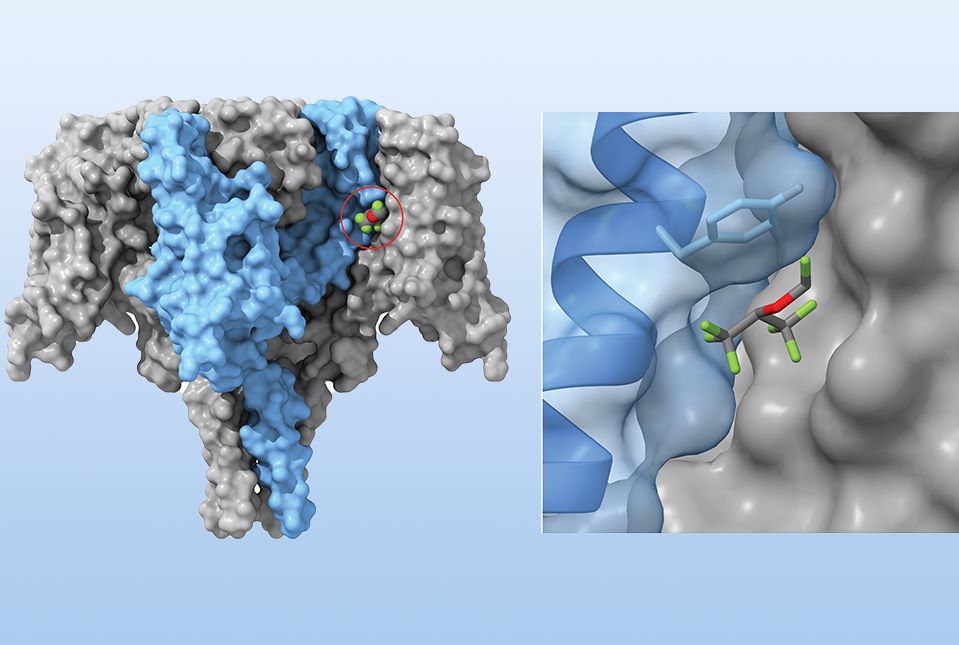
Left: Surface model of the bacterial sodium channel NavMs with one of the four subunits coloured light blue and the others grey. The anaesthetic sevoflurane (coloured spheres) sits in a pocket at the interface of two adjacent subunits. Right: Close-up of the binding pocket. The semi-transparent surface exposes the underlying ribbon and a tyrosine amino acid (light blue), which is key to binding sevoflurane (coloured sticks). Credit: Dr Karl Herold

Researchers at Weill Cornell Medicine and Birkbeck, University of London, have identified a site where a commonly used anaesthetic binds to sodium ion channels, revealing a molecular mechanism that may explain how these drugs dampen communication between neurons. Ion channels are proteins that regulate the flow of charged particles across cell membranes, enabling neurons to generate electrical signals. By reducing this signalling, inhaled anaesthetics help suppress brain activity, producing unconsciousness and immobility during surgery.

The findings, published June 19 in Nature Communications, shed light on a longstanding mystery: For 175 years, doctors have safely used inhaled anaesthetics to render patients unconscious, but didn’t fully understand how these drugs work.

“Sodium channels are critical for communication between neurons in the brain, and anaesthesia breaks down that communication,” said Dr Hugh Hemmings, senior associate dean for research and chair of the Department of Anesthesiology at Weill Cornell, who co-led the research. “So, there’s good reason to believe that the unconsciousness produced by volatile anaesthetics is related to their effects on sodium channels.” 

The study provides the first atomic-level view of how the anaesthetic sevoflurane binds to sodium channels and stabilises them in an inactive state. “The insights we gain from this study may enable us to design safer, more selective anaesthetics, with fewer side effects,” said Dr Karl Herold, co-first author and senior research associate at Weill Cornell.

Anaesthetising a bacterial counterpart

As far back as the 1970s, scientists suspected that inhaled, volatile anaesthetics could interact with ion channels – in particular, the voltage-gated sodium channels that play a crucial role in cell-to-cell communication throughout the nervous system. But determining how this interaction inhibits neuronal activity has been challenging because mammalian sodium channels were too large and complex for detailed structural analysis.

The researchers turned to a marine bacterium, Magnetococcus marinus, that uses voltage-gated sodium channels to swim toward nutrients and oxygen. Although structurally simpler than their mammalian counterparts, the bacterial channels operate similarly and share the same sensitivity to anaesthetics. “Volatile anaesthetics bind through weak, low-affinity interactions that are very hard to capture structurally,” Dr Herold said. “A bacterial channel that behaves like ours but is small enough to crystallise lets us finally see where sevoflurane sits and how it holds the channel inactive.”

Discovering a binding pocket

The Weill Cornell team joined forces with Birkbeck researchers, co-senior author Dr Bonnie Ann Wallace and co-first author David Hollingworth. The UK-based researchers have extensive expertise in structural analysis of these bacterial channels bound to a variety of drugs, including those that affect neuronal activity.

Using high-resolution X-ray crystallography, the researchers captured detailed snapshots of sevoflurane bound to the channel. They discovered that the anaesthetic tucks into a small pocket at the edge of the channel’s pore-forming region, but away from the pathway through which sodium ions flow. Binding in this pocket stabilises the channel in an inactive state, making it less likely to open and allow sodium ions through, thereby reducing a neuron’s ability to transmit electrical signals.

This interaction is key to the drug’s molecular effects. When the researchers altered a single amino acid in the binding pocket, sevoflurane could no longer bind effectively and lost its ability to keep the channel in its inactivated state.

The researchers are now working on translating their findings to the mammalian system. “The bacterial channel is just a testing ground,” Dr Hemmings explained. “If naturally occurring mutations affecting anaesthetic binding exist in humans, studying them could help explain why some people respond differently to anaesthesia and may provide new insights into the biology of consciousness.”

“As anaesthesiologists, it’s our responsibility to understand how these drugs work, so we can resolve issues when people don’t react well to anaesthesia,” said Dr Hemmings, who is also anaesthesiologist-in-chief at NewYork-Presbyterian/Weill Cornell Medical Center.

Source: Weill Cornell Medical Center