

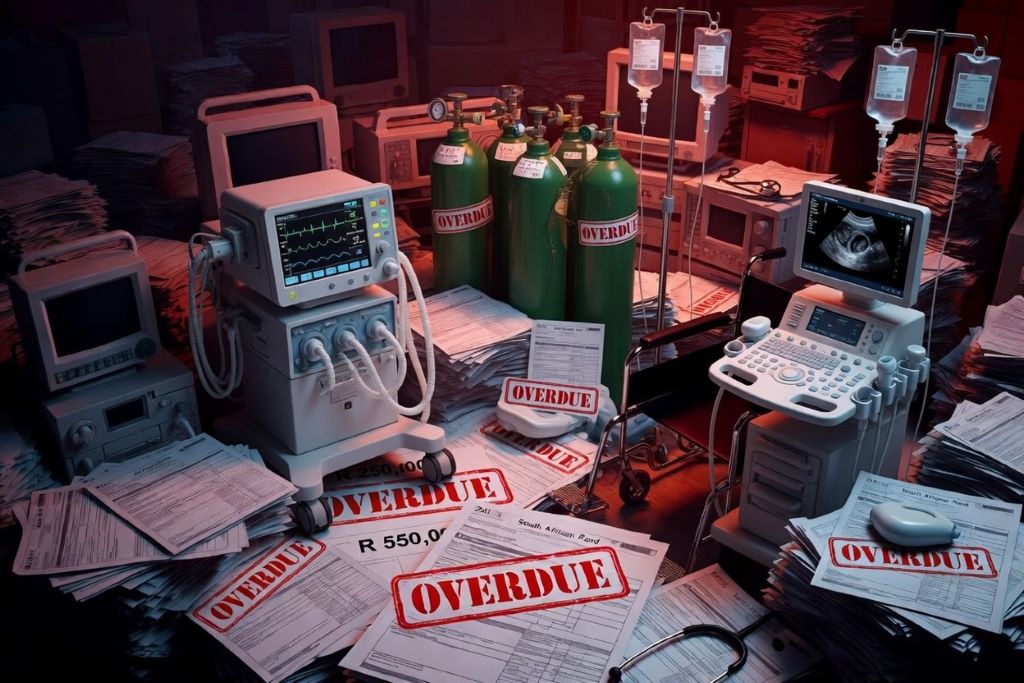
The South African Medical Technology Industry Association (SAMED) has called for urgent and measurable action to resolve the escalating supplier debt crisis within Gauteng’s public health system, warning that continued delays in payments and procurement failures are placing both healthcare delivery and supplier sustainability at serious risk.
The call comes ahead of the Gauteng Department of Health’s hospital-level engagements with suppliers on 27 May, following MEC for Health and Wellness Faith Mazibuko’s recent acknowledgement that approximately R8 billion is owed to suppliers.
SAMED’s latest member data shows that R245 517 666.12 is owed to 27 medical technology suppliers, with a significant portion overdue well beyond the public sector’s 30-day payment requirement. Many affected suppliers are South African SMEs now operating under severe financial strain, forced to absorb the consequences of systemic procurement and payment failures while continuing to supply essential medical devices, diagnostics, consumables, and other critical technologies needed for patient care.
While SAMED welcomes the Department’s willingness to engage directly with suppliers, the association stresses that these discussions must lead to concrete commitments and operational action.
For SAMED and its members, this crisis is not new.
The association has spent more than a decade raising concerns about systemic procurement dysfunction, delayed payments, weak supply chain controls, and administrative failures that continue to undermine the effective functioning of the public healthcare system.
Today, those longstanding failures have evolved into a critical risk for both the healthcare sector and the businesses that support it.
In some cases, suppliers are delivering urgently needed products to hospitals while administrative bottlenecks make timely payment structurally impossible. This is particularly acute where delayed purchase orders, including for consignment stock arrangements, create a mismatch between supply delivery and budget allocation.
Monica Lucas, SAMED Board Member said, “SAMED members have continued supporting public healthcare under extraordinary financial strain because patient care cannot simply pause. But suppliers cannot indefinitely act as the financiers of a dysfunctional system. This is no longer just a debt issue; it is a structural operational failure that requires urgent executive intervention.”
Following the Department’s engagement with service providers on 23 May, SAMED has formally written to MEC Mazibuko requesting greater transparency on the Department’s debt reduction plans, and stronger accountability across finance, supply chain management, and hospital leadership.
SAMED will participate constructively in the upcoming hospital engagements and remains committed to finding practical solutions in partnership with government.
However, the association cautions that engagement without accountability will not restore supplier confidence.
After years of repeated commitments and limited progress, the sector requires clear timelines, written commitments, and measurable implementation.
“Direct engagement with leadership is welcome, but suppliers need more than reassurance. We need transparency, accountability, and a credible plan to resolve both the immediate debt burden and the underlying operational failures that continue to create it. Without that, the risks to healthcare continuity will only deepen.” – Scott de Oliveira, SAMED Chairperson
SAMED is calling for immediate action, including:
- Publication of a verified and transparent debt position
- A time-bound repayment plan for outstanding supplier debt
- Executive oversight of hospital procurement and payment failures
- Improved responsiveness from finance and supply chain leadership
- Structured follow-up engagements with measurable progress reporting
SAMED remains committed to constructive engagement but warns that the public healthcare system cannot continue relying on suppliers to absorb systemic dysfunction indefinitely.
This week’s engagements must mark the beginning of real corrective action, not another cycle of discussion.
