Photo by Kampus Production: https://www.pexels.com/photo/man-in-blue-and-black-crew-neck-shirt-8638036/
A new study has shown how muscle stem cells protect themselves from loss in old age: as we age, muscles lose their ability to regenerate quickly, due to increased production of the protein NDRG1 in muscle stem cells. Prof Dr Julia von Maltzahn from the BTU Cottbus-Senftenberg, who has spent many years researching muscle regeneration during ageing as a group leader at the Leibniz Institute on Aging – Fritz Lipmann Institute (FLI), has published a commentary on this article, as these new findings will change the way we look at changes in stem cells during ageing.
Muscle stem cells are essential for repairing our skeletal muscles. In young people, they respond very quickly to injuries, dividing and helping to rapidly replace damaged muscle tissue. However, these cells change with age, and muscles regenerate much more slowly – this has been known for some time.
A study on “Cellular survivorship bias as a mechanistic driver of muscle stem cell aging” by Jengmin Kang et al. from Stanford University School of Medicine, USA, now published in the journal Science, reveals for the first time an important mechanism behind the changes in muscle stem cells during aging. In aging muscle stem cells in mice, the protein NDRG1 is produced in increased amounts, which slows down their activation after injuries but at the same time increases their survivability. This balance of delayed activity during regeneration and increased resistance explains a fundamental trade-off in the aging process of muscle regeneration – and provides a new cellular mechanism behind the observed loss of function of aging cells.
Prof Dr Julia von Maltzahn classifies the new findings by Kang et al. against the background of relevant work on changes in muscle stem cells associated with aging as follows.
“The study shows that muscle stem cells develop a kind of protective mechanism during the aging process that leads to the survival of a subpopulation of stem cells. It is therefore important to look at the aging process and not the final stage.”
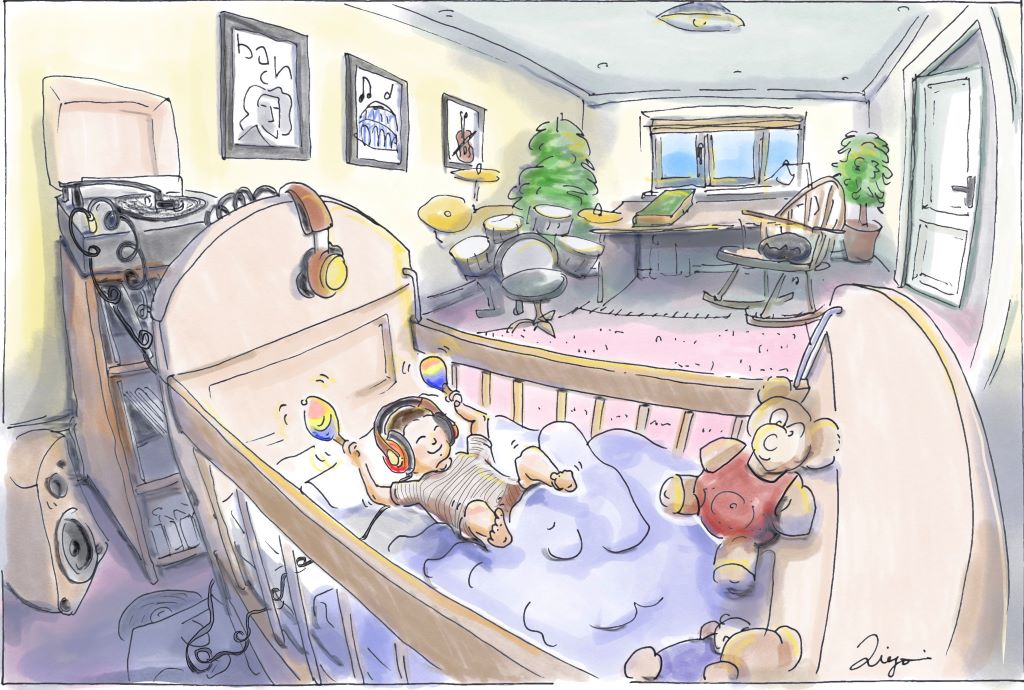
Newborns listening to Bach music predicted rhythm, but not melody, according to their brain waves
Human newborns can predict rhythmic structure from music, while they are not as good at expecting melodic changes. Image credit: Diego Perez-Lopez, PLOS, CC-BY 4.0
Babies are born with the ability to predict rhythm, according to a study published February 5th in the open-access journal PLOS Biology by Roberta Bianco from the Italian Institute of Technology, and colleagues.
It’s anticipating a beat drop, key change or chorus in a song you’ve never heard. Across all cultures, humans can inherently anticipate rhythm and melody. But are babies born with these behaviours, or are they learned? Research shows that by approximately 35 weeks of gestation, foetuses begin to respond to music with changes in heart rate and body movements. However, newborns’ ability to anticipate rhythm and melody is not fully understood.
To understand babies’ musical aptitudes, researchers played J.S. Bach’s piano compositions for an audience of 49 sleeping newborns. Musical stylings included 10 original melodies and four shuffled songs with scrambled melodies and pitches. While the babies listened, the researchers used electroencephalography – electrodes placed on the babies’ heads – to measure their brainwaves. When the babies’ brain waves showed signs of surprise, it meant they expected the song to go one way, but it went another.
The newborns tended to show neural signs of surprise when the rhythm unexpectedly changed; in other words, the miniature maestros had generated musical expectations based on rhythm. Previously, this result had been observed in non-human primates. The researchers found no evidence that the newborns tracked melody or were surprised by unexpected melodic changes, a skill that comes at an unknown exact point later in development.
According to the authors, understanding how humans become aware of rhythm can help biologists understand how our auditory systems develop. Future studies can investigate how exposure to music during gestation affects acquisition of rhythm and melody.
The authors add, “Are newborns ready for Bach? Newborns come into the world already tuned in to rhythm. Our latest research shows that even our tiniest 2-day old listeners can anticipate rhythmic patterns, revealing that some key elements of musical perception are wired from birth. But there’s a twist: melodic expectations – our ability to predict the flow of a tune – don’t seem to be present yet. This suggests that melody isn’t innate but gradually learned through exposure. In other words, rhythm may be part of our biological toolkit, while melody is something we grow into.”
Study finds genetic contribution to human lifespan is about 50% – more than double previous estimates
Photo by Matteo Vistocco on Unsplash
What determines how long we live – and to what extent is our lifespan shaped by our genes? Surprisingly, scientists believed for decades that the heritability of human lifespan was relatively low compared to other human traits, standing at just 20 to 25%; some recent large-scale studies even placed it below 10%. Now, a new study from the Weizmann Institute of Science, published in Science, presents an entirely different picture. According to the findings, genetics accounts for about 50% of variation in human lifespan – twice as much, or more, than previously thought.
The study was led by Ben Shenhar from the lab of Prof Uri Alon of Weizmann’s Molecular Cell Biology Department.
“For many years, lifespan was attributed mainly to non-genetic factors, fuelling scepticism about genetic determinants of longevity”
Using mathematical models and analyses of three large twin databases from Sweden and Denmark – including, for the first time in this context, a dataset of twins who were raised apart – the researchers showed that earlier heritability estimates were masked by high levels of extrinsic mortality, such as deaths caused by accidents, infections and environmental hazards. Filtering out such extrinsic factors was impossible in historic datasets because they provided no information about the cause of death. To compensate for this limitation, the researchers developed an innovative framework that included mathematical simulation of virtual twins to separate deaths due to biological ageing from those caused by extrinsic factors. The new results are consistent with the heritability of other complex human traits and with findings from animal models.
Science Numbers
Up to age 80, the risk of dying from dementia shows a heritability of about 70% – far higher than that of cancer or heart disease.
The results have far-reaching implications for ageing research and public health. “For many years, human lifespan was thought to be shaped almost entirely by non-genetic factors, which led to considerable scepticism about the role of genetics in ageing and about the feasibility of identifying genetic determinants of longevity,” says Shenhar. “By contrast, if heritability is high, as we have shown, this creates an incentive to search for gene variants that extend lifespan, in order to understand the biology of ageing and, potentially, to address it therapeutically.”
One- and three-month regimens both had few adverse reactions and high rates of completion
Tuberculosis bacteria. Credit: CDC
A study comparing one- and three-month antibiotic treatments to prevent active tuberculosis (TB) finds that a high percentage of patients successfully completed both regimens and suffered few adverse side effects. A team led by Richard Chaisson, of the Johns Hopkins School of Medicine, reports these findings February 10th in the open access journal PLOS Medicine.
Following TB exposure, the World Health Organization has traditionally recommended six to nine months of antibiotic treatment to prevent an active infection from developing, but many individuals fail to complete the long course of medication. Studies have shown that shorter regimens lasting one and three months are effective at preventing TB, but the one-month treatment had only been tested in people living with HIV, and the safety of the two regimens had not been compared in a head-to-head trial.
Researchers performed a clinical trial in 500 people residing in Brazil, who were not living with HIV and had been exposed to TB. They randomly assigned participants to take two antibiotics, isoniazid and rifapentine, daily for one month, or weekly for three months. Both the one- and three-month regimens had similarly high rates of completion, at 89.6% and 84.1%, respectively. Adverse reactions were typically mild or moderate, and occurred at comparable rates in both groups. Both regimens were deemed successful and neither proved superior to the other.
Expanding the number of people who receive preventive therapy is essential for reducing TB infections globally, but these efforts have been hampered by several factors, including the length of the treatments. The new findings provide evidence that a one-month course of antibiotics is safe for patients, regardless of HIV status, and will help clinicians, public health programs, and patients to make informed choices about which regimens to use. Experts hope the success of shorter treatments, combined with the availability of newer generic formulations of the medications, which can be taken at home, will facilitate broader use of preventive therapy for TB.
The authors add, “Prevention of tuberculosis in people at the greatest risk is essential for global control of the disease, and shorter preventive treatment regimens will be instrumental in catalyzing uptake in high-burden countries.”
“Tuberculosis preventive treatment regimens have now been shortened from 6-9 months of daily medication to 1 month of daily treatment or 12 once-weekly doses, a transformational advance. Our study shows that both of the ultra-short regimens are well-tolerated and have high rates of completion.”
“The high rates of treatment completion and excellent safety profile of the short-course regimens will help Brazil and other high-burden countries achieve TB control by facilitating widespread uptake of TB preventive treatment,” states coauthor Betina Durovni.
“Preventing TB with short courses of well-tolerated medicines ensures that millions more people around the world can be protected from the devastating consequences of TB disease,” says coauthor Marcelo Cordeiro-Santos.
Discovery could lead to mRNA therapeutic to reduce the risk of cardiac damage
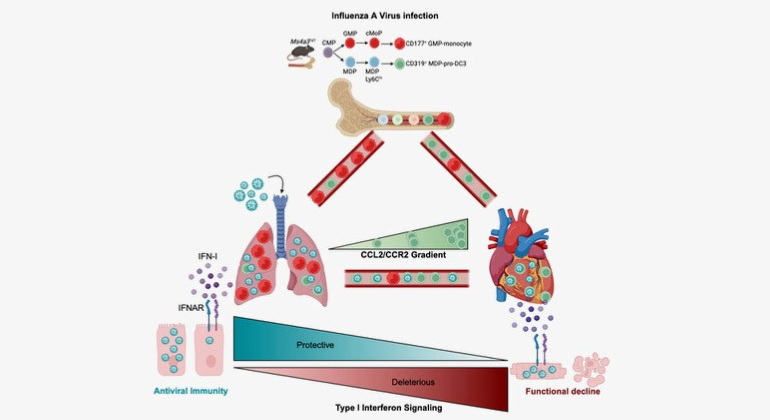
Graphical Abstract summarising the key findings of the paper. The authors found that severe influenza damages the heart by exploiting a specific immune cells and engaging a type-I interferon response. The authors also show that therapeutic silencing of the response mitigates heart damage.
Researchers at Mount Sinai in the US have identified a cellular mechanism linking infections from influenza A viruses (IAVs) to cardiovascular disease, providing critical insights on how influenza can damage the heart and increase the risk of a heart attack or other major cardiovascular event.
Through its work with mouse models and human data, the team also provided evidence that a cutting-edge modified mRNA treatment that dampens an interferon signalling pathway in the heart can significantly mitigate cardiac damage following viral infection while preserving the protective antiviral response of the immune system. The study was published in the February 9 issue of Immunity.
“We have known for years that the frequency of heart attacks increases during flu season, yet outside of clinical intuition, scant evidence exists of the underlying mechanisms of that phenomenon,” says senior author Filip Swirski, PhD, Director of the Cardiovascular Research Institute at the Icahn School of Medicine at Mount Sinai.
“Studies like ours are now shedding valuable light on immune system pathways, like the antiviral cytokine type 1 interferon (IFN-1), that factor into damage to the heart following severe influenza infection. These findings offer great promise for the development of new therapies, which are desperately needed since there are currently no viable clinical options to prevent cardiac damage.”
Influenza A viruses are responsible for an estimated 1 billion infections globally each year, ranging from seasonal flu outbreaks locally to pandemics globally. While most infections are mild and self-resolving, in some cases they can become severe or even fatal, particularly when the virus travels to the heart and triggers the death of cardiomyocytes, specialized muscle cells that are responsible for the rhythmic contraction and relaxation of the heart.
The Mount Sinai team studied autopsies of 35 hospitalised patients who died of influenza and found that more than 85% had at least one significant cardiovascular comorbidity, such as hypertension, and that the majority had multiple comorbidities, including atherosclerosis and cardiac fibrosis, underscoring cardiovascular disease as a major driver of influenza mortality.
The research team also uncovered the mechanism by which cardiac damage occurs. They learned, for example, that a novel subset of white blood cells, known as pro-dendritic cell 3, becomes infected in the lung and, after traveling to the heart, produces large amounts of type 1 interferon. This, instead of fulfilling its mission of clearing the virus from the heart, triggers the death of cardiomyocytes, impairing cardiac output.
“We found that the pro-dendritic cell 3 acts as the ‘Trojan horse’ of the immune system during influenza infection, becoming infected in the lung, trafficking the virus to the heart, and disseminating it to cardiomyocytes. This process causes production of the damaging type 1 interferon that comes with considerable collateral damage to the heart,” explains Jeffrey Downey, PhD, a member of Dr Swirski’s laboratory who served as lead author of the study. “The hopeful news for patients is that by injecting a novel mod-RNA therapeutic that modulates the IFN-1 signaling pathway, we reduced levels of cardiac damage, as evidenced by lower troponin, and improved cardiac function, as measured by higher left ventricular ejection fraction.”
As part of its ongoing research, Dr Swirski’s team is collaborating with Lior Zangi, PhD, Associate Professor of Medicine (Cardiology), and Genetics and Genomic Sciences, at the Icahn school of Medicine at Mount Sinai, to investigate the use of a safe and effective systemic delivery method of the mod-RNA therapeutic to the heart’s muscle cells, instead of the direct injection method used in its proof-of-concept study. Additional work is focused on the pro-dendritic cell 3 itself: why is it so susceptible to influenza and how could its protective capacity be fully harnessed to potentially minimize heart damage exacerbated by cardiovascular disease?
“Pathogens are constantly emerging and evolving, which means our strategies to combat them must evolve as well,” says Dr Swirski. “Better understanding of influenza pathogenesis and immune pathways that are activated throughout the body will help fuel the next stage of advanced care.”