Day: December 4, 2025

Experimental Drug Repairs DNA Damage Caused by Disease
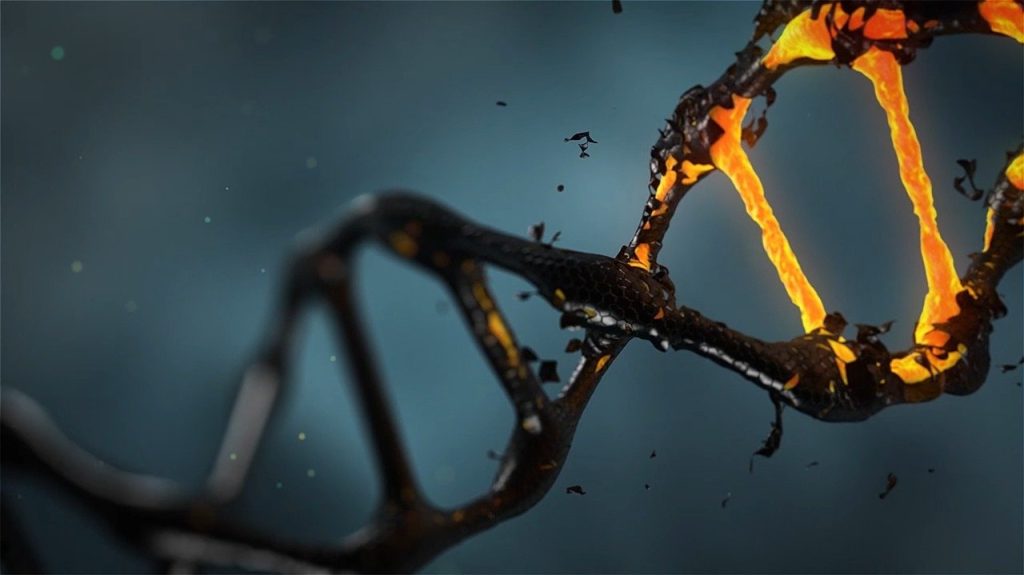
Source: Pixabay CC0

Cedars-Sinai scientists have developed an experimental drug that repairs DNA and serves as a prototype for a new class of medications that fix tissue damage caused by heart attack, inflammatory disease or other conditions.

Investigators describe the workings of the drug, called TY1, in a paper published in Science Translational Medicine.

“By probing the mechanisms of stem cell therapy, we discovered a way to heal the body without using stem cells,” said Eduardo Marbán, MD, PhD, executive director of the Smidt Heart Institute at Cedars-Sinai and the study’s senior author. “TY1 is the first exomer – a new class of drugs that address tissue damage in unexpected ways.”

TY1 is a laboratory-made version of an RNA molecule that naturally exists in the body. The research team was able to show that TY1 enhances the action of a gene called TREX1, which helps immune cells clear damaged DNA. In so doing, TY1 repairs damaged tissue.

The development of TY1 has been more than two decades in the making. It started when Marbán’s previous laboratory at Johns Hopkins University developed a technique to isolate progenitor cells from the human heart. Like stem cells, progenitor cells can turn into new healthy tissue, but in a more focused manner than stem cells. Heart progenitor cells promote the regeneration of the heart, for example.

Later, at Marbán’s lab at Cedars-Sinai, Ahmed Ibrahim, PhD, MPH, discovered that these heart progenitor cells send out tiny molecule-filled sacs called exosomes. These sacs are loaded with RNA molecules that help repair and regenerate injured tissue.

Ahmed Ibrahim, PhD, MPH“Exosomes are like envelopes with important information,” said Ibrahim, who is associate professor in the Department of Cardiology in the Smidt Heart Institute and first author of the paper. “We wanted to take apart these coded messages and figure out which molecules were, themselves, therapeutic.”

Scientists genetically sequenced the RNA material inside the exosomes. They found that one RNA molecule was more abundant than the others, hinting it might be involved in tissue healing. The investigators found the natural RNA molecule to be effective in promoting healing after heart attacks in laboratory animals. TY1 is the synthetic, engineered version of that RNA molecule, designed to mimic the structure of approved RNA drugs already in the clinic. TY1 works by increasing the production of immune cells that reverse DNA damage, a process that minimises the formation of scar tissue after a heart attack.

“By enhancing DNA repair, we can heal tissue damage that occurs during a heart attack,” Ibrahim said. “We are particularly excited because TY1 also works in other conditions, including autoimmune diseases that cause the body to mistakenly attack healthy tissue. This is an entirely new mechanism for tissue healing, opening up new options for a variety of disorders.”

The investigators next plan to study TY1 in clinical trials. 

Source: Cedars–Sinai

Boy Given World-first Gene Therapy for Hunter Syndrome Is ‘Thriving’

Ollie Chu with his father, Ricky.

A young boy born with a devastating, rare genetic condition has been given a new lease of life thanks to a team of UCL scientists who manufactured a pioneering gene therapy for him.

Ollie Chu was born with Hunter syndrome – or MPSII – an inherited, life-limiting genetic condition which causes progressive damage to the body and brain.

In the most severe cases, patients with the disease usually die before the age of 20. The effects are sometimes described as a type of childhood dementia.

Due to a faulty gene, before the treatment Ollie was unable to produce an enzyme crucial for keeping cells healthy.

But in a world first, scientists at UCL have altered Ollie’s cells using gene therapy in a bid to halt the disease.

His parents are thrilled at Ollie’s progress which they say they has been “exponential” since his transplant. He is being treated in hospital in Manchester.

Dr Karen Buckland (UCL Great Ormond Street Institute of Child Heath) said: “It’s really heart-warming to hear how well Ollie is doing – his progress is amazing.

“It’s also really, really rewarding for the team here. A lot of hard work has gone into manufacturing this new gene therapy. As well as the core team of five, around 50 staff were involved in total including all the clinical trial co-ordinators, project managers and quality assurance staff.

“It took two years just to check that the manufacturing process worked correctly. We then had to get regulatory approval before we could even begin treating Ollie’s cells.”

Dr Buckland and three other of her UCL Institute of Child Heath colleagues were directly involved with manufacturing his cells: Dr Winston Vetharoy, Edward Morgan and Raymond Nguyen. The fifth member of the team was Agrim Mahajan, from Great Ormond Street Hospital.

Dr Buckland said the project came about because she and colleagues had worked successfully on a previous project with the same Manchester team on a treatment for a similar condition called Mucopolysaccharidosis type III (MPS III) or San Filippo Syndrome.

In 2019 the Manchester team, then led by Professor Brian Bigger, approached Dr Buckland and her team again and asked them to manufacture the treatment for Hunter’s Syndrome.

In 2021 the UCL team began the process of checking the manufacturing process worked correctly.

That process, which is the first outside-of-the-body gene therapy to treat the condition, involves purifying a patient’s white blood cells to retrieve their stem cells, which are then added to a specialist growth medium.

A working copy of the gene is then added to a viral vector, which is used to transport the healthy copy of the gene into the patient’s own stem cells.

The cells are then washed and frozen and stored at -130 degrees C, in a process known as cryopreservation.

The cells are checked using several quality control tests to make sure they’re safe to be given back to the patient.

Having confirmed, in 2022, that the process worked correctly the University of Manchester applied successfully to the UK medicines regulator, the Medicines and Healthcare products Regulatory Agency (MHRA), for approval. They could then use the process on a patient.

Ollie, from California, is the first of five boys around the world to receive the treatment.

The team treating him at Royal Manchester Children’s Hospital (RMCH) sent Dr Buckland and her colleagues some of his white blood cells.

Dr Vetharoy, who led the manufacture of the gene therapy product for Ollie, said: “Every stage of the process required meticulous attention to detail. We needed to maintain absolute control over contamination risks and ensure that all reagents and materials met the highest-quality standards.

“Seeing how well Ollie is thriving after such a short time is incredibly fulfilling for the entire team, and we wish him continued progress and good health in the years to come.”

In November 2024, the UCL manufacturing team made the altered cells for him, using the validated manufacturing process. In February 2025, those altered cells were transplanted into Ollie’s body.

Nine months on, his father, Ricky, says the improvement in his son’s condition is remarkable.

He said: “I don’t want to jinx it, but I feel like it’s gone very, very well. His life is no longer dominated by needles and hospital visits. His speech, agility and cognitive development have all got dramatically better.

“It’s not just a slow, gradual curve as he gets older, it has shot up exponentially since the transplant.”

Currently the only licensed treatment that can help to improve life for children with Hunter syndrome is Elaprase – a weekly enzyme replacement therapy that takes approximately three hours to administer, that children must take for their whole life. 

Dr Buckland and her colleagues manufactured the new gene therapy treatment at the specialist Cell and Gene Therapy Manufacturing Facility in The Zayed Centre for Research (ZCR) into Rare Diseases in Children, a facility jointly run by UCL and GOSH.

The clinical trial at RMCH is being done in collaboration with University of Manchester and the Manchester Centre for Genomic Medicine at Saint Mary’s Hospital.

Source: University College London

Aircraft and Hospital Air Is Cleaner than You Might Think

First study to use worn face masks as a passive tool to monitor indoor air

Photo by Daniel Eledut on Unsplash

According to a new Northwestern University study, the ambient air on aeroplanes and in hospitals mostly contains harmless microbes typically associated with human skin.

In the first study of its kind, scientists used an unexpected sampling tool – used face masks and an aircraft air filter – to uncover the invisible world of microbes floating in our shared air. Their results revealed that the same types of harmless, human-associated bacteria dominate both aeroplane and hospital air.

Across all samples, the team detected 407 distinct microbial species, including common skin bacteria and environmental microbes. While a few potentially pathogenic microbes did appear, they were in extremely low abundance and without signs of active infection.

Not only does the study help illuminate what microbes exist in shared air, but it also demonstrates that face masks and air filters can be repurposed as non-invasive, cost-effective tools to monitor confined, high-traffic environments.

“We realized that we could use face masks as a cheap, easy air-sampling device for personal exposures and general exposures,” said Northwestern’s Erica M. Hartmann, who led the study. “We extracted DNA from those masks and examined the types of bacteria found there. Somewhat unsurprisingly, the bacteria were the types that we would typically associate with indoor air. Indoor air looks like indoor air, which also looks like human skin.”

An expert on indoor microbiomes, Hartmann is an associate professor of civil and environmental engineering at Northwestern’s McCormick School of Engineering.

A second life for used face masks

Hartmann and her team conceived the project in January 2022, amid the COVID-19 pandemic. At the time, travellers became increasingly concerned with how well aircraft cabins filtered and circulated air. Hartmann received a grant to collect aircraft cabin filters to look for evidence of pathogens.

Although Hartmann did procure an aircraft’s high-efficiency particulate air (HEPA) filter, which had been used for more than 8000 flight hours, she quickly realised the project might be impractical.

“At the time, there was a serious concern about Covid transmission on planes,” Hartmann said. “HEPA filters on planes filter the air with incredibly high efficiency, so we thought it would be a great way to capture everything in the air. But these filters are not like the filters in our cars or homes. They cost thousands of dollars and, in order to remove them, workers have to pull the airplane out of service for maintenance. This obviously costs an incredible amount of money, and that was eye opening.”

Searching for another method that passively traps microbes, Hartmann and her team pivoted to a much cheaper and much less disruptive tool: face masks. For the study, volunteers wore face masks on both domestic and international flights. After landing, they put the masks into sterile bags and sent them to Hartmann’s lab. For comparison, Hartmann also collected face masks that volunteers took on flights but never wore.

To understand how indoor environments differ, Hartmann and her team wanted to examine another high-traffic, enclosed environment with heavily filtered air. The team selected hospitals as the second testbed. After wearing a face mask during a shift, hospital workers submitted their masks to Hartmann’s lab.

“As a comparison group, we thought about another population of people who were likely wearing masks anyway,” Hartmann said. “We landed on health care providers.”

The sky is clear

After receiving masks from travellers and health care workers, Hartmann’s team collected DNA from the outsides of masks. They found the air in hospitals and in aircraft contains a diverse but mostly harmless mix of microbes, with only minimal traces of potentially pathogenic species.

In both environments, common human-associated bacteria – especially those found on skin and in indoor air – dominated the samples. Although the abundance of each microbe present was slightly different, the microbial communities from hospitals and aeroplanes were highly similar. The overlap suggests that people themselves – rather than the specific environment – are the main source of airborne microbes in both settings. And those microbes floating around indoor air come from people’s skin, not from illness.

Hartmann’s team also identified a handful of antibiotic resistance genes, linked to major classes of antibiotics. While these genes do not indicate the presence of dangerous microbes in the air, they highlight how widespread antibiotic resistance has become.

Although indoor air might not be as harmful as some people may have feared, Hartmann emphasises that airborne spread is just one way infections can travel. For many common illnesses, other routes – such as direct contact with an infected individual or interacting with high-touch surfaces – are far more important.

“For this study, we solely looked at what’s in the air,” Hartmann said. “Hand hygiene remains an effective way to prevent diseases transmission from surfaces. We were interested in what people are exposed to via air, even if they are washing their hands.”

The study, published in the journal Microbiome, was supported by the Walder Foundation.

Source: Northwestern University

Do Babies Really Need Sunscreen? The Risks of Overuse and Underuse

Photo by Marissa Daeger on Unsplash

When it comes to protecting babies from the sun, many parents wonder if sunscreen is safe and necessary. The truth is, experts advise against using sunscreen on infants under six months old as their skin is thinner and more sensitive, leading to greater absorption of chemicals and a higher risk of irritation and rashes.

Babies under six months have a higher surface-area-to-body-weight ratio, which increases their exposure to sunscreen chemicals. Some chemical ingredients, like oxybenzone, may cause allergic reactions or disrupt hormones. Sunscreen can also impede a baby’s ability to sweat and regulate their body temperature. 

Instead, the best protection for young babies is to keep them out of direct sunlight, dress them in lightweight, long-sleeved clothing, and use hats and shade as natural barriers. 

For babies over six months, a gentle, broad-spectrum baby sunscreen with at least SPF 30 can be safely applied. However, using sunscreen should complement, not replace, other sun safety measures, which are vital – especially in our sunny South African climate! 

Karen Van Rensburg, spokesperson for Sanosan, explains, “Parents often struggle with knowing how much sunscreen to use on their babies. It’s important to understand that while sunscreen is a helpful tool, relying solely on it, especially for very young infants, can be risky. Using physical barriers like shade and protective clothing alongside sunscreen provides the safest approach to sun care for babies.”

To keep babies safe, parents should:

  • Avoid sun exposure during peak hours (10 a.m. to 4 p.m.)
  • Use shade and protective clothing as the first defence.
  • For babies over six months, reapply a suitable sunscreen on a regular basis to maintain protection, especially after going in the water, after drying off or after sweating. 
  • Your baby should not stay in the sun too long even with sunscreen because every sunburn damages the skin and is a serious risk to their health. 

This balanced approach highlights that cautious sunscreen use combined with physical protection methods is key to keeping baby skin healthy and safe from sun damage.

Sanosan Baby Sun Cream SPF 50+ is a top-tier sunscreen designed specifically for delicate baby skin including broad range of UVA+UVB protection SPF 50+. With its pleasant texture, this cream absorbs quickly for easy application and delivers 24 hours of nourishing care, making it suitable for babies, children, and adults alike. With its gentle formula, this sun cream helps maintain skin hydration while protecting against sun damage, allowing for worry-free outdoor playtime. Plus, its microplastic-free, and safe for our oceans!

Why Drugs Targeting Interleukin-17 Don’t Work in Rheumatoid Arthritis

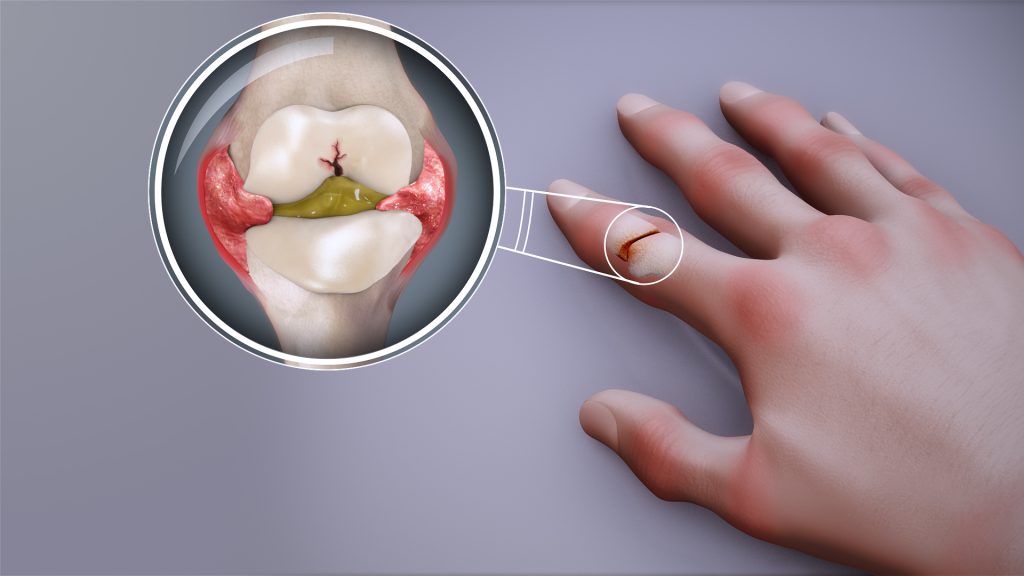
Rheumatoid arthritis. Credit: Scientific Animations CC4.0

Cedars-Sinai investigators may have figured out why certain immunosuppressive treatments don’t work well in rheumatoid arthritisIn a study published in Science Immunology, scientists traced the problem to specific changes that occur in immune cells within the joints as the disease progresses.

The findings could lead to more effective therapies for the incurable autoimmune disease.

“Our discoveries point to the importance of the tissue environment in worsening rheumatoid arthritis and driving resistance to antirheumatic medications,” said Nunzio Bottini, MD, PhD, director of the Kao Autoimmunity Institute at Cedars-Sinai, professor of Medicine and corresponding author of the study.

Rheumatoid arthritis causes chronic inflammation in the joints. In other forms of autoimmune arthritis, inflammation can be relieved by targeting interleukin-17, one of several proteins that can contribute to joint inflammation.

In experiments involving human rheumatoid arthritis tissues and laboratory mice, investigators showed that, over time, the immune cells that produce interleukin-17 gradually stop making it. This finding helps explain why IL-17-targeted treatments do not work well against established rheumatoid arthritis.

“These immune cells can also change in ways that make them more aggressive and able to sustain inflammation even without interleukin-17,” Bottini said.

Changes to the immune cells appear to be driven by synoviocytes – nonimmune cells that produce the lubricating synovial fluid in the joints, according to the study.

Bottini said that the Department of Computational Biomedicine at Cedars-Sinai, particularly the laboratory of Kyoung Jae Won, PhD, played a key role in the study by contributing critical work in spatial biology, an emerging field that studies how cells function within their tissue environments.

The findings carry significant implications for treating rheumatoid arthritis, according to Joyce So, MD, PhD, chief genomics officer at Cedars-Sinai and medical director of the newly established Center for Genomic Medicine at Cedars-Sinai Guerin Children’s.

“This important new insight contributes to shifting the paradigm of how we understand rheumatoid arthritis progression and why IL-17 treatments haven’t worked as well as expected,” So said. “Only with a precise understanding of the biological mechanisms of disease can effective, precision therapies be developed. In the meantime, clinicians can help patients in early or presymptomatic stages make the most of treatments that may lose effectiveness over time.”

Source: Cedars–Sinai