Arthritis in the knee’s patellofemoral joint (PFJ) is common following anterior cruciate ligament reconstruction (ACLR) and may be linked with altered loading at the joint. In a study published in the Journal of Orthopaedic Research, young adults post‐ACLR who exhibited lower PFJ loading during hopping were more likely to have PFJ osteoarthritis at one year and worsening PFJ osteoarthritis between one and five years post-procedure.
In the study, data for net PFJ contact force were normalised to each participant’s body weight. For every one body weight decrease in the peak PFJ contact force during hopping, the proportion of people at one year post-ACLR with early PFJ osteoarthritis increased by 37%, and the risk of worsening PFJ osteoarthritis between one and five years post-ACLR increased by 55%.
“Clinical interventions aimed at mitigating osteoarthritis progression may be beneficial for those with signs of lower PFJ loading post-ACLR,” the authors wrote.
The vital role of the ‘love hormone’ oxytocin for social attachments is being called into question. More than 40 years of pharmacological and behavioural research has pointed to oxytocin receptor signalling as an essential pathway for the development of social behaviours in prairie voles, humans, and other species, but a genetic study published in the journal Neuron shows that voles can form enduring attachments with mates and provide parental care without oxytocin receptor signalling.
Prairie voles are one of only a few monogamous mammalian species. After mating, they form lifelong partnerships known as “pair-bonds.” Pair-bonded voles share parental responsibilities, prefer the company of their partner over unknown members of the opposite sex, and actively reject potential new partners. Previous studies that used drugs to block oxytocin from binding to its receptor found that voles were unable to pair-bond when oxytocin signalling was blocked.
Neuroscientists Devanand Manoli of UCSF and Nirao Shah of Stanford University wanted to know whether pair-bonding was really controlled by oxytocin receptor signalling. To test this, they used CRISPR to generate prairie voles that lack functional oxytocin receptors. Then, they tested these mutant oxytocin-receptor-less voles to see whether they could form enduring partnerships with other voles. To their surprise, the mutant voles formed pair-bonds just as readily as normal voles.
“We were all shocked that no matter how many different ways we tried to test this, the voles demonstrated a very robust social attachment with their sexual partner, as strong as their normal counterparts,” says Manoli.
Next, the researchers wondered whether oxytocin receptor signaling is similarly dispensable for its other functions – parturition, parenting (which, in prairie voles, is a shared responsibility between the two parents), and milk release during lactation.
“We found that mutant voles are not only able to give birth, but actually nurse,” says Shah. Both male and female mutants engaged in the usual parental behaviours of huddling, licking, and grooming, and were able to rear pups to weaning age.
However, the mutant prairie voles did have limited milk release compared to normal voles. As a result, fewer of their pups survived to weaning age, and those that did survive were smaller compared to the pups of normal prairie voles. The fact that the voles could nurse at all is in contrast to equivalent studies in oxytocin receptor-deficient mice, who completely failed to lactate or nurse, and whose pups consequently died within a day or so of being born. The authors hypothesize that this species difference could be due to the inbred nature of laboratory mouse strains in contrast to the genetically heterogenous voles. “It could be that inbreeding in mice has selected for a large dependence on oxytocin signalling, or this may represent a species-specific role of oxytocin receptor signalling,” says Shah.
When asked why their results differ from previously published studies that used drugs to block oxytocin receptor signalling, the authors point to the key difference between genetic and pharmacological studies: precision. “Drugs can be dirty,” says Manoli, “in the sense that they can bind to multiple receptors, and you don’t know which binding action is causing the effect. From a genetics perspective, we now know that the precision of deleting this one receptor, and subsequently eliminating its signalling pathways, does not interfere with these behaviours.”
“For at least the last ten years people have been hoping for the possibility of oxytocin as a powerful therapeutic for helping people with social cognitive impairments due to conditions ranging from autism to schizophrenia,” Manoli says. “This research shows that there likely isn’t a magic bullet for something as complex and nuanced as social behaviour.”
Another key difference is that, whereas most pharmacological studies suppress oxytocin receptor signalling in adult animals, this study switched it off when the voles were embryos. “We’ve made a mutation that starts from before birth,” says Shah. “It could be that there are compensatory or redundant pathways that kick-in in these mutant animals and mask the deficits in attachment, parental behaviours, and milk let-down.”
Working with prairie voles presented an obstacle, but one worth overcoming. Because prairie voles are not commonly used in genetic studies like laboratory mice, the team needed to develop all of their molecular tools and protocols from scratch. Now that they have these vole-specific pipelines and tools, the authors are excited about the doorways this opens, both for them and for other researchers.
“We’re very happy to be part of a community and to have this technology that we can share,” says Manoli. “Now we have this trove that we can start to mine. There are so many other questions that prairie voles could be interesting and useful for answering, both in terms of potential clinical implications for models of anxiety or attachment and also for basic comparative biology.”
Patients can experience 30% fewer serious adverse reactions if their drugs are tailored to their genes, reports a study published in The Lancet. A European collaboration involving researchers from Karolinska Institutet suggests that a genetic analysis prior to drug therapy could significantly reduce suffering and healthcare costs.
A significant proportion of patients experience adverse reactions to their medication. Since we each carry a unique set of genes, we react differently to the same drugs. For example, some people break them down faster, meaning that they require a higher dose to obtain the desired effect.
DNA pass that fits in the wallet
To overcome this problem, researchers from Leiden University Medical Center in the Netherlands, Karolinska Institutet and other collaborating institutions have developed the principle for a “DNA pass” that has been clinically validated in the recently published study.
“It’s basically a credit card-sized card with a magnetic strip containing all the important genetic data on a particular patient,” explains one of the study’s co-authors Magnus Ingelman-Sundberg, professor of molecular toxicology at the Department of Physiology and Pharmacology at Karolinska Institutet.
“When a patient’s card is scanned, doctors and pharmacists can work out the optimal dose of a drug for that particular individual.”
The study included almost 7 000 patients from seven European countries between March 2017 and June 2020 all of whom were genotyped with respect to variations in twelve specific genes of significance to drug metabolism, transport and side-effects. All participants then received their drugs either conventionally or with a genotype-based modification.
Twelve weeks after their drug regimen began, the patients were contacted by a specialist nurse about any adverse reactions, such as diarrhoea, pain or loss of taste. The study concluded that such adverse reactions to drugs can be greatly reduced by analysing the genes that code for enzymes that metabolise them.
“The patients who’d received genotype-driven treatment had, on average, 30 per cent fewer adverse reactions than the controls,” says Professor Ingelman-Sundberg.
Now sufficiently compelling data
Professor Ingelman-Sundberg, a long-standing expert at the European Medical Agency on the development of this method, believes that there is now sufficiently compelling data to warrant the widespread use of the DNA pass.
“I think we’ve come to the point where a genetic pass like this will be useful,” he says.
Globally, the problem of adverse reactions is considerable. In the EU, they cause up to 128 000 fatalities a year and up to 9% of all hospital admissions, a figure that more than doubles to 20% in over 70s.
“Our results strongly suggest that an initial genotyping of the patients will deliver significant savings to society,” says Professor Ingelman-Sundberg. “The genotyping itself need only be done once per patient at a maximum cost of 6,000 SEK. The general introduction of this predictive system could therefore go a long way towards reducing public healthcare costs.”
ChatGPT can score at or around the approximately 60% pass mark for the United States Medical Licensing Exam (USMLE), with responses that make coherent, internal sense and contain frequent insights, according to a study published in PLOS Digital Health by Tiffany Kung, Victor Tseng, and colleagues at AnsibleHealth.
ChatGPT is a new artificial intelligence (AI) system, known as a large language model (LLM), designed to generate human-like writing by predicting upcoming word sequences. Unlike most chatbots, ChatGPT cannot search the internet. Instead, it generates text using word relationships predicted by its internal processes.
Kung and colleagues tested ChatGPT’s performance on the USMLE, a highly standardised and regulated series of three exams (Steps 1, 2CK, and 3) required for medical licensure in the United States. Taken by medical students and physicians-in-training, the USMLE assesses knowledge spanning most medical disciplines, ranging from biochemistry, to diagnostic reasoning, to bioethics.
After screening to remove image-based questions, the authors tested the software on 350 of the 376 public questions available from the June 2022 USMLE release.
After indeterminate responses were removed, ChatGPT scored between 52.4% and 75.0% across the three USMLE exams. The passing threshold each year is approximately 60%. ChatGPT also demonstrated 94.6% concordance across all its responses and produced at least one significant insight (something that was new, non-obvious, and clinically valid) for 88.9% of its responses. Notably, ChatGPT exceeded the performance of PubMedGPT, a counterpart model trained exclusively on biomedical domain literature, which scored 50.8% on an older dataset of USMLE-style questions.
While the relatively small input size restricted the depth and range of analyses, the authors note their findings provide a glimpse of ChatGPT’s potential to enhance medical education, and eventually, clinical practice. For example, they add, clinicians at AnsibleHealth already use ChatGPT to rewrite jargon-heavy reports for easier patient comprehension.
“Reaching the passing score for this notoriously difficult expert exam, and doing so without any human reinforcement, marks a notable milestone in clinical AI maturation,” say the authors.
Author Dr Tiffany Kung added that ChatGPT’s role in this research went beyond being the study subject: “ChatGPT contributed substantially to the writing of [our] manuscript… We interacted with ChatGPT much like a colleague, asking it to synthesise, simplify, and offer counterpoints to drafts in progress…All of the co-authors valued ChatGPT’s input.”
A new way to significantly increase the potency of almost any vaccine has been developed by researchers from the International Institute for Nanotechnology (IIN) at Northwestern University, which they describe in Nature.
The scientists used chemistry and nanotechnology to change the structural location of adjuvants and antigens on and within a nanoscale vaccine, greatly increasing vaccine performance. The antigen targets the immune system, and the adjuvant is a stimulator that increases the effectiveness of the antigen.
“The work shows that vaccine structure and not just the components is a critical factor in determining vaccine efficacy,” said lead investigator Chad A. Mirkin, director of the IIN. “Where and how we position the antigens and adjuvant within a single architecture markedly changes how the immune system recognises and processes it.”
This new heightened emphasis on structure has the potential to improve the effectiveness of conventional cancer vaccines, which historically have not worked well, Mirkin said.
Mirkin’s team has studied the effect of vaccine structure in the context of seven different types of cancer to date, including triple-negative breast cancer, papillomavirus-induced cervical cancer, melanoma, colon cancer and prostate cancer to determine the most effective architecture to treat each disease.
Conventional vaccines take a blender approach
With most conventional vaccines, the antigen and the adjuvant are simply blended and injected into a patient, giving no control over the vaccine structure, and, consequently, limited control over trafficking and processing of the vaccine components. Thus, there is no control over how well the vaccine works.
“A challenge with conventional vaccines is that out of that blended mish mosh, an immune cell might pick up 50 antigens and one adjuvant or one antigen and 50 adjuvants,” said study author and former Northwestern postdoctoral associate Michelle Teplensky, who is now an assistant professor at Boston University. “But there must be an optimum ratio of each that would maximise the vaccine’s effectiveness.”
Enter SNAs (spherical nucleic acids), which are the structural platform, invented and developed by Mirkin, used in this new class of modular vaccines. SNAs allow scientists to pinpoint exactly how many antigens and adjuvants are being delivered to cells. SNAs also enable scientists to tailor how these vaccine components are presented, and the rate at which they are processed. Such structural considerations, which greatly impact vaccine effectiveness, are largely ignored in conventional approaches.
Vaccines developed through ‘rational vaccinology’ offer precise dosing for maximum effectiveness
Mirkin came up with this approach to systematically control antigen and adjuvant locations within modular vaccine architectures, and called it ‘rational vaccinology’. It is based on the concept that the structural presentation of vaccine components matters as much as the components themselves in driving efficacy.
“Vaccines developed through rational vaccinology deliver the precise dose of antigen and adjuvant to every immune cell, so they are all equally primed to attack cancer cells,” said Mirkin. “If your immune cells are soldiers, a traditional vaccine leaves some unarmed; our vaccine arms them all with a powerful weapon with which to kill cancer. Which immune cell ‘soldiers’ do you want to attack your cancer cells?”
Building an (even) better vaccine
The team developed a cancer vaccine that reduced tumour growth by more than four times compared to checkpoint inhibitor monotherapy, and led to a 40% extension in median survival.
By reconfiguring the architecture of a vaccine containing multiple targets, the SNA enables the immune system to find tumour cells. The team investigated differences in how well two antigens were recognised by the immune system depending on their placement, on the core or perimeter, of the SNA structure. For an SNA with optimum placement, they could increase the immune response and how quickly the nanovaccine triggered cytokine (an immune cell protein) production to boost T cells attacking the cancer cells. The scientists also studied how the different placements affected the immune system’s ability to remember the invader, and whether the memory was long-term.
“Where and how we position the antigens and adjuvant within a single architecture markedly changes how the immune system recognises and processes it,” Mirkin said.
The most powerful structure throws two punches to outsmart the tumour
The study data show that attaching two different antigens to an SNA comprising a shell of adjuvant was the most potent approach for a cancer vaccine structure. These engineered SNA nanostructures stalled tumour growth in multiple animal models.
“It is remarkable,” Mirkin said. “When altering the placement of antigens in two vaccines that are nearly identical from a compositional standpoint, the treatment benefit against tumours is dramatically changed. One vaccine is potent and useful, while the other is much less effective.”
Many current cancer vaccines are designed to primarily activate cytotoxic T cells, only one defence against a cancer cell. Because tumour cells are always mutating, they can easily escape this immune cell surveillance, quickly rendering the vaccine ineffective. The odds are higher that the T cell will recognise a mutating cancer cell if it has more antigens to recognise it.
“You need more than one type of T cell activated, so you can more easily attack a tumour cell,” Teplensky said. “The more types of cells the immune system has to go after tumours, the better. Vaccines consisting of multiple antigens targeting multiple immune cell types are necessary to induce enhanced and long-lasting tumour remission.”
Another advantage of the rational vaccinology approach, especially when used with a nanostructure like an SNA, is that it’s easy to alter the structure of a vaccine to go after a different type of disease. Mirkin said they simply switch out a peptide, a snippet of a cancer protein with a chemical handle that “clips” onto the structure, not unlike adding a new charm to a bracelet.
Towards the most effective vaccine for any cancer type
“The collective importance of this work is that it lays the foundation for developing the most effective forms of vaccine for almost any type of cancer,” Teplensky said. “It is about redefining how we develop vaccines across the board, including ones for infectious diseases.”
In a previously published paper, Mirkin, Teplensky and colleagues demonstrated the importance of vaccine structure for SARS-CoV-2 by creating vaccines that exhibited protective immunity in 100% of animals against a lethal viral infection.
“Small changes in antigen placement on a vaccine significantly elevate cell-to-cell communication, cross-talk and cell synergy,” Mirkin said. “The developments made in this work provide a path forward to rethinking the design of vaccines for cancer and other diseases as a whole.”
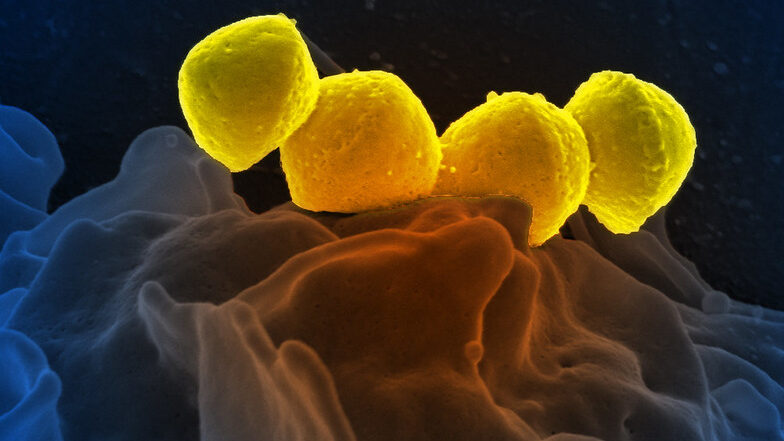
Streptococcus pyogenese bound to a human neutrophil.
Credit: National Institute of Allergy and Infectious Diseases, National Institutes of Health
Griffith University researchers have unlocked one of the secrets as to why some forms of Streptococcus Group A (Strep A) are associated with severe invasive infection. The results, published in mBio, suggest that a toxin it secretes not only damages cells but helps Strep A resist host defence.
Around the world, invasive Strep A diseases are responsible for more than 163 000 deaths annually and a recent increase in cases of invasive Strep A disease has been observed internationally.
For the past 10 years, Institute for Glycomics Associate Professor Manisha Pandey and Professor Michael Good have been researching the pathways in which Strep A can spread through the body.
“The findings from this study will have far-reaching implications as Strep A is responsible for a significant number of invasive and non-invasive infections which cause significant morbidity and mortality globally,” Associate Professor Pandey said.
“The reason for this is that invasive organisms express significantly more of the toxin, streptolysin O (SLO), which was the main focus of this study.
“SLO exerts potent cell and tissue destructive activity and promotes Strep A resistance to clearance by white cells in the body which is the critical first element of host defence against invasive Strep A infection.”
Professor Good said: “We found SLO alters interactions with host cell populations and increases Strep A viability at sites in the body such as the blood and spleen, and that its absence results in significantly less virulence.”
“Essentially, the less SLO present, the less severe the case of Strep A.”
SLO is secreted by nearly all Strep A isolates, but those that secrete the most SLO are the most virulent.
This work underscores the importance of SLO in Strep A virulence while highlighting the complex nature of Strep A pathogenesis.
This improved insight into host-pathogen interactions will enable a better understanding of host immune evasion mechanisms and inform streptococcal vaccine development programs.
Dr Pandey said a key finding was the presence of SLO in invasive organisms did not impair the ability of the Strep A vaccine candidate developed by Griffith University’s Institute for Glycomics and which is now in a clinical trial.
The Strep A virulence study was part of a PhD project undertaken by Dr Emma Langshaw.
Investigators have identified new genetic variations that affect gene expression in the liver cells of patients of African ancestry, findings that provide insight into how drugs are metabolised differently in different populations, according to a study published in The American Journal of Human Genetics.
Expression quantitative locus (eQTL) studies use an individual’s genomic and transcriptomic data to uncover unique genetic variants that regulate gene expression. However, people of African descent have not been well represented in these databases.
Having this comprehensive, multiomic data is key to uncovering the mechanisms that regulate an individual’s genome and understanding how different groups of people respond to drugs differently, which can improve treatment strategies, according to Minoli Perera, PharmD, PhD, associate professor of Pharmacology and senior author of the study.
“We don’t have data from any historically excluded populations to run these analyses, so a big motivation of my lab is to create data in African ancestry populations so that they are represented in multiomics,” said Perera.
In the current study, the investigators treated hepatocytes from liver tissue samples from African American patients with six FDA approved drugs: Rifampin, Phenytoin, Carbamazepine, Dexamethasone, Phenobarbital and Omeprazole.
The investigators then performed whole-genome genotyping and RNA sequencing on primary hepatocytes treated both with and without the drugs. They also mapped eQTLs, or single-nucleotide polymorphisms (SNPs) affecting gene expression, in the liver cells.
From this comprehensive analysis, they uncovered varying transcriptional changes in the cell lines across the different drug treatments and identified NRF2 as a potential gene transcription regulator.
“NRF2 has been already identified as a very important transcription factor for drug metabolism, but this is a much more comprehensive way to look at it,” Perera said.
The investigators also discovered nearly 3000 genetic variants that affect how well hepatocytes respond to external stimuli, including drugs, which the investigators called drug response eQTLs, or reQTLs. Notably, they discovered reQTLs for drug-metabolising genes such as CYP3A5.
Most individuals of European ancestry carry a specific genetic variant in CYP3A5 which results in no/low CYP3A5 enzyme, whereas individuals of African ancestry carry that variant at a lower frequency. According to Perera, this is a problem because most participants that are recruited for clinical trials are of European ancestry, and the findings from these trials directly inform how often and how much of a drug should be prescribed to all patients, regardless of their ancestry.
“When you test drugs in a group of people with limited diversity, and then say this is the dose, this is how fast it’s metabolised, this is how often you dose the drug and then you give this medication to the entire U.S. population, we don’t know for sure how accurate those measures are, and that’s just with one variant. Other variants that may influence how much or how little we up-regulate these important enzymes,” Perera said.
Perera said her team is now expanding their work by increasing the number of hepatocytes from African American participants they’re studying and incorporating other types of omics techniques, such as epigenetic profiling.
“Almost exclusively we’ve done epigenetic screenings in European populations, so what can we find in the epigenome that’s important for African Americans. Also, because there’s more genetic variation in individuals of African descent, would that change the epigenome in ways that we aren’t able to see in Europeans,” Perera said. “We hope that what we’re doing can help annotate new studies coming along for African ancestry populations.”
Commonly ordered tests can provide early warning of underlying disease, but could also create unnecessary risks of false positive results, provoking anxiety in the patient, wasted time and money and risks of invasive testing.
Therefore, to combat commonly ordered – but not always necessary – procedures and tests, the Society of General Internal Medicine (SGIM) on Tuesday released its revised list of recommendations on five primary care procedures and tests that patients and physicians should question.
For instance, the age-old idea of getting an annual physical exam with “routine blood tests” from a primary care doctor is a misconception because a person’s age and other risk factors should influence how frequently they should see their doctor, Linder said.
“We often have patients come in asking us to ‘check me for everything,’ but this is a potentially anxiety-provoking, dangerous thing for patients because the more testing we do, the more stuff we find, and the more we need to follow up,” said Linder, chief of the division of general internal medicine at Northwestern University Feinberg School of Medicine and a Northwestern Medicine physician. “In someone who is asymptomatic, an ‘abnormality’ is much more likely to be a false positive or of no clinical significance than for us to catch early disease.
“False positives can expose patients to all of the anxiety, costs, hassle and time commitment, and danger from sometimes invasive testing, with a very low likelihood that it is going to improve their health.”
This isn’t to say nobody should get a checkup every year. For instance, patients who have overdue preventive services, rarely see their primary care physician, have low self-rated health and/or are aged 65 or older should get an annual checkup, the scientists said.
The newly revised list is part of SGIM’s Choosing Wisely campaign, which is an initiative of the American Board of Internal Medicine Foundation. SGIM members originally selected the topics in 2013 and later updated the list in 2017.
The list generated controversy when it was first developed in 2013, recalls Linder.
“The list was widely misinterpreted as ‘specialty society says you don’t need to see your doctor,’ but that was not what it said,” Linder said.
Time and downstream financial costs also are issues of these commonly ordered but oftentimes unnecessary tests and procedures, Liss said.
“Patients and care teams often spend valuable time on low-value checkups that could have been devoted to high-need patients,” said Liss, research associate professor of general internal medicine at Feinberg. “There also is the overall increase in costs to the health system. And even if annual checkups are covered by most insurance, patients often have copays for services like blood draws and other diagnostic tests.”
The revised list was developed after months of careful consideration and review, using the most current evidence about management and treatment options. Linder and Liss served as ad hoc members of the SGIM’s Choosing Wisely Working Group.
Here are the five recommendations, based on a review of the most recent studies in the field:
Don’t recommend daily home glucose monitoring in patients with Type 2 diabetes mellitus not using insulin.
Don’t perform routine annual checkups unless patients are likely to benefit; the frequency of checkups should be based on individual risk factors and preferences. During checkups, don’t conduct comprehensive physical exams or routine lab testing.
Don’t perform routine pre-operative testing before low-risk surgical procedures.
Don’t recommend cancer screening in adults with life expectancy of less than 10 years.
Don’t place, or leave in place, peripherally inserted central catheters for patient or provider convenience.
A large new study led by researchers from Lund University in Sweden shows that narrowing and calcification of the blood vessels of the heart are more common in women previously affected by pregnancy complications, and in some cases can result in coronary artery changes similar to those in women 10 years older who had no pregnancy complications.
Despite complications in pregnancy having increasingly been acknowledged as a new type of risk factor for heart disease, it is yet to be determined how this information can best be used within healthcare.
“Our results suggest that the correlation exists even among women with a low expected risk of cardiovascular disease. The study is an important piece of the puzzle in understanding how women with pregnancy complications should be followed-up by their healthcare provider after pregnancy,” says lead researcher Simon Timpka, associate professor of clinical epidemiology at Lund University.
Researchers included 10 528 women from the National Medical Birth Register* who have subsequently gone on to participate in the large population study SCAPIS at age 50-65 years. All the women underwent coronary CT angiography in order to detect calcification of blood vessels, narrowing and other signs of heart disease. The researchers investigated signs of heart disease by history of five common complications in pregnancy: pre-eclampsia, gestational hypertension, preterm delivery, gestational diabetes and infants born small for gestational age.
Four per cent more of the women with pregnancy complications had visible atherosclerosis of the coronary arteries, compared to the group who had not had complications in pregnancy (32% as opposed to 28%).
Pre-eclampsia and gestational hypertension were the most strongly linked: among women who had not experienced any pregnancy complications, 2% had narrowing in coronary arteries while the corresponding number among women who previously suffered from pre-eclampsia or pregnancy-induced hypertension was 5%.
“To reduce the risk of these women developing coronary heart disease in the future, it is important that they check risk factors such as blood pressure, blood sugar and cholesterol regularly,” says co-author Sofia Sederholm Lawesson, consultant cardiologist at the University Hospital in Linköping.
“In this study, we have investigated many different associations between complications in pregnancy and heart disease all at once, so it is possible that chance might explain individual results,” says Timpka. “Yet the pattern is relatively consistent, which makes it easier to draw conclusions including that women with prior pre-eclampsia have changes in the coronary arteries that are equivalent to the changes seen in women who have not experienced complications in pregnancy but are five to ten years older.”
According to Timpka, CT scans of the coronary arteries are increasingly used in patients presenting with symptoms, but there is still a lack of large studies into the significance over time of some of the studied changes among women without current symptoms.
“Even if our study provides new knowledge on the development of coronary heart disease among middle-aged women who have previously suffered complications in pregnancy, there is a need for long-term studies in order to understand the true meaning that our discoveries have for symptomatic disease,” concludes Timpka.
A team of researchers at Kyoto University’s Graduate School of Medicine has now found that mindfulness meditation does reduce anxieties associated with anorexia nervosa. Results from the study, published in BHPsych Open, show changes in the activity of brain regions involved in anxiety.
Anorexia nervosa (AN) is a severe psychiatric illness associated with intense anxieties concerning weight, shape, and self-esteem. AN is characterised by food restriction, voluntary vomiting, and extreme emaciation. Mindfulness meditation has already become a globally recognised method for addressing AN but its effectiveness in clinically treating neurogenic emaciation has not been studied yet.
The team’s mindfulness meditation program has seen a significant decrease in obsessive thoughts about test subject’s self-image and brain activity associated with related emotions.
“Our results suggest that the participants in the study became better at accepting their anxiety as it is,” says lead author Tomomi Noda.
Mindfulness and meditation work hand-in-hand. The former teaches practitioners to hone their awareness of their present experience and their ability to not judge and rather accept their circumstances. The latter is the medium by which mindfulness can be approached.
“We focused on the possibility that patients with AN try to avoid their crippling anxiety about weight gain and self-image by restricting food or vomiting,” adds co-author Masanori Isobe.
A 4-week mindfulness intervention program examined neural changes using tasks designed to induce weight-related anxiety. The researchers then regulated this anxiety by helping patients accept their current situations and experiences at face value, instead of avoiding them.
The researchers used functional magnetic resonance imaging (fMRI) to analyse attention regulation in relation to eating disorders. The study’s results support the subjective experiences of the researchers, although it was unexpected to them that several global events, such as the COVID pandemic and the Russo-Ukrainian war, were significant factors in patients’ anxieties.
“We anticipate practical implications of our results in clinical psychiatry and psychology and broader research into mitigating suffering through mindfulness, using the strategy of self-acceptance to regulate attention,” concludes group leader Toshiya Murai.