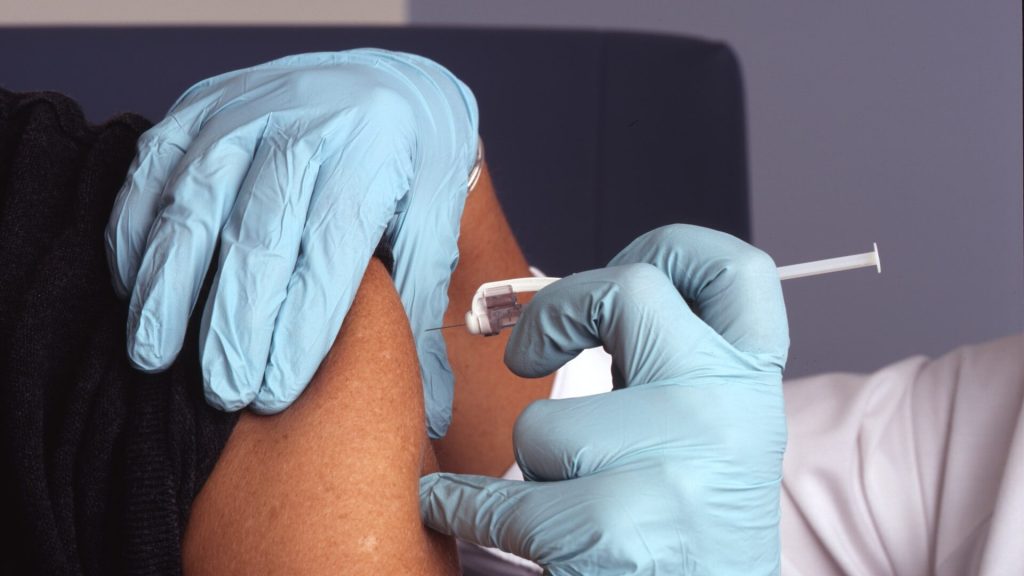
Administering a booster shot of Johnson & Johnson’s COVID vaccine was found to be 85% effective in preventing serious illness in Omicron-dominated areas, preliminary results from a South African trial study show.
The South African Medical Research Council performed the study on health workers from 15 November to 20 December, but has not yet been peer-reviewed. It found the booster was effective in largely protecting staff as Omicron came to dominate the country.
“The increase in CD8+ T-cells generated by the Johnson & Johnson vaccine may be key to explaining the high levels of effectiveness against severe COVID disease and hospitalisation in the Sisonke 2 study, as the Omicron variant has been shown to escape neutralising antibodies,” Johnson & Johnson reported in a statement. That data showed that the booster jab “provides 85 percent effectiveness against hospitalisation in areas where Omicron is dominant/”
“This adds to our growing body of evidence which shows that the effectiveness of the Johnson & Johnson Covid vaccine remains strong and stable over time, including against circulating variants such as Omicron and Delta,” it continued.
Around half a million South African health staff have received Johnson jabs as part of clinical trials. South Africa has recorded more than 3.5 million cases and 94 000 deaths since the start of the pandemic.
An earlier South African study in December found the Pfizer/BioNTech vaccine to be less effective overall against Omicron, but still reduced hospital admissions by up to 70%.
Ghanaian health tech startup mPharma is building a network of community pharmacies across Africa as it plans to be the go-to primary healthcare service provider for millions of people. Drug supply in Africa is often unaffordable and counterfeits are rife.
The startup’s community (Mutti) pharmacies are essentially mini-hospitals offering affordable services, ranging from medical consultation to diagnostic and telehealth services.
The company plans more Mutti pharmacies to extend its reach ater raising $35 million, bringing the total amount raised by mPharma to $65 million.
According to mPharma co-founder and CEO Gregory Rockson told TechCrunch, the new financing will be used to ramp up its infrastructure, staff and expansion into African markets.
“We are hiring over 100 engineers to build all our technology in-house and this includes a massive data infrastructure we are creating. We are also investing in other skilled talent like doctors and nurses, professionals that are critical in the work we do,” Rockson told TechCrunch.
Originally founded in 2013, mPharma aims to manage prescription drug inventory for pharmacies and their suppliers, retail pharmacy operations and to provide market intelligence to hospitals, pharmacies and patients.
In October 2021, the startup added telehealth services to its portfolio, catching the telemedicine wave brought in by the COVID pandemic. Rockson told TechCrunch the startup was planning to have 100 virtual centres after six months. The number of virtual centres is primed to grow further alongside mPharma’s plan to increase its community pharmacies from 200 to over 2000 in three years.
Patients in Ghana, Nigeria, Kenya, Zambia, Malawi, Rwanda and Ethiopia, where mPharma has a presence, can access these virtual services. Startups like mPharma aim to address healthcare gaps in Africa.
Sub-Saharan African countries have an average of 0.23 doctors for every 10 000 people against the best ratio of 84.2 doctors in some of the most developed countries. In addition, healthcare infrastructure remains critically underdeveloped.
“COVID showed us that the best form of care is local, it is in the community, and the closest thing in communities are pharmacies. We believe that the pharmacy of the future, which is what we are creating, is one built around longitudinal care not episodic care,” said Rockson.
“We are transforming community pharmacies into the foundation of a modern health system in Africa. We will have a Mutti pharmacy in every community on the continent, guarantee the availability and safety of medicines for each community and utilise the physical infrastructure of Mutti pharmacies to expand Mutti Doctor (the telemedicine service), creating the largest network of doctor offices and diagnostic centres.”
Astronaut Raja Chari sequences DNA from bacteria samples to understand the microbial environment on the International Space Station. Credit: NASA
The lack of gravity in outer space could be the key to the efficient production of large quantities of stem cells. Scientists at Cedars-Sinai have found that the microgravity environment in space stations can potentially aid life-saving advances on Earth by facilitating the rapid mass production of stem cells.
A new paper in Stem Cell Reports outlines key opportunities discussed at a space biomanufacturing symposium to expand the manufacture of stem cells in space.
With new rocket technology, the cost of access to space has plummeted, opening up new opportunities for research and industry, as well as spaceflight by private citizens. Biomanufacturing of therapeutic and research biomaterials can be more productive in microgravity conditions.
“We are finding that spaceflight and microgravity is a desirable place for biomanufacturing because it confers a number of very special properties to biological tissues and biological processes that can help mass produce cells or other products in a way that you wouldn’t be able to do on Earth,” said stem cell biologist Arun Sharma, PhD, head of a new Cedars-Sinai research laboratory.
“The last two decades have seen remarkable advances in regenerative medicine and exponential advancement in space technologies enabling new opportunities to access and commercialise space,” he said.
Attendees at the virtual space symposium in December identified more than 50 potential commercial opportunities for conducting biomanufacturing work in space, according to the Cedars-Sinai paper. The most promising fell into three categories: Disease modelling, biofabrication, and stem-cell-derived products.
Scientists use disease modelling, to study diseases and possible treatments by replicating full-function structures – whether using stem cells, organoids or other tissues.
Decades of spaceflight experience has shown that when the body is exposed to low-gravity conditions for extended periods of time, it experiences accelerated bone loss and ageing. By developing disease models based on this accelerated ageing process, research scientists can better understand the mechanisms of the ageing process and disease progression.
“Not only can this work help astronauts, but it can also lead to us manufacturing bone constructs or skeletal muscle constructs that could be applied to diseases like osteoporosis and other forms of accelerated bone ageing and muscle wasting that people experience on Earth,” explained Dr Sharma.
Biofabrication, another major topic of discussion at the symposium, produces materials like tissues and organs with 3D printing a core technology.
A major issue with biofabrication on Earth involves gravity-induced density, which makes it hard for cells to expand and grow. This requires the use of scaffolding structures, but it generally cannot support the small, complex shapes found in vascular and lymphatic pathways. With the lack of gravity in space, scientists are hopeful that they can use 3D printing to print unique shapes and products, like organoids or cardiac tissues, in a way that can’t be replicated on Earth. This technology is being tested on the International Space Station.
The third category has to do with the production of stem cells and understanding how some of their fundamental properties are influenced by microgravity. Some of these properties include potency, or the ability of a stem cell to renew itself, and differentiation, the ability for stem cells to turn into other cell types.
Understanding some of the effects of spaceflight on stem cells can potentially lead to better ways to manufacture large numbers of cells in the absence of gravity. In coming months, Cedars-Sinai scientists will send stem cells into space to test whether it is possible to produce large batches in a low gravity environment.
“While we are still in the exploratory phase of some of this research, this is no longer in the realm of science fiction,” Dr Sharma said. “Within the next five years we may see a scenario where we find cells or tissues that can be made in a way that is simply not possible here on Earth. And I think that’s extremely exciting.”
A new systematic review has found only very low-quality evidence that substances claiming to treat or prevent alcohol-induced hangover have any effectiveness. In light of this, the researchers called for more rigorous scientific exploration of the effectiveness of these remedies for hangovers to provide practitioners and the public with accurate evidence-based information for decision making.
Numerous remedies claim to be effective against hangover symptoms; however, up-to-date scientific examination of the literature is lacking. To address this gap, a team of researchers from King’s College London and South London and Maudsley NHS Foundation Trust conducted a systematic review to consolidate and assess the current evidence for hangover treatments.
The study, published today by the scientific journal Addiction, assessed 21 placebo-controlled randomised trials of clove extract, red ginseng, Korean pear juice, and other hangover cures. Although some studies showed statistically significant improvements in hangover symptoms, all evidence was of very low quality, usually because of methodological limitations or imprecise measurements. In addition, no two studies reported on the same hangover remedy and no results have been independently replicated.
Of the 21 included studies, eight were conducted exclusively with male participants. The studies were generally limited in their reporting of the nature and timing of alcohol challenge that was used to assess the hangover cures and there were considerable differences in the type of alcohol given and whether it was given alongside food.
Common painkillers such as paracetamol or aspirin have not been evaluated in placebo controlled randomised controlled trials for hangover. Future studies ought to be more rigorous, such as using validated scales to assess hangover symptoms, the researchers advised. More female participants are also needed in hangover research.
Lead author Dr Emmert Roberts said: “Hangover symptoms can cause significant distress and affect people’s employment and academic performance. Given the continuing speculation in the media as to which hangover remedies work or not, the question around the effectiveness of substances that claim to treat or prevent a hangover appears to be one with considerable public interest. Our study has found that evidence on these hangover remedies is of very low quality and there is a need to provide more rigorous assessment. For now, the surest way of preventing hangover symptoms is to abstain from alcohol or drink in moderation.”
The hangover cures assessed in this study included Curcumin, Duolac ProAP4 (probiotics), L-cysteine, N-Acetyl-L-Cysteine (NAC), Rapid Recovery (L-cysteine, thiamine, pyridoxine and ascorbic acid), Loxoprofen (loxoprofen sodium), SJP-001 (naproxen and fexofenadine), Phyllpro (Phyllanthus amarus), Clovinol (extract of clove buds), Hovenia dulcis Thunb. fruit extract (HDE), Polysaccharide rich extract of Acanthopanax (PEA), Red Ginseng, Korean Pear Juice, L-ornithine, Prickly Pear, Artichoke extract, ‘Morning-Fit’ (dried yeast, thiamine nitrate, pyridoxine hydrochloride, and riboflavin), Propranolol, Tolfenamic acid, Chlormethiazole, and Pyritinol.
SARS-CoV-2 is a “predatory virus” that appears to have multiplied the risk of death by a similar amount for most adults in the UK regardless of their underlying health status, according to new research published in PLOS Medicine.
The London School of Hygiene & Tropical Medicine (LSHTM)-led research team estimated excess mortality in the UK during Wave 1 of the COVID pandemic in nearly 10 million adults aged 40 and over. They then estimated and compared relative rates of all-cause mortality in people with and without more than 50 health and socio-demographic characteristics before the pandemic and during Wave 1.
The rate of death during Wave 1 increased on average by a factor of just over 40% (x1.4) for the study population compared to before the pandemic. This relative increase in the rate of death was surprisingly consistent across much of the population, regardless of health conditions and other characteristics.
However, before the pandemic, those with pre-existing health conditions such as heart disease or asthma had a higher mortality rate than those without a further mortality rate increase of 40% had a bigger absolute impact on them.
Exceptions included those with dementia and learning difficulties; both groups had approximately 3x the rate of death compared to people without the condition before the pandemic but approximately 5x the rate of death compared to people without the condition during Wave 1.
Non-white ethnicities were another exception: black people had 20% reduced rate of death compared to white people before the pandemic but a 50% increase in relative rate of death compared to white people during Wave 1. Also, those living in London also had a lower rate of death before the pandemic compared to people living outside of London, but substantially elevated relative rate during Wave 1.
Researcher co-leader, LSHTM’s Dr Helen Strongman, said: “Our work has shown that the threat posed by COVID increases evenly with frailty or ill health caused by ageing and a wide range of respiratory and non-respiratory medical conditions. This compares to flu, which also tends to be more dangerous in the elderly but also affects young children and is more strongly associated with respiratory conditions such as asthma, COPD and smoking.”
Whilst the health and demographic factors studied are known to be associated both with mortality in non-pandemic years and mortality due to COVID during the pandemic, this is the first time the two have been linked – analysing all-cause mortality rather than COVID-specific mortality.
Dr Strongman said: “As we learn to live with COVID, we all need to be aware of and manage our own risk and that of others around us. Our study shows that SARS-CoV-2 is a predatory virus, amplifying mortality rates across the board, and having the biggest impact on those with existing ill health or who are frail. This emphasises how important it is for everyone to protect themselves and the most vulnerable in society through measures such as vaccination and wearing face masks. However, more basic research about why and how the virus exploits any vulnerability is needed.”
Dr Helena Carreira from LSHTM and co-lead author, added: “While we saw increases in the rate of death during the first wave of the pandemic across the population, our study also reinforced how COVID has disproportionately affected some groups, including people with dementia and learning disabilities, possibly through higher levels of exposure due to institutional or home-based care or occupation.”
Further research is needed to clarify whether there were differences across waves in the UK, especially for ethnicity, deprivation and other factors, and independent effects of individual health and demographic risk factors should be investigated.
Limitations include possible misclassification of the date of death for some individuals and the misclassification of health factors through incomplete information. However, the similarity of the results obtained from sensitivity analyses suggest only a minor impact on their findings.