The commonly prescribed triptans, a class of migraine drugs, may be useful in treating obesity, a new study published in Journal of Experimental Medicine suggests. In studies on obese mice, a daily dose of a triptan caused them to eat less food and lose weight over the course of a month.
“We’ve shown that there is real potential to repurpose these drugs, which are already known to be safe, for appetite suppression and weight loss,” said study leader Chen Liu, PhD.
Serotonin has long been known to play a key role in appetite. However, there are 15 different serotonin receptors. Researchers have struggled to understand the role of each serotonin receptor in appetite, and previous drugs, including fen-phen and lorcaserin, that targeted certain individual receptors have been withdrawn from the market due to side effects.
Triptans, which are used to treat acute migraines and cluster headaches, work by targeting a different receptor — the serotonin 1B receptor (Htr1b) — that had not previously been well studied in the context of appetite and weight loss, said Dr Liu.
For the new study, the researchers tested six prescription triptans in obese mice that were fed a high-fat diet for seven weeks. Mice fed two of these drugs ate about the same amount, but mice fed the other four ate less. After 24 days, mice given a daily dose of the drug frovatriptan lost, on average, 3.6% of their body weight, while mice not given a triptan gained an average of 5.1% of their body weight. The researchers saw similar results when they implanted devices into the animals that gave them a steady dose of frovatriptan for 24 days.
“We found that these drugs, and one in particular, can lower body weight and improve glucose metabolism in less than a month, which is pretty impressive,” said Dr Liu.
Since triptans are generally prescribed for short-term use during migraines, Dr Liu suspects that patients would not have noticed the longer-term impacts on appetite and weight in the past.
To determine exactly how frovatriptan impacts food intake and weight, the researchers engineered mice to lack either Htr1b or Htr2c, the serotonin receptor targeted by fen-phen and lorcaserin. In mice without Htr1b, frovatriptan no longer could decrease appetite or cause weight loss, while cutting out Htr2c had no effect. This confirmed that the drug worked by targeting the serotonin 1B receptor.
“This finding could be important for drug development,” said Dr Liu. “We not only shed light on the potential to repurpose existing triptans but also brought attention to Htr1b as a candidate to treat obesity and regulate food intake.”
A new analysis of offers the most comprehensive assessment so far of menstrual changes experienced by pre- and post-menopausal individuals in the first two weeks after being vaccinated against COVID. Published in the journal Science Advances, the study adds to the growing body of evidence that significant numbers of people experience this unexpected side effect.
“Menstruating and formerly menstruating people began sharing that they experienced unexpected bleeding after being administered a COVID vaccine in early 2021,” the scientists who led the study wrote. Because vaccine trials typically do not ask about menstrual cycles or bleeding, this side effect was largely ignored or dismissed.
Early reports about post-vaccination menstrual changes were largely brushed aside, said Kathryn Clancy, a professor of anthropology who led the research with Katharine Lee, another anthropology professor. Some clinicians said it was unclear how a vaccine could trigger such changes.
However, it is known that other vaccines – including those for typhoid, Hepatitis B and HPV – are sometimes associated with changes in menstruation, Prof Clancy said. The changes are more likely to be associated with an increase in immune-related inflammatory pathways, as opposed to any hormonal changes.
“We suspect that for most people the changes associated with COVID vaccination are short-term, and we encourage anyone who is worried to contact their doctor for further care,” Lee said. “We want to reiterate that getting the vaccine is one of the best ways to prevent getting very sick with COVID, and we know that having COVID itself can lead not only to changes in periods, but also hospitalisation, long COVID and death.”
The researchers used a survey to query people about their experiences after vaccination. Launched in April 2021, the survey asked for demographic and other information but focused on respondents’ reproductive history and experiences regarding menstrual bleeding. The team downloaded the data from the surveys on June 29, 2021. Only those who had not been diagnosed with COVID were included in the analysis, as COVID itself is sometimes associated with menstrual changes. Data from people aged 45–55 years was excluded to avoid the confounding of effect menstrual changes associated with perimenopause.
“We focused our analysis on those who regularly menstruate and those who do not currently menstruate but have in the past,” Prof Clancy said. “The latter group included postmenopausal individuals and those on hormonal therapies that suppress menstruation, for whom bleeding is especially surprising.”
A statistical analysis revealed that 42.1% of menstruating survey respondents reported a heavier menstrual flow after receiving the COVID-19 vaccine. Some experienced this in the first seven days but many others saw changes 8–14 days after vaccination. Roughly the same proportion, 43.6%, reported no alteration of their menstrual flow after the vaccine, and a smaller percentage, 14.3%, saw a mix of no change or lighter flow, the researchers report.
Because the study relied on self-reported experiences logged more than 14 days after vaccination, it cannot establish causality or be seen as predictive of people in the general population, Lee said. But it can point to potential associations between a person’s reproductive history, hormonal status, demographics and changes in menstruation following COVID vaccination.
For example, the analysis revealed that respondents who had experienced a pregnancy were most likely to report heavier bleeding after vaccination, with a slight increase among those who had not given birth. A majority of non-menstruating premenopausal respondents on hormonal treatment experienced breakthrough bleeding after receiving the vaccine. This side effect was common in respondents using long-acting reversible contraception and 38.5% of those undergoing gender-affirming hormone treatments reported this side effect.
Those who were older, and those who experienced fever or fatigue as a side effect of vaccination were also more likely than other groups to report heavier menstrual flow after vaccination. White respondents were slightly less likely to report heavier menstrual flow.
Those who had experienced endometriosis, menorrhagia, fibroids or other reproductive problems also were more likely to report a heavier menstrual flow post-vaccination, the team found. The largest single increase was in those who have been pregnant without a delivery.
While the uptick in menstrual flow for some people may be transitory and quickly resolve, unexpected changes in menstruation can still cause concern, Prof Lee said.
“Unexpected breakthrough bleeding is one of the early signs of some cancers in post-menopausal people and in those who use gender-affirming hormones, so experiencing it can make people worry and require expensive and invasive cancer-screening procedures,” Prof Lee said.
“This screening is very important so we can catch cancers early,” Prof Clancy said. “For diagnostic purposes, it would be helpful to know whether there are other causes for the bleeding.”
“We’d love to see future vaccine testing protocols incorporate questions about menstruation that go beyond screening for pregnancy,” Prof Lee said. “Menstruation is a regular process that responds to all kinds of immune and energetic stressors, and people notice changes to their bleeding patterns, yet we don’t tend to talk about it publicly.”
Doctors in the US have been prescribing a unique new treatment for attention deficit hyperactivity disorder (ADHD) in children – a video game.
Designed in conjunction with neuroscientists, EndeavorRx, known in clinical trials as AKL-T01, is the first FDA-approved video game designed to treat ADHD in children. It is currently only available in the US by prescription but its creators are hoping to have it approved in other countries.
The game, which involves controlling a little alien racing across different environments to complete tasks, specifically trains users to concentrate on multitasking and to block out distractions – cognitive areas which often need a boost in ADHD.
In a randomised controlled trial published in The Lancet Digital Health, 348 patients, aged 8–12 years old and not receiving medication for ADHD, were randomised to receive the game intervention or a control.
For a control, the clinical trial made use of a different game specifically designed as a digital word game which did not target areas involved with ADHD.
Over four weeks, participants were instructed to play the intervention or placebo game for five minutes, five times a day, five days a week.
The trial found that compliance was high, with 83% of treatment session being played. Treatment-related adverse events were mild and included frustration (5 [3%] of 180) and headache (3 [2%] of 180).
ADHD was measured by Test of Variables of Attention (TOVA) Attention Performance Index (API). The mean change from baseline on the TOVA API was 0·93 in the AKL-T01 group and 0·03 in the control group.
An extension of the trial found that EndeavorRx also worked as an adjunct treatment in children with ADHD who were also receiving stimulant treatment for their condition. One hundred and thirty were enrolled in the On Stimulants cohort, and 76 in the No Stimulants cohort. Despite severe comorbidities being exclusionary, around 20% of the included participants still presented with at least one DSM-listed comorbidity. The trial involved a four week treatment period, a four week pause, and another four week treatment period. Improvements for both groups were found from the first treatment period, and continued into the pause and into the second treatment period, suggesting continuing and lasting gains.
Eddie Martucci, chief executive of Akili which produced the game, told the BBC that EandeavorRx offers something that pharmaceuticals currently cannot. “It is something that’s very difficult to get through molecular means, like taking a pill. But it turns out that sensory stimuli can actually directly stimulate parts of the brain controlling cognitive function.”
A new analysis describes how people in the UK shifted the amount of time they spent on various activities over various stages of pandemic restrictions and shifted to online versus in-person settings. The findings were published in the open-access journal PLOS ONE.
When the COVID pandemic began, the U.K. joined many countries in introducing restrictions on people’s movement and social activities to mitigate viral spread. A growing body of research reveals how such restrictions have affected people’s lifestyles worldwide. This study examined how UK residents’ habits changed over time as different restrictions were implemented and lifted.
The researchers conducted six online surveys of UK residents between April 2020 and July 2021 and were ultimately able to follow 203 people who responded to multiple surveys. The surveys included questions about 16 different types of activities respondents participated in during different phases of the pandemic, such as journalling, shopping, and getting active, and whether they participated online or in person.
Statistical analysis of the responses showed that the biggest changes in terms of amount of time spent – as well as the biggest changes in online versus in-person participation – occurred for cultural activities, spending time with others, and travelling. Changes were most pronounced in March to June 2020, corresponding with the first lockdown period, when participation in all 16 activities decreased. The biggest shift from in-person to online participation occurred from March to October 2020, which included the first lockdown followed by relaxation of restrictions.
Cultural activities, such as going to museums, and group activities were the two categories that fell the most, and did not recover to pre-pandemic levels when UK restrictions were lifted on July 19, 2021. During the restrictions, participation was mostly online in these activities. Spending time with family was among the most robust, and remained mostly in-person, though supplemented by online interaction.
These findings could help policymakers understand the impact of their pandemic restrictions. In the future, the researchers plan to investigate how demographic factors, such as age and employment, may have affected the results, as well as long-term mental health implications of the lifestyle changes.
Professor Patty Kostova, leader of the study, added: “This longitudinal research study illustrated citizens’ resilience throughout the stages of the pandemic.”
Lan Li adds: “This longitudinal study determines the frequency and way of people doing activities from Spring 2020 to Summer 2021 during different phases of the COVID pandemic in the UK. The findings provide an invaluable insight into understanding how people in the UK changed their lifestyle, including what activities they do, and how they accessed those activities in light of the COVID pandemic and related public health policy implemented to address the pandemic.”
According to a study published in the American Journal of Roentgenology, an AI tool for detection of incidental pulmonary embolus (iPE) on conventional contrast-enhanced chest CT examinations had high false negative and moderate false positive rates for detection, and was even able to pick up some iPEs missed by radiologists.
“Potential applications of the AI tool include serving as a second reader to help detect additional iPEs or as a worklist triage tool to allow earlier iPE detection and intervention,” wrote lead investigator Kiran Batra from the University of Texas Southwestern Medical Center in Dallas. “Various explanations of misclassifications by the AI tool (both false positives and false negatives) were identified, to provide targets for model improvement.”
Batra and colleagues’ retrospective study included 2,555 patients (1,340 women, 1,215 men; mean age, 53.6 years) who underwent 3,003 conventional contrast-enhanced chest CT examinations between September 2019 and February 2020 at Parkland Health in Dallas, TX. Using an FDA-approved, commercially available AI tool (Aidoc) to detect acute iPE on the images, a vendor-supplied natural language processing algorithm was then applied to the clinical reports to identify examinations interpreted as positive for iPE.
Ultimately, the commercial AI tool had NPV of 99.8% and PPV of 86.7% for detection of iPE on conventional contrast-enhanced chest CT examinations (ie, not using CT pulmonary angiography protocols). Of 40 iPEs present in the team’s study sample, 7 were detected only by the clinical reports, and 4 were detected only by AI.
Noting that both the AI tool and clinical reports detected iPEs missed by the other method, “the diagnostic performance of the AI tool did not show significant variation across study subgroups,” the authors added.
The oral fungal pathogen Candida albicans (red) produce hyphae that allow attachment of another fungus Candida glabrata (green). Yeast cells of Candida glabrata (green) adhere to Candida albicans hyphae (red) both in static culture (left, scanning electron microscopy) and under biofilm conditions of flow (right, confocal fluorescence microscopy). Credit: Edgerton Lab, State University of New York at Buffalo
Candida, a distant cousin of baker’s yeast is notorious for causing various types of thrush that can be a major nuisance, but it can also lead to an invasive and occasionally fatal infection. In a study in the journal Nature Immunology, a research team uncovered a previously unknown defense mechanism employed by the immune system in fighting Candida infections.
In healthy individuals, Candida is present in the microbiome in the gut and on the skin. Normally, Candida is held in check by the immune system, but it can occasionally grow excessively, invading the lining of the mouth, the vagina, the skin or other parts of the body. In severe cases, it can spread to the bloodstream and from there to the kidneys. Such life-threating infections may occur in weakened immune systems. Antibiotics can also unleash local or invasive Candida eruptions by wiping out competing, beneficial bacteria.
Until now, the immune cells that got most of the credit for defending the body against Candida were the small, round lymphocytes of the T cell type, called TH17. These cells were also the ones to take the blame when this defence failed.
In the new study, postdoctoral fellow Dr Jan Dobeš, working together with colleagues in Abramson’s lab, discovered that a powerful commando unit of TH17 cells capable of fighting Candida cannot be generated without crucial early support from an entirely different contingent: a subset of rare lymphoid cells known as type-3 innate lymphoid cells, or ILC3, that express a gene called the autoimmune regulator, or Aire
The two groups of cells belong to the two different arms of the immune system, which, like normal soldiers and specialised ‘commando’ units, join forces against a common enemy. The Aire-ILC3s – part of the more ancient, innate arm – spring into action almost immediately upon encountering a threat – in this case, a Candida infection. The TH17s belong to the immune system’s more recent, adaptive arm, which takes several days or even weeks to respond, but which launches a much more targeted and potent attack than the innate one.
The scientists found that as soon as Candida starts infecting tissues, the Aire-ILC3s engulf the yeast whole, chop them up and display some of the yeast pieces on their surfaces. In this way, the bits are presented to the TH17s, a few of which are generally on call in the lymph nodes, ready for an infection alert. This kind of presentation instructs the specialised T cells to start dividing rapidly, soaring in number from a few lone commandos to several hundred or even thousands of Candida-specific fighters, capable of destroying the yeast at the sites of infection.
“We have identified a previously unrecognised immune system weapon that is indispensable for orchestrating an effective response against the fungal infection,” Abramson said.
Abramson became intrigued by Candida because it commonly leads to severe, chronic infections in people with a rare autoimmune syndrome caused by defects in the Aire gene. Abramson’s lab had conducted extensive studies of this gene, helping to clarify its role in preventing autoimmune disorders. That research, as well as studies by other scientists, had shown that Aire-expressing cells in the thymus instruct developing T cells to refrain from attacking the body’s own tissues. When Aire is defective, T cells fail to receive proper instructions, consequently causing widespread autoimmunity that wreaks havoc in multiple body organs. But one puzzle remained: Why would Aire-deficient patients suffering from a devastating autoimmune syndrome also develop chronic Candida infections?
While trying to complete the Aire puzzle, Dobeš and colleagues found that outside the thymus, Aire is also expressed in a small subset of ILC3s in the lymph nodes. The researchers then genetically engineered two groups of mice: One lacked Aire in the thymus, and the other group lacked it in the ILC3s in the lymph nodes. The first group developed autoimmunity but was able to successfully fight off Candida. In contrast, those in the second group, the ones lacking Aire in ILC3s, were without autoimmunity, but were unable to generate numerous Candida-specific TH17s. Consequently, they failed to effectively eliminate Candida infections. In other words, without Aire-expressing ILC3s, the specialised T cells needed for fighting Candida were not produced in sufficient numbers.
“We found an entirely new role for Aire, one that it plays in the lymph nodes – turning on a mechanism that increases the numbers of Candida-fighting T cells,” Dr Dobeš explained.
An Aire-ILC3 cell (green) “kisses” a Candida-fighting TH17 cell (red), telling it to start dividing (top row), but it ignores other T cells that do not specialize in fighting Candida (bottom row)
These findings open up new directions of research that in the future may help develop new treatments for severe Candida, and possibly for other fungal infections. The newly discovered mechanism might, for example, help produce large numbers of Candida-fighting T cells to be used in cell therapy. If scientists one day decode the signals by which Aire-ILC3s boost T cell proliferation, they might serve as the basis for new therapies.
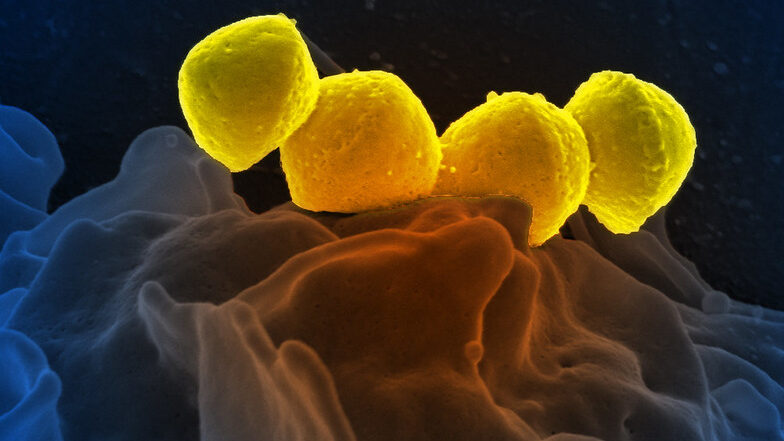
Streptococcus pyogenese bound to a human neutrophil. Credit: National Institute of Allergy and Infectious Diseases, National Institutes of Health
Bordering on science fiction, medicinal microrobots could help physicians better treat and prevent diseases. But a serious problem is the synthetic materials they are made of trigger immune responses. Now, for the first time, researchers report in ACS Central Science that they achieved precise control neutrophils as a natural, biocompatible microrobot by using lasers. By getting the ‘neutrobots’ to perform multiple tasks, the researchers demonstrated they could one day deliver drugs to precise locations in the body.
Microrobots being developed for medical applications would need to be administered in injections or oral capsules to get them inside the body. But these microscopic objects are often found to trigger immune reactions in small animals, resulting in the the microrobots being ejected from the body before they can carry out their tasks. By using the body’s own cells, such as neutrophils, drugs could be delivered less invasively without provoking an immune response.
Neutrophils already naturally pick up nanoparticles and dead red blood cells and can migrate through blood vessels into adjacent tissues, so they are good candidates for becoming microrobots. Previously, researchers have guided neutrophils with lasers in lab dishes, moving them around as ‘neutrobots’. However, this had not been tried in living animals. So, researchers set out to demonstrate the feasibility of light-driven neutrobots in animals using live zebrafish.
The researchers manipulated and moved neutrophils in zebrafish tails, using focused laser beams as optical tweezers. The ‘neutrobots’ could be moved up to a velocity of 1.3 µm/s, three times faster than a neutrophil’s natural speed. The optical tweezers were able to precisely and actively control the functions that neutrophils conduct as part of the immune system. For example, moving through a blood vessel wall into the surrounding tissue; carrying a plastic nanoparticle, showing potential for delivering medicine; and pushed towards red blood cell debris, a neutrophil engulfed the pieces. Surprisingly, at the same time, a different neutrophil, which wasn’t controlled by a laser, tried to naturally remove the cellular debris. Because they successfully controlled neutrobots in vivo, the researchers say this study advances the possibilities for targeted drug delivery and precise treatment of diseases.
About a third of people with psoriasis develop inflammation in their joints (psoriatic arthritis) as a result of the chronic skin condition. Research published in Annals of the Rheumatic Diseases has now discovered a key starting point for inhibiting inflammation in both psoriasis and psoriatic arthritis. These findings may lead to major new developments for treatment, diagnostic and prevention strategies.
The study conducted by the research group led by Erwin Wagner at the Medical University of Vienna focused on the S100A9 gene. The team has discovered that the severity of psoriasis (Ps) and psoriatic arthritis (PsA) can be reduced by inhibiting S100A9 systemically throughout the whole body rather than locally on the skin.
With this finding, the researchers are laying the foundation for a paradigm shift in the treatment of Ps and PsA: “Our study is an important step towards the development of targeted therapeutic options in the form of drugs that act systemically rather than locally on the skin,” affirms Erwin Wagner. New diagnostic and prevention strategies can also build on the study.
Psoriasis, typically an adult-onset disease, have triggers such as stress and UV radiation. There can also be a genetic predisposition to developing Ps. S100A9 activation in skin and immune cells has been identified as a risk factor for the development of Ps and/or PsA.
Previous work by Erwin Wagner’s team showed that the symptoms of psoriasis disappear when the S100A9 gene is deactivated in all of the body’s cells. Their recent preclinical experiments highlighted the particular influence that those skin and immune cells in which S100A9 is produced have on disease severity. “We now know that the inflammatory responses in psoriasis and psoriatic arthritis are enhanced when S100A9 is only inhibited in skin cells,” Erwin Wagner explained. Therefore drugs inhibiting S100A9 would have to be administered systemically in the form of tablets or drips
In 2016, Spinraza® became the by the first FDA-approved treatment for spinal muscular atrophy (SMA). This neurodegenerative disease is the leading genetic cause of infant death. The drug was conceived and developed by Cold Spring Harbor Laboratory (CSHL) Professor Adrian Krainer and collaborators. But Prof Krainer’s lab continued to try and improve Spinraza® could be improved, in collaboration with Alberto Kornblihtt at Universidad de Buenos Aires. They discovered pairing Spinraza® with a second FDA-approved drug called valproic acid (VPA) could be a new way to boost its therapeutic effects, without increasing toxic side effects.
Prof Krainer explained: “Sometimes you don’t want to use a ton of a drug. If you have a condition that allows you to use less drug, then you may have fewer toxicities. So the idea is to combine these two drugs to get maximal effects.”
In SMA, the body produces insufficient amounts of a protein called SMN. Spinraza® is a type of molecule called an antisense oligonucleotide (ASO) that helps cells make more SMN protein from a gene called SMN2. Roadblocks were discovered on the SMN2 gene when using Spinraza®, slowing down the cellular machine producing SMN protein. The drug VPA helps remove these roadblocks, allowing Spinraza® to further increase the SMN protein output. When mice with SMA were treated with both VPA and a Spinraza®-like ASO used for research, the mice survived longer, with improved muscle function.
To date, more than 11 000 SMA patients have been treated with Spinraza® in more than 50 countries. Prof Krainer’s latest research shows that there’s always room for improvement. He hopes the team’s findings will help optimize the efficacy of Spinraza® treatments, and hopes their work will help the development of treatments for other neurodegenerative diseases.
Healthcare workers are among the 20% of the world’s population who do shift work. Shift workers’ differing sleep-wake cycle is a risk factor for numerous health disorders, including diabetes, heart attacks, cancer and strokes.
Now, new research published in Neurobiology of Sleep and Circadian Rhythms shows the adverse effects of shift work can be long-lasting, even after returning to a normal schedule.
“Shift work, especially rotating shift work, confuses our body clocks and that has important ramifications in terms of our health and well-being and connection to human disease,” said Professor David Earnest at the Texas A&M University College of Medicine. “When our internal body clocks are synchronized properly, they coordinate all our biological processes to occur at the right time of day or night. When our body clocks are misaligned, whether through shift work or other disruptions, that provides for changes in physiology, biochemical processes and various behaviours.”
A previous study done by Earnest and colleagues found that animal models on rotating shift work schedules had more severe stroke outcomes, than those on regular 24-hour cycles of day and night. Males were distinguished by worse outcomes in which mortality rates were much higher.
This new study took a different approach. Rather than examining immediate effects of shift work on strokes, the researchers returned all subjects to regular 24-hour cycles and waited until their midlife equivalent – when humans are most likely to experience a stroke – to evaluate stroke severity and outcomes.
“What was already born out in epidemiological studies is that most people only experience shift work for five to eight years and then presumably go back to normal work schedules,” Prof Earnest said. “We wanted to determine, is that enough to erase any problems that these circadian rhythm disruptions have, or do these effects carry over even after returning to normal work schedules?”
They found that the health impacts of shift work do, indeed, persist over time. The sleep-wake cycles of subjects on shift work schedules never truly returned to normal, even after subsequent exposure to a regular schedule. Compared to controls maintained on a regular day-night cycle throughout the study, they displayed persistent alterations of their sleep-wake rhythms, with periods of abnormal activity when sleep would have normally occurred. When they suffered strokes, their outcomes were again much worse than the control group, except females had more severe functional deficits and higher mortality than the males.
“The data from this study take on added health-related significance, especially in females, because stroke is a risk factor for dementia and disproportionately affects older women,” said Professor Farida Sohrabji.
The researchers also observed increased levels of inflammatory mediators from the gut in subjects exposed to a shift work schedule. “We now think that part of the underlying mechanism for what we’re seeing in terms of circadian rhythm disruption causing more severe strokes may involve altered interactions between the brain and gut,” Prof Earnest said.
The results of this study could eventually lead to the development of interventions that block adverse effects of disrupted circadian rhythms. In the meantime, shift workers can improve care of their internal body clocks by trying to maintain a regular schedule as much as possible and avoiding a high-fat diets, which can cause inflammation and also alter the timing of circadian rhythms.
This research has clear implications for shift workers, but it could extend to many other people who keep schedules that differ greatly from day to day. Modern work has also extended the work day thanks to email and the internt.
“Because of the computer age, many more of us are no longer working from nine to five. We take our work home and sometimes work late at night,” Prof Earnest said. “Even those of us who do work regular schedules have a tendency to stay up late on the weekends, producing what is known as ‘social jet lag,’ which similarly unwinds our body clocks so they no longer keep accurate time. All this can lead to the same effects on human health as shift work.”