Tag: tobacco

Memory Loss and Confusion More Common among Middle-aged Smokers

Photo by Elsa Olofsson on Unsplash

Middle-aged smokers are much more likely to report having memory loss and confusion than nonsmokers, and the likelihood of cognitive decline is lower for those who have quit, even recently, according to a new study appearing in the Journal of Alzheimer’s Disease.

The study is the first to examine the relationship between smoking and cognitive decline using a one-question self-assessment asking people if they’ve experienced worsening or more frequent memory loss and/or confusion.

The findings build on previous research that established relationships between smoking and Alzheimer’s Disease and other forms of dementia, and could point to an opportunity to identify signs of trouble earlier in life, said Jenna Rajczyk, lead author of the study.

It’s also one more piece of evidence that quitting smoking is good not just for respiratory and cardiovascular reasons, but to preserve neurological health, said Rajczyk, a PhD student in Ohio State’s College of Public Health, and senior author Jeffrey Wing, assistant professor of epidemiology.

“The association we saw was most significant in the 45–59 age group, suggesting that quitting at that stage of life may have a benefit for cognitive health,” Wing said. A similar difference wasn’t found in the oldest group in the study, which could mean that quitting earlier affords people greater benefits, he said.

Researchers used data from the 2019 Behavioral Risk Factor Surveillance System Survey to compare subjective cognitive decline (SCD) measures for current smokers, recent former smokers, and those who had quit years earlier. The analysis included 136 018 people 45 and older, and about 11% reported SCD.

The prevalence of SCD among smokers in the study was almost 1.9 times that of nonsmokers. The prevalence among those who had quit less than 10 years ago was 1.5 times that of nonsmokers. Those who quit more than a decade before the survey had an SCD prevalence just slightly above the nonsmoking group.

“These findings could imply that the time since smoking cessation does matter, and may be linked to cognitive outcomes,” Rajczyk said.

The simplicity of SCD, a relatively new measure, could lend itself to wider applications, she said.

“This is a simple assessment that could be easily done routinely, and at younger ages than we typically start to see cognitive declines that rise to the level of a diagnosis of Alzheimer’s Disease or dementia,” Rajczyk said. “It’s not an intensive battery of questions. It’s more a personal reflection of your cognitive status to determine if you’re feeling like you’re not as sharp as you once were.”

Many people don’t have access to more in-depth screenings, or to specialists, making the potential applications for measuring SCD even greater, she said.

Wing said it’s important to note that these self-reported experiences don’t amount to a diagnosis, nor do they confirm independently that a person is experiencing decline out of the normal ageing process. But, he said, they could be a low-cost, simple tool to consider employing more broadly.

Source: Ohio State University

Emphysema Found to be More Common in Marijuana Smokers

Anatomical model of lungs
Photo by Robina Weermeijer on Unsplash

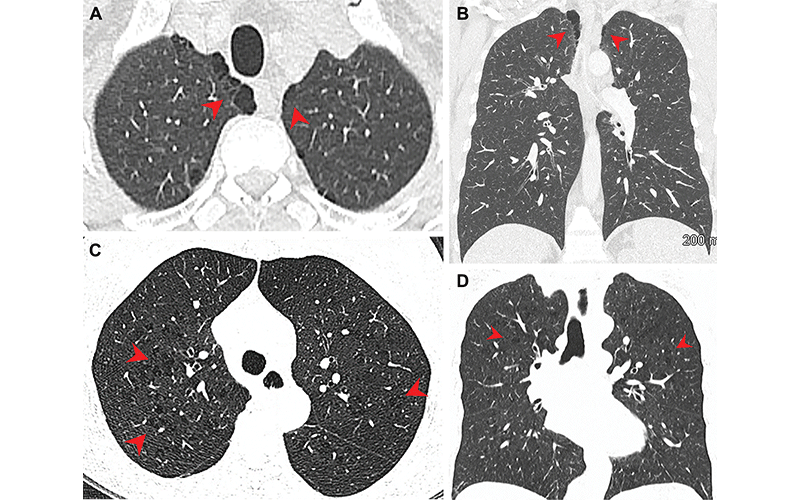
Airway inflammation and emphysema are more common in marijuana smokers than cigarette smokers, according to a study published in Radiology. Researchers said the difference may be due to the way that marijuana is smoked, which is usually inhaled more deeply and without a filter.

Marijuana is one of the most widely used psychoactive substances in the world and the most-commonly smoked substance after tobacco. Its use has increased in recent years amid legalisation of recreational marijuana in many countries. The growing use has created an urgent need for information on marijuana’s effects on the lungs, something that is currently lacking.

“We know what cigarettes do to the lungs,” said study author Giselle Revah, MD, a cardiothoracic radiologist and assistant professor at the University of Ottawa. “There are well researched and established findings of cigarette smoking on the lungs. Marijuana we know very little about.” 

To find out more, Dr Revah and colleagues compared chest CT results from 56 marijuana smokers with those of 57 non-smoking controls and 33 tobacco-only smokers.

Pulmonary emphysema in (A, B) marijuana and (C, D) tobacco smokers. (A) Axial and (B) coronal CT images in a 44-year-old male marijuana smoker show paraseptal emphysema (arrowheads) in bilateral upper lobes. (C) Axial and (D) coronal CT images in a 66-year-old female tobacco smoker with centrilobular emphysema represented by areas of centrilobular lucency (arrowheads). (Murtha, et al.)

Lack of filtering partly to blame

Three-quarters of the marijuana smokers had emphysema, a lung disease that causes difficulty with breathing, compared with 67% of the tobacco-only smokers. Only 5% of the non-smokers had emphysema. Paraseptal emphysema, which damages the tiny ducts that connect to the air sacs in the lungs, was the predominant emphysema subtype in marijuana smokers compared to the tobacco-only group.

Airway inflammation was also more common in marijuana smokers than non-smokers and tobacco-only smokers, as was gynecomastia, enlarged male breast tissue due to a hormone imbalance. Gynecomastia was found in 38% of the marijuana smokers, compared with 11% of the tobacco-only smokers and 16% of the controls. 

The researchers found similar results among age-matched subgroups, where the rates of emphysema and airway inflammation were again higher in the marijuana smokers than the tobacco-only smokers.

There was no difference in coronary artery calcification between age-matched marijuana and tobacco-only groups.

Dr. Revah said the results were surprising, especially considering that the patients in the tobacco-only group had an extensive smoking history.

“The fact that our marijuana smokers – some of whom also smoked tobacco – had additional findings of airway inflammation/chronic bronchitis suggests that marijuana has additional synergistic effects on the lungs above tobacco,” she said. “In addition, our results were still significant when we compared the non-age-matched groups, including younger patients who smoked marijuana and who presumably had less lifetime exposure to cigarette smoke.” 

The reasons for the differences between the two groups is likely due to several factors. Marijuana is smoked unfiltered, Dr Revah noted, while tobacco cigarettes are usually filtered. This results in more particulates reaching the airways from smoking marijuana.

In addition, marijuana is inhaled with a longer breath hold and puff volume than tobacco smoke.

“It has been suggested that smoking a marijuana joint deposits four times more particulates in the lung than an average tobacco cigarette,” Dr Revah said. “These particulates are likely airway irritants.”

The higher incidence of emphysema may also be due to the way that marijuana is smoked. Full inhalation with a sustained Valsalva manoeuvre, an attempt at exhalation against a closed airway, may lead to trauma and peripheral airspace changes. 

More research is needed, Dr Revah said, with larger groups of people and more data on how much and how often people are smoking. Future research could also look at the impact of different inhalation techniques, such as through a bong, a joint or a pipe.

“It would be interesting to see if the inhalation method makes a difference,” Dr Revah said.

For More Information

Read the Radiology study, “Chest CT Findings in Marijuana Smokers,” and the related editorial.

Source: Radiological Society of North America

Falling Pregnant Unconsciously Curbs Smoking

pregnant woman holding her belly
Source: Anna Hecker on Unsplash

Pregnant smokers reduced their smoking by an average of one cigarette per day before becoming aware they were pregnant, according to a new study in in Addiction Biology. In the month after learning of their pregnancy, participants reduced smoking by another four cigarettes per day.

“Our findings suggest that pregnancy could curb smokers’ desire to smoke before they are even aware of having conceived,” said the study’s lead author and principal investigator, Dr Suena Huang Massey, associate professor of psychiatry and behavioural sciences and medical social sciences at Northwestern University Feinberg School of Medicine.

“While recognition of pregnancy is a common motivation to reduce or quit smoking, if biological processes in early pregnancy are also involved as suggested by this study, identifying precisely what these processes are can lead to the development of new smoking-cessation medications.”

The vast majority of research in this field focuses on the impact of a person’s smoking on the pregnancy and the baby. This study examines, instead, the impact of pregnancy on a person’s smoking behaviour.

Though it is well known that smoking is reduced in pregnancy, it was not known when it started and whether the smokers knew they were pregnant.

“Before this paper, it was largely assumed that the only thing causing pregnant smokers to cut down was a desire to protect the baby,” Dr Massey said. “While our study does support the discovery of pregnancy as a salient event, levels of pregnancy smoking began to decline before smokers suspected they were pregnant.”

These findings support a new line of research into what happens biologically during pregnancy that might be interrupting addictive behaviours, Massey said. Her hope is that the answer to this question will lead to the discovery of new and improved ways to treat addiction.

Pregnancy hormones a contributing factor?

Human chorionic gonadotropin (hCG) is a hormone produced by the placenta in early pregnancy that is linked to morning sickness (nausea and vomiting during pregnancy).

“Strikingly, we observed the steepest declines in smoking precisely when hCG levels typically peak – between five and 10 weeks of pregnancy,” Massey said. “What’s more, pregnant smokers who do not quit during the first trimester (when hCG levels are elevated) are unlikely to quit before delivery, even with assistance from medications or financial incentives.”

Study methodology

Scientists estimated changes in cigarettes per day smoked, reported retrospectively, by 416 participants from two independent cohorts (145 from 2000 to 2005 and 271 from 2006 to 2009). Every participant was a smoker prior to becoming pregnant. Women in the study were interviewed about their smoking habits at 16 weeks of pregnancy and provided urine samples, so researchers could verify their reports.

On average, participants smoked about 10 cigarettes per day before conception. Between conception and the date they realised they were pregnant (highly variable and reported by each participant), smoking fell by an average of one cigarette per day. In the month after recognising the pregnancy, smoking dropped from an average of 9 cigarettes per day to five. Importantly, these declines were seen whether pregnancies were planned or unplanned, and whether smokers quit or did not quit.

Source: Northwestern University

Social Media Viewing of Tobacco Content Linked to Use

Photo by Freestocks on Unsplash

People who have viewed tobacco content on social media are more than twice as likely than non-viewers to report using tobacco and, among those who have never used tobacco, more predisposed to use in the future.

A meta-analysis of 29 studies published in JAMA Pediatrics analysed data from a total of 139 624 participants. The study draws on data across age groups, countries, content types and platforms and is the first large-scale effort linking social media content to tobacco use.

“We casted a wide net across the tobacco and social media literature and synthesised everything into a single association summarising the relationship between social media exposure and tobacco use,” said Scott Donaldson, PhD, the study’s first author. “What we found is that these associations are robust and have public health implications at the population level.”

The findings come amid growing concerns about the potential harms of social media use, particularly among young people. They build a compelling argument that online tobacco content has the power to influence viewers’ offline tobacco use.

“The proliferation of social media has offered tobacco companies new ways to promote their products, especially to teens and young adults,” said Assistant Professor Jon-Patrick Allem, the paper’s senior author. “Our hope is that policymakers and other stakeholders can use our study as a basis for decision making and action.”

Effects across age, content type and platform

Compared to those not reporting exposure tobacco content, people who did report exposure were more than twice as likely to use tobacco in their lifetime, to have used it in the past 30 days, or to be susceptible to future tobacco use if they had never used tobacco before.

“Of particular importance is the fact that people who had never before used tobacco were more susceptible,” Prof Allem said. “This suggests that exposure to tobacco-related content can pique interest and potentially lead nonusers to transition to tobacco use.”

The sample included populations from across the United States, India, Australia, and Indonesia. Adolescents made up 72% of the participants, while young adults and adults accounted for 15% and 13%, respectively.

Tobacco content included both ‘organic’ or user-generated posts, such as videos of friends smoking or vaping, and promotional material, including advertising or sponsorships from tobacco companies. Items depicted in posts ranged from cigarettes and e-cigarettes to cigars, hookah and smokeless tobacco products. Tobacco content appeared on a range of social media platforms, including Facebook, Instagram, Twitter, YouTube, Snapchat, Pinterest and Tumblr.

Both active engagement with tobacco content (eg commenting or liking) and passive engagement (just viewing) were associated with lifetime use, recent use and susceptibility to future use. People who saw content on two or more social media platforms faced even higher odds of use or susceptibility to use than those who saw tobacco-related content on just one platform.

The researchers suggest that future research should use longitudinal or experimental designs to determine whether exposure to tobacco content on social media directly leads to tobacco use. As the data in meta-analysis was drawn mostly from surveys conducted at a single point in time, a causal relationship between viewing and use could not be established.

Preventing harm from tobacco content

The study’s authors point to three levels of action that can help address the abundance of tobacco content on social media.

“First of all, we can work on designing and delivering interventions that counter the influence of pro-tobacco content, for example by educating teens about how the tobacco industry surreptitiously markets its products to them,” Allem said.

Social media platforms can also implement safeguards to protect users, especially young people, from tobacco content, for instance by including warning labels on posts that include tobacco-related terms or images. At the federal level, regulators might also choose to place stricter limits on the way tobacco companies are permitted to promote their products online.

The researchers next plan to explore the effectiveness and reach of social media tobacco prevention campaigns. They also aim to delve deeper into specific platforms used by young people, such as TikTok, and investigate how tobacco-related videos can impact susceptibility.

Source: University of Southern California

Despite Smoking Less, Women Find it Harder to Quit

Source: Pawel Czerwinski on Unsplash

A large study has found that women smoke fewer cigarettes than men but are less likely to quit.

Study author Ms Ingrid Allagbe, PhD student at the University of Burgundy, said: “In our study, women who used smoking cessation services had higher rates of overweight or obesity, depression, and anxiety compared to men and kicked the habit less often. Our findings highlight the need to provide smoking cessation interventions tailored to the needs of women.”

This study, presented at ESC Congress 2021, compared characteristics and abstinence rates of men and women visiting smoking cessation services between 2001 and 2018 in France, obtained from a nationwide database. The participants were smokers with at least one additional risk factor for cardiovascular disease: overweight/obese (body mass index [BMI] 25 kg/m² or above); high cholesterol; diabetes; high blood pressure; history of stroke, heart attack or angina.

Participants were classified as having mild, moderate, or severe nicotine dependence. Smoking abstinence (at least 28 consecutive days) was self-reported and confirmed by measurement of exhaled carbon monoxide less than 10 parts per million (ppm).

Participant height, weight, age, education level, chronic conditions, and number of cigarettes smoked each day were recorded. Participants were classified as having anxiety and depression symptoms or not according to their medical history, use of anti-anxiety medication or antidepressants, and the Hospital Anxiety and Depression Scale (HADS).

A total of 37 949 smokers were included in the study, of whom 43.5% were women. The average age of women in the study was 48 years, while the average age of men was 51 years. More women (55%) reported a bachelor’s degree level of education or higher compared to men (45%).

Both men and women had a high burden of cardiovascular risk factors. High cholesterol was more common in men (33%) than women (30%), as was high blood pressure (26% vs 23%, respectively) and diabetes (13% vs 10%, respectively).

Women were more likely (27%) to be overweight or obese compared to men (20%), and more likely (37.5%) to have symptoms of anxiety or depression than men (26.5%). Chronic obstructive pulmonary disease was more common in women (24%) compared to men (21%) as was asthma (16% vs 9%, respectively).

However, women smoked fewer cigarettes per day (23) than men (27). Severe nicotine dependence was less common, 56% of women compared to 60% of men, and abstinence was less common in women (52%) than men (55%).

Ms Allagbe said: “The findings suggest that despite smoking fewer cigarettes and being less nicotine dependent than men, women find it more difficult to quit. Possible contributors could be the higher prevalence of anxiety, depression and overweight or obesity among women. It has previously been reported that women may face different barriers to smoking cessation related to fear of weight gain, sex hormones, and mood.”

She concluded: “The results indicate that comprehensive smoking cessation programmes are needed for women that offer a multidisciplinary approach involving a psychologist, dietitian, and physical activity specialist.”

Source: European Society of Cardiology

Angioplasty Needed by Smokers 10 years Before Non-smokers

Photo by Elsa Olofsson on Unsplash

Smokers needed their blocked arteries fixed nearly 10 years earlier than non-smokers, and patients with obesity underwent these procedures four years earlier than non-obese patients, according to a new US study.

Angioplasty is a nonsurgical procedure that opens clogged or narrow coronary arteries. The procedure involves inserting an inflatable balloon-tipped catheter through the skin in extremities and then inflating the balloon once it reaches the stenosed arterial site. The balloon pushes the atherosclerotic intraluminal plaque against the arterial wall and restores the luminal diameter, and so restores blood flow to the heart muscle.

The study included patients with no heart attack history, treated at hospitals across Michigan. The patients had all undergone angioplasty and/or stenting to widen or unblock their coronary arteries and restore blood flow. Nearly all of them had at least one traditional risk factor, including smoking, obesity, high blood pressure, high cholesterol and diabetes. Most patients had three or more.

Furthermore, compared to men, women generally had their first procedure at a later age. Over the past ten years, among patients undergoing their first angioplasty or stent procedure, obesity and diabetes rates have increased, while smoking and high cholesterol have decreased.

“Smoking is a completely preventable risk factor,” said senior author Devraj Sukul, MD, MSc, an interventional cardiologist and a clinical lecturer at the University of Michigan Health Frankel Cardiovascular Center. “If we direct additional efforts at preventing smoking and obesity we could significantly delay the onset of heart disease and the need for angioplasty and stenting.”

“In Michigan, we will work to help every smoker quit at the time of cardiac care because it is an unmatched teachable moment for patients,” said Michael Englesbe, M.D., a surgeon and professor at Michigan Medicine who serves as portfolio medical director for the Collaborative Quality Initiatives.

Source: Medical Xpress

Journal information: Zoya Gurm et al, Prevalence of coronary risk factors in contemporary practice among patients undergoing their first percutaneous coronary intervention: Implications for primary prevention, PLOS ONE (2021). DOI: 10.1371/journal.pone.0250801

Tobacco Industry Linked to Disproven COVID ‘Protective Effect’ of Nicotine

Photo by Sara Kurfeß on Unsplash

An investigation by The BMJ uncovered undisclosed financial links between certain authors and the tobacco and e-cigarette industry in a number of COVID research papers, which had suggested that smokers were less likely to develop COVID. 

In April 2020, two French studies (in preprint and not yet peer reviewed) suggested that nicotine might have a protective effect against COVID, which was coined the ‘nicotine hypothesis’.

The studies were reported on widely by the media, causing fears that it could undermine decades of tobacco control. What should have been an opportunity for promoting cessation of this practice which every year kills five million people around the world.

Since then, the ‘nicotine hypothesis’ has been soundly disproved, with several studies showing that, to the contrary, smoking is associated with an increased chance of COVID related death.

Journalists Stéphane Horel and Ties Keyze investigated the circumstances of these reports. They pointed out that one of the study authors, Professor Jean-Pierre Changeux, has a history of receiving funding from the Council for Tobacco Research, whose purpose was to fund research that would cast doubt on the dangers of smoking and focus on the positive effects of nicotine.

From 1995 to 1998, documents from the tobacco industry show that Changeux’s laboratory received $220,000 (£155,000; €180,000) from the Council for Tobacco Research.

When approached by The BMJ, Changeux assured them that he has not received any funding linked “directly or indirectly with the tobacco industry” since the 1990s.

In late April 2020, Greek researcher Konstantinos Farsalinos was the first to publish the ‘nicotine hypothesis’ formally in a journal, in an editorial in Toxicology Reports.

That journal’s editor in chief, Aristidis Tsatsakis was a co-author, as was A Wallace Hayes, who in 2013 had been a member of Philip Morris International’s scientific advisory board, and had served as a paid consultant to the tobacco company.

Another co-author is Konstantinos Poulas, head of the Molecular Biology and Immunology Laboratory at the University of Patras, where Farsalinos is affiliated.

The laboratory has been receiving funding from Nobacco, the market leader in Greek e-cigarettes and the exclusive distributor of British American Tobacco’s nicotine delivery systems since 2018. However, in their published scientific articles, neither Farsalinos nor Poulas had ever declared this Nobacco funding.

Yet the journalists showed that two grants were attributed in 2018 by the Foundation for a Smoke Free World—a non-profit established by tobacco company Philip Morris International in 2017—to ‘Patras Science Park’.

The grants, which according to tax documents came close to €83 000, went to NOSMOKE, a university start-up incubator headed by Poulas, which markets an ‘organic’ vaping product.

Last month, the European Respiratory Journal retracted a paper with Poulas and Farsalinos as co-authors, after two other authors failed to disclose conflicts of interest.

The retracted article had found that “current smoking was not associated with adverse outcome” in patients admitted to hospital with COVID, and it claimed that smokers had a significantly lower risk of acquiring the virus.

The foundation has invested heavily in the COVID/nicotine hypothesis, said Horel and Keyzer.

In June 2020 it set aside €900 000 for research “to better understand the associations between smoking and/or nicotine use, and COVID-19 infection and outcome.”

Its request stated that the pandemic offered “both an opportunity and a challenge for individuals to quit smoking or transition to reduced risk nicotine products.”

They concluded that, in 2021, “amid a global lung disease pandemic, tobacco industry figures are increasingly pushing the narrative of nicotine as the solution to an addiction that they themselves created, with the aim of persuading policy makers to give them ample room to market their “smoke-free” products. This makes studies on the hypothetical virtues of nicotine most welcome indeed.”

Source: Medical Xpress

Article information: Covid 19: How harm reduction advocates and the tobacco industry capitalised on the pandemic to promote nicotine, The BMJ, DOI: 10.1136/bmj.n1303 , www.bmj.com/content/373/bmj.n1303

Recreational Substances Including Cannabis Linked to Heart Disease

Alcohol, tobacco and cannabis are among recreational drugs that contribute to early-onset atherosclerotic cardiovascular disease (ASCVD) in young people, a study has found.

The study drew on data of more than a million people receiving primary care services throughout the VA Healthcare System in 2014 or 2015, of whom there were 135 703 with premature ASCVD.

A number of independent predictors for first-event ASCVD for men (from age 55) and women (from 65) were picked up. Tobacco (adjusted odds ratio [OR] 1.97) and alcohol use (OR 1.50)  conferred significant additional risk, but the greatest risk increase of generally legal substances was cannabis use (OR 2.65). Cocaine use (OR 2.44), amphetamine use (OR 2.74) and other drug use (OR 2.53) all had very high risk increases.

Those using four or more substances had the greatest risk at nearly nine times normal. Women also had much stronger effect sizes for premature ASCVD than men.

In an accompanying editorial Anthony Wayne Orr, PhD, and colleagues at LSU Health Shreveport, wrote: “Substance use disorders have been associated with an acceleration of the ageing process. We are only young once, and we should do everything in our power to maintain that state as long as we can.”

The editorialists suggested a nationwide ASCVD education campaign targeting people with substance use disorders.

“In addition, clinicians and primary care providers should begin screening their adult and young adult patients with a history of a substance use disorder for symptoms of premature or extremely premature ASCVDs at earlier stages in their patients’ lives,” suggested the editorialists.

Limitations included it being an observational study, lack of socioeconomic data and the cohort being mostly white males, as well as not being able to discern between prescription and recreational amphetamine use.
“Retrospective studies are limited by the available data. While this study supports the association between substance use disorder and early-onset ASCVD, the effect of substance use frequency, dose, and duration cannot be reliably ascertained in this patient sample,” the editorialists stated.

The editorialists recommended that specific biomarkers for substance use-associated cardiovascular disease be identified, and therapeutic window characterised to limit these chronic effects of substance use disorder.

Source: MedPage Today

Journal information: Mahtta D, et al “Recreational substance use among patients with premature atherosclerotic cardiovascular disease” Heart 2021; DOI: 10.1136/heartjnl-2020-318119.

Editorial information: Scott ML, et al “Young at heart? Drugs of abuse cause early-onset cardiovascular disease in the young” Heart 2021; DOI: 10.1136/heartjnl-2020-318856.