

Monitoring After Syncope Identifies Cardiovascular Conditions
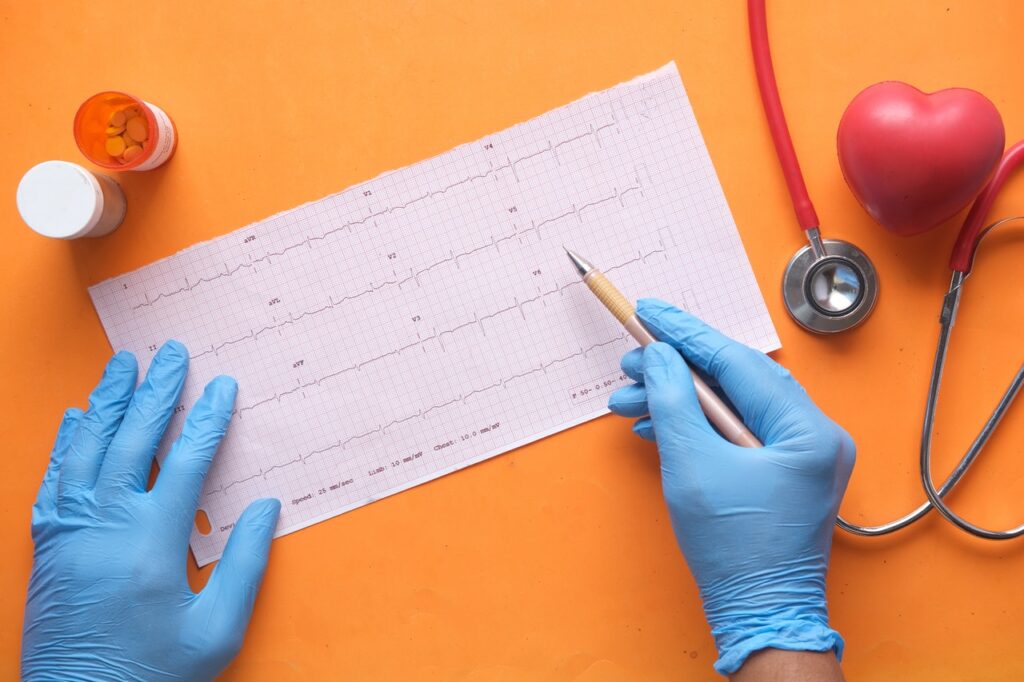
Fitting a wearable heart monitor for 14 days when patients go to A&E (accident & emergency) with unexplained fainting improves the detection of life-threatening heart problems, a study shows.
Using the two-week monitor more than doubled the detection rate of heart rhythm problems. After one year, heart rhythm problems were identified in 22% of the monitor group compared with 9% of those who received standard care.
The death rate after one year in the two-week monitoring group, at 1.5%, was almost half that of the standard care group, at 2.9%.
The reduction in death rate is strong evidence that the new strategy can save lives, experts say.
Difficult diagnosis
Around 650 000 people visit A&E with unexplained fainting each year in the UK. Although the cause is often harmless, fainting episodes can be a sign of abnormal heart rhythms – known as arrhythmias – which can be dangerous.
Arrhythmias in these patients are hard to diagnose. People who have fainted have usually recovered by the time they reach A&E, meaning their heart rhythm has likely returned to normal, and tests won’t show any abnormalities.
Currently, patients with unexplained fainting are referred for tests such as a Holter monitor – a small wearable device that records the heart’s rhythm. However, a Holter monitor is usually only worn for 48 hours, so can only identify an arrhythmia in this small window.
Patients must also attend an outpatient cardiology clinic first, meaning that monitoring is done at any point from six weeks to two years after they attend A&E.
Earlier monitoring
The new heart monitor is smaller – about the size of a car key fob – and is worn in the middle of the chest. It can be worn continuously for the two-week period.
The University of Edinburgh-led research team studied 2234 people who attended UK A&E departments with unexplained fainting. Half of the study volunteers were fitted with the new monitor, while the other half received the current standard monitoring.
Data from the monitors were sent to clinicians after the two-week monitoring period, who then determined whether their recordings showed signs of an arrhythmia and if treatment was needed. If the monitor picked up a serious arrythmia, the patient’s clinician was alerted within 24 working hours.
We were able to begin patient monitoring within 72 hours of people arriving at A&E, which is much faster than the current standard. Continuous data on a patient’s heart rhythm for two weeks is invaluable to cardiologists when they are trying to diagnose an arrhythmia. As the results show, more patients with hidden heart rhythm problems were identified, and their treatment could be sped up.
We believe that the lower death rate seen for this group is strong evidence that this new strategy can save lives. Hopefully it will be adopted by hospitals across the country, so that fewer people with a potentially life-threatening condition slip through the net.
Professor Matthew ReedStudy lead and Honorary Professor of Emergency Medicine at the Usher Institute
Faster treatment
Arrhythmias were identified in an average of 22 days in those with chest-worn monitors, compared to 54.5 days with standard care. This included life-threatening arrhythmias like complete heart block and a pause in the heartbeat of over six seconds.
As a result of increased and quicker detection, more people who used the chest-worn monitor started treatment for their arrhythmia.
For the monitoring group, 10.8 per cent were given anti-arrhythmic medication and 6.8 per cent had a pacemaker implanted, versus 7.3 per cent and 4.6 per cent respectively for the standard care group.
Experts hope that the strategy will become standard practice in the NHS now it has been shown to help doctors treat dangerous heart problems and reduce death rates.
This large trial is a good example of how BHF investment in research can drive life-changing innovations in healthcare. The study shows that monitoring the heart with simple new technology after a patient has had a sudden collapse can identify potentially life-threatening disturbances in heart rhythm that can be treated to reduce risk of death.
The results of this trial should certainly help inform future clinical practice when treating patients with sudden unexplained collapse in the future.
Professor Bryan WilliamsChief Scientific and Medical Officer at the British Heart Foundation
The study, funded by the British Heart Foundation, is published in the New England Journal of Medicine and being presented at the European Society of Cardiology Congress in Munich.
Read the study in the New England Journal of Medicine
Source: The University of Edinburgh

