Tag: medical training

Mistreatment at Med School Leads to Later Exhaustion, Regret

Photo by SJ Objio on Unsplash

Medical students who experienced mistreatment during medical school were more likely to become exhausted or disengaged, have less empathy, and have career regret, a new study has revealed.

Among a large national sample of trainees, the 22.9% of respondents who reported mistreatment on the Association of American Medical Colleges’ Medical School Year 2 Questionnaire (Y2Q) had higher exhaustion and disengagement scores on the Graduation Questionnaire (GQ) 2 years later, reported Liselotte Dyrbye, MD, of the Mayo Clinic in Rochester, Minnesota, and colleagues writing in JAMA Network Open.

Furthermore, of those who had experienced mistreatment, 18.8% reported career regret on the GQ.

Conversely, medical students who experienced a better environment more likely to:

Have lower exhaustion scores: for each 1-point increase on the Y2Q, there was a 0.05 reduction in exhaustion score
Report lower disengagement scores on the GQ: for each 1-point increase on the Y2Q, there was a 0.04 reduction in disengagement score
Further, reports of having positive interactions with faculty on the Y2Q were associated with higher empathy scores on the GQ. For each 1-point increase, there was a rise of 0.02 in empathy score. Positive student-to-student interactions were linked to having lower odds of career regret during the last year of medical school.

“The potential protective effect of positive experiences within the learning environment may provide insight into strengths that organizations can amplify to mitigate burnout, decline in empathy, and career choice regret among their students,” wrote Dyrbye and colleagues.

The team noted the opportunity for potential interventions. “Although the most effective approaches to addressing mistreatment of learners remain elusive, the frequency of mistreatment varies between educational programs, suggesting there are likely to be levers within the control of the organisation that adequate commitment, leadership, infrastructure, resources, and accountability can lead to a meaningful reduction in mistreatment.”

Average age of the respondents was 28 years, 52% were women, 72.8% were single, and 91% reported having no dependents. The study also found that older medical students reported higher disengagement scores, and that women reported lower exhaustion (by 0.27 points) and disengagement (by 0.47 points) scores on the GQ.

However, women and older medical students had higher empathy scores compared with their male peers (0.74 points and 0.05 points, respectively).

The researchers observed that conflicting findings on burnout among women in medicine have been reported. For example, a longitudinal cohort study of resident physicians across specialties in the US found that female residents were “more likely to develop burnout and have worsening in the severity of their emotional exhaustion between the second and third year of training compared with male residents, even after controlling for various forms of mistreatment.”

Limitations of their own study, the researchers noted, included unestablished differences between the exhaustion, disengagement, and empathy scale measures that were used in the questionnaires; and the varying response rates between questionnaires: 55.5% for the Y2Q and 81.5% for the GQ.

Source: MedPage Today

Research Shows Surgical Simulation Training Improves Performance

Photo by Tim Cooper on Unsplash

Success with independent surgical simulation training has made it the new normal for students at the Pan Am Clinic.

Traditionally, surgical resident training has been master–apprentice-type relationship, with gradually increasing responsibilities until the trainees can do procedures on their own. Given recent pressures in the health care system, including reduced operating room time, increased difficulty of procedures and working hour restrictions, there is less time for residents to learn using the traditional method.

Surgical simulation, a surprisingly old system, dates back nearly 2500 years, when they were first used to plan innovative procedures while maintaining patient safety. One of the first recorded instances of surgical simulation was the use of leaf and clay models in India around 600 BC to conceptualise nasal reconstruction with a forehead flap

In a recent study, researchers from the University of Manitoba and the Pan Am Clinic recently examined the effectiveness of a mixed reality simulator for the training of arthroscopy novices.

Study author Dr Samuel Larrivée said: “Sports surgeons at our institution noted anecdotally that junior residents had difficulty reaching competency in arthroscopic skills by the end of their three-month rotation, and were not as prepared when starting their senior rotation. There was a need to increase training opportunities outside of the operating room in order to prepare our residents for independent practice.”

Prior to obtaining the ArthroS™ simulator, the University of Manitoba Orthopedic Surgery program occasionally made use of options such as benchtop dry simulators, cadavers and an older generation simulator with active haptics. These largely complemented academic teaching sessions in small groups with some success, and were available for use by residents as needed. But, due to the low fidelity and difficult setup, few residents took advantage of it.

However, medical students readily took to the ArthroS simulator. Alisha Beaudoin, a co-author and medical student, attested to her experience using the ArthroS simulator in her early training. “I found this training to be very helpful during my surgery rotation. Many of my preceptors were impressed by my superior arthroscopic and laparoscopic skills. This training may allow students with an interest in surgery to be more prepared.

“Recently, many Canadian universities have moved to competency-based curriculums where residents must demonstrate competency prior to moving to the next defined practice level. The study noted that this is similar to the training available on VirtaMed ArthroS and that “a user enrolled in the mentoring program is progressed through various levels of training by meeting training targets, essentially providing a proficiency-based progression.”

This paper is the first in what the authors hope is a larger body of work on validating arthroscopy simulators for resident training. There are currently plans to repeat similar studies with the other modules (hip, shoulder, and ankle), with larger sample sizes, and at different levels of training.

Participants were split into three groups: simulator training only, mentor-based training, and a control. After  four weeks, surgical performance improved among both traditional and simulator-based training groups. The study concluded that “simulator training may provide enhanced skills to improve patient safety overall, as residents may become more skilled earlier in their training, leaving more time for the mentor to teach more advanced skills.” Dr Beaudoin further explains: “I believe that simulation training should be introduced into the standardised curriculum because I believe it offers a safe space to hone your skills and improve in a stress-free environment.”

On the strength of the results, the residency programme has made it a requirement in the curriculum that residents in their sports rotation complete the self-learning modules. Dr Larrivée believes this will help residents develop their triangulation skills and memorise the steps ahead of their first surgery, and to consolidate their knowledge.

Source: VirtaMed

Indian Medical Trainee Exams Postponed to Boost Personnel

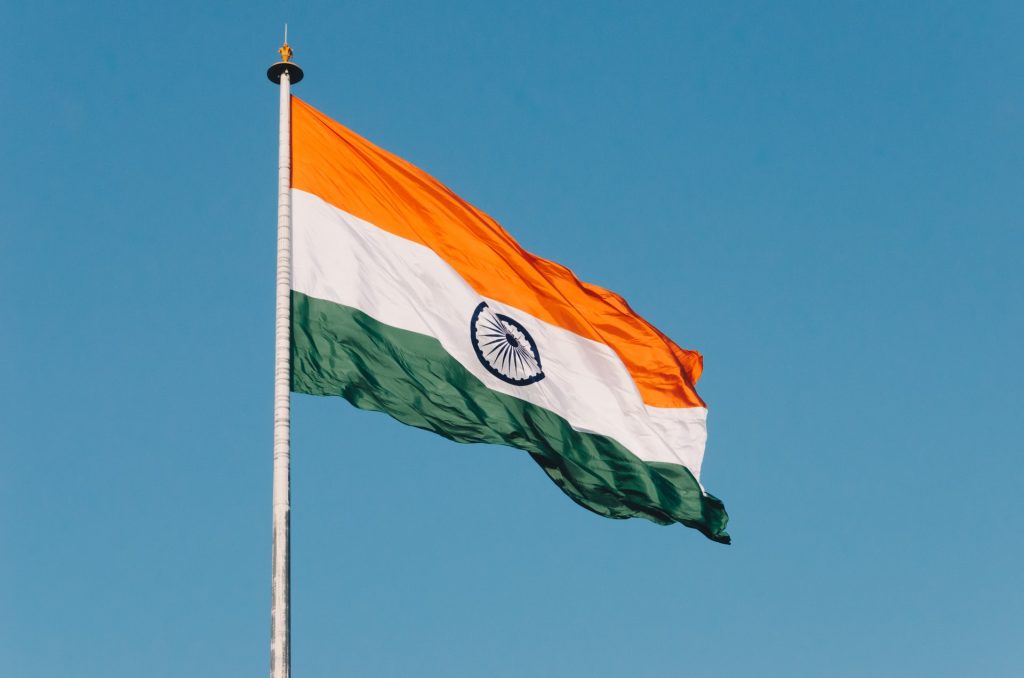
Indian flag. Photo by Naveed Ahmed on Unsplash

India postponed exams for trainee doctors and nurses on Monday, freeing them up to fight the world’s biggest surge in COVID infections, as the health system buckles under the weight of new cases, and a lack of beds and oxygen.

The total number of infections so far rose to just short of 20 million, propelled by a 12th straight day of more than 300 000 new cases.

Actual numbers in India could be five to 10 times higher than those reported, according to medical exports.

Hospitals have been overloaded, oxygen has run short, and morgues and crematoriums have struggled with the number of corpses. 
“Every time we have to struggle to get our quota of our oxygen cylinders,” said BH Narayan Rao, a district official in the southern town of Chamarajanagar, where 24 COVID patients died, some suspected from lack of oxygen.

“It’s a day-to-day fight,” added Rao, describing the struggle for supplies.

In many cases, volunteer groups have come to the rescue. Outside a temple in India’s capital, New Delhi, Sikh volunteers provided oxygen to patients lying on benches inside makeshift tents, hooked up to a giant cylinder. A new patient would come in every 20 minutes.

“No one should die because of a lack of oxygen. It’s a small thing otherwise, but nowadays, it is the one thing every one needs,” Gurpreet Singh Rummy, who runs the service, told Reuters.

Offering a glimmer of hope, the country’s health ministry said that positive cases relative to the number of tests fell on Monday for the first time since at least April 15, and modelling shows that the virus could peak on Wednesday.

While 11 states and regions have put movement curbs in place to stem transmissions, Prime Minister Narendra Modi’s government, widely criticised for allowing the crisis to spin out of control, is reluctant to announce a national lockdown, concerned about the economic impact.

“In my opinion, only a national stay at home order and declaring medical emergency will help to address the current healthcare needs,” Bhramar Mukherjee, an epidemiologist with the University of Michigan, said on Twitter.

As medical facilities near collapse, the government postponed an exam for doctors and nurses to free up some to join in the COVID fight, it said in a statement.

Prime Minister Modi has provoked criticism for not acting earlier to limit the spread and for allowing millions of people, mostly without masks, to attend religious festivals and political rallies during March and April.

In early March, a forum of government scientific advisers warned officials of a new and more contagious variant of the coronavirus taking hold, five of its members told Reuters.

Four of the scientists said in spite of the warning, the federal government did not try and impose strict curbs.

Meanwhile, in response to India’s crisis, aid has poured in. On Sunday, the UK government said it will send another 1000 ventilators to India. 

Several nations have shut their borders to Indian arrival as the Indian COVID variant has now reached at least 17 countries including the UK, Iran and Switzerland.

Source: Reuters