

Tag: dopamine

Single Pathway Controls Drug Withdrawal-induced Anxiety

Depression, young man
Source: Andrew Neel on Unsplash

New research published today in Cell Reports finds that drug withdrawal-induced anxiety and return to drug seeking behaviours are controlled by a single pathway in the brain and are centred on dopamine cells, which are normally associated with reward behaviours.

Addiction occurs in phases: the initial drug exposures are rewarding, and then repeated administration leads to tolerance or sensitisation to the drug’s effects, with withdrawal leading to anxiety and a negative affective state, which, in turn, contributes to a return to drug taking or seeking.

“In order to prevent relapse among drug users, specifically cocaine users, we need to understand the factors in the brain that contribute to drug seeking behaviours and the vulnerability to relapse,” said Kevin Beier, PhD, assistant professor of physiology and biophysics from the University of California, Irvine. “In this study, we identified a brain circuit that is responsible for drug withdrawal-induced anxiety as well as relapse-related behaviour, along with the identification of a potential target for therapeutic interventions.”

The negative affective state induced by drug withdrawal is a critical factor in the relapse of drug users.

“Both the drug withdrawal-induced anxiety and reinstatement of drug seeking are controlled by a single pathway centred around dopamine cells in the ventral midbrain,” explained Dr Beier. “That a single pathway controls both sets of behavioural changes may help to explain many addiction-related behavioural phenomena. Importantly, it links them both directly to dopamine, which is more typically linked to reward-related behaviours.”

While midbrain dopamine circuits are central to motivated behaviours, just how experience modifies these circuits to facilitate subsequent behavioural adaptations is not well understood. This study demonstrates the selective role of a ventral tegmental area dopamine projection to the amygdala for cocaine induced anxiety, but not for cocaine reward or sensitisation. Silencing this projection prevents development of anxiety during protracted withdrawal after cocaine use.

According to the National Center for Drug Abuse Statistics, there are roughly 70 000 drug overdoses each year in the United States. In 2017, nearly one in five drug overdose deaths was cocaine-related, with the highest rate of cocaine-related overdoses and deaths occurring among non-Hispanic black populations. Between 2012 and 2018, the rate of cocaine-related overdose deaths increased from 1.4 to 4.5%. The American Addiction Centers state recent drug relapse statistics show that more than 85% of individuals relapse and return to drug use within a year following treatment.
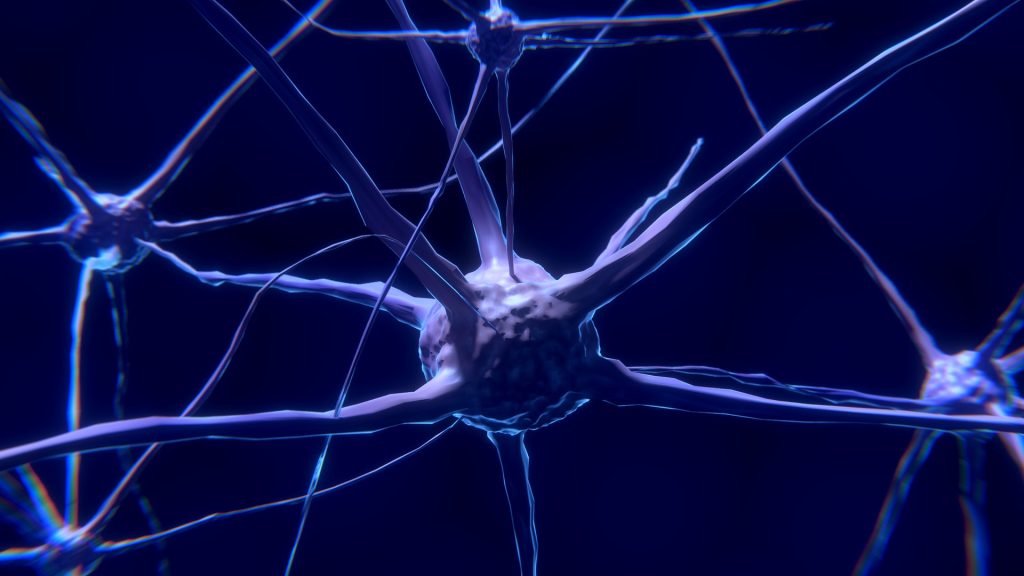
Source: University of California – Irvine

Glutamate and Dopamine Interact in Addiction

Image source: Pixabay

Drug addiction is a psychiatric disorder for which no pharmacological treatment with long-term efficacy currently exists: all addictive substances have in common the fact that they raise concentrations of the neurotransmitter dopamine within brain regions forming the neural reward circuit.

This increase in dopamine levels results in long-lasting alteration of signal transmission that is dependent on another neurotransmitter, glutamate, which causes addictive behaviours. Through a new study in mice and humans, an international team including scientists from the CNRS, INRAE, the CEA, Sorbonne University, Paris-Saclay University, the University of Bordeaux, and Université Côte d’Azur has uncovered, the molecular bases of this deleterious interplay between dopamine and glutamate.

The researchers’ findings demonstrate that the inhibition of interactions between dopamine and glutamate receptors prevents pathological behaviours provoked by cocaine in mice, without altering natural reward processing. Their findings, published in Science Advances, will help pave the way for the development of new therapeutic strategies to treat addiction, and a wider spectrum of psychiatric disorders.

Source: CNRS (Délégation Paris Michel-Ange)

Why Antipsychotic Drugs Cause Weight Gain

A University of Pittsburgh study has discovered that the reason antipsychotic medications have weight gain as side effects is because the pancreas also produces and responds to dopamine.

Dopamine is a neurotransmitter involved in mood regulation, pleasure and reward signalling. Many psychological disorders are thought to involve dopamine imbalances and are treated by medications designed to this end.
“There are dopamine theories of schizophrenia, drug addiction, depression and neurodegenerative disorders, and we are presenting a dopamine theory of metabolism,” said lead author Despoina Aslanoglou, PhD, at the University of Pittsburgh. “We’re seeing now that it is not only interesting to study dopamine in the brain, but it is equally interesting and important to study it in the periphery.”

Senior author Zachary Freyberg, MD, PhD, assistant professor of psychiatry and cell biology at Pitt, observed that the dopamine theory is not as simple or as well understood as we would like to think.

“We still don’t really understand how dopamine signals biologically,” said Dr Freyberg. “Even decades after dopamine receptors have been discovered and cloned, we still deploy this ‘magical thinking’ approach: something happens that’s good enough. We use drugs that work on dopamine receptors, but how they intersect with this ‘magical system’ is even less understood.”

The researchers found that dopamine is not only produced in the brain but also in the alpha and beta cells of the pancreas, which secrete glucagon and insulin, respectively.

Alpha cells can produce their own dopamine with no precursors in response to glucose levels, while beta cells require an L-DOPA precursor. It may be possible that alpha cells secrete dopamine for their own receptors, while also supplying it to beta cells to suppress the release of insulin.

Surprisingly, the researchers also discovered that pancreatic dopamine can affect other receptors, such as noradrenaline and adrenaline.
At low concentrations, dopamine binds to D2-like dopamine receptors, blocking the release of glucagon or insulin. At high concentrations, dopamine binds to beta-adrenergic receptors, becoming stimulatory and pushing up glucagon levels while inhibiting insulin levels by blocking alpha-adrenergic receptors.

The study revealed how blocking inhibitory dopamine receptors causes an unchecked release of insulin and glucagon, leading to metabolic disorders and eventually, obesity and diabetes. This finding will help to formulate better drugs that target the dopamine system, reducing the effect on the pancreas.

Source: News-Medical.Net