Tag: breast cancer

Diet Affects both Breast Microbiome and Breast Cancer Tumours

Breast cancer cells. Image source: National Cancer Institute on Unsplash

The breast has its own microbiome of bacteria, and new research has shown it can be influenced by diet, as can breast cancer tumours.

In 2018, scientists at Wake Forest School of Medicine, part of Wake Forest Baptist Health, showed that diet, just like the gut microbiome, can influence the breast microbiome.

Now, new research shows that diet, including fish oil supplements, can alter not only the breast microbiome, but also breast cancer tumours. The findings were published online in Cancer Research.

To untangle the relationship between microbiome, diet and cancer risk, researchers undertook a multi-pronged approach to study both animal models and breast cancer patients.

“Obesity, typically associated with a high-fat diet consumption, is a well-known risk factor in postmenopausal breast cancer,” said Katherine L. Cook, PhD, assistant professor in the surgery – hypertension and cancer biology departments at Wake Forest School of Medicine. “But there’s still a lot we don’t know about the obesity link to microbiomes and the impact on breast cancer and patient outcomes.”

In the first part of the study, mice susceptible to breast cancer were fed either a high-fat or a low-fat diet. Mice consuming the high-fat diet had more tumours, which were also larger and more aggressive than the tumours in the low-fat diet group.

Next, to study the microbiome, researchers performed faecal transplants. Mice consuming the low-fat diet received the high-fat diet microbiome transplant, and mice consuming the high-fat diet received the low-fat diet microbiome transplant. Unexpectedly, mice that consumed the low-fat diet and received a high-fat diet microbiome had just as many breast tumours as mice on the high-fat diet.

“Simply replacing the low-fat diet gut microbiome to the microbiome of high-fat diet consuming animals was enough to increase breast cancer risk in our models,” Cook said. “These results highlight the link between the microbiome and breast health.”

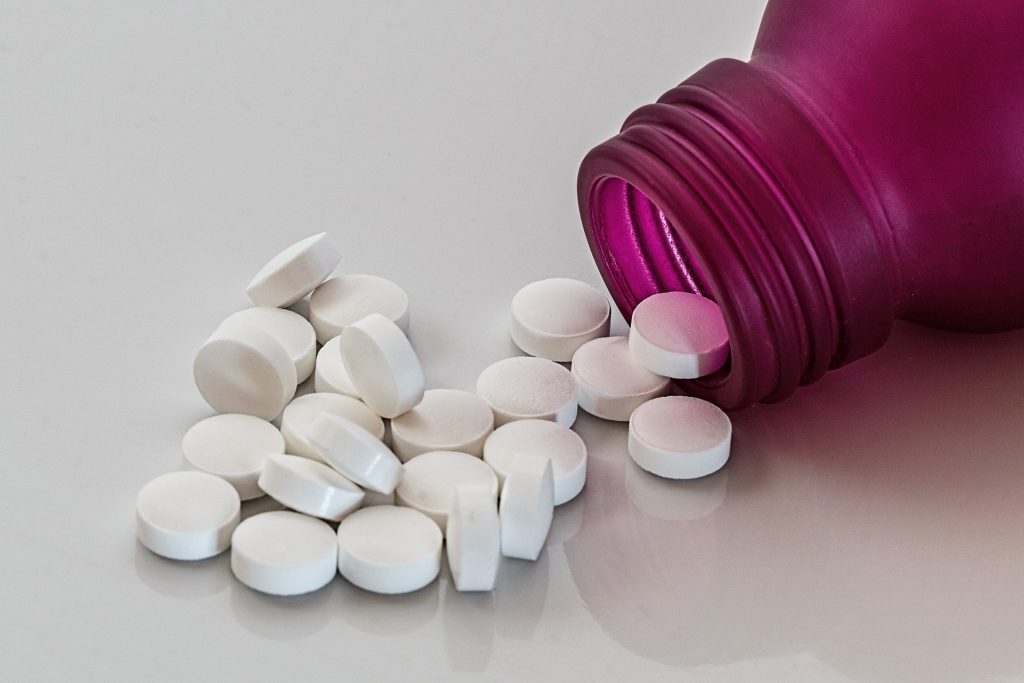
Researchers also conducted a double-blind placebo-controlled clinical trial with breast cancer patients, with patients either receiving placebo or fish oil supplements for two to four weeks before lumpectomy or mastectomy.

Results showed that fish oil supplementation significantly modified the breast microbiome in both non-cancerous and malignant breast tissue. For example, scientists found longer-term administration of fish oil supplements (four weeks) increased the proportional abundance of Lactobacillus in the breast tissue near the tumour. Lactobacillus is a genus of bacteria shown to decrease breast cancer tumour growth, suggesting potential anti-cancer properties of this intervention. Researchers also found decreased proportional abundance of Bacteroidales and Ruminococcus microbes in the breast tumours of patients taking the supplements, though the significance of this is not understood.

“This study provides additional evidence that diet plays a critical role in shaping the gut and breast microbiomes,” concluded Dr Cook. “Ultimately, our study highlights that potential dietary interventions might reduce breast cancer risk.”

Dr Cook’s team is also conducting further studies to see if probiotic supplements can affect microbiome populations in mammary glands and in breast tumours.

Source: Wake Forest Baptist Medical Center

Electromagnetic Fields Could Inhibit Breast Cancer Cell Spread

A new study has shown that electrical fields can slow, and in some cases halt, the spread of breast cancer cells through the body.

The research also found how electromagnetic fields (EMFs) have the ability to hinder the number of cancer cells that can spread. Pulsed EMFs have also been shown to have some effectiveness in pain management, and low level EMFs were shown also to reduce blood glucose in animal models, a possible first step to treating diabetes.

“We think we can hinder metastasis by applying these fields, but we also think it may be possible to even destroy tumours using this approach,” said senior author Vish Subramaniam, former professor of mechanical and aerospace engineering at The Ohio State University. Subramaniam retired from Ohio State in December.

“That is unclear at this stage, but we are working on understanding that – how big should the electromagnetic field be, how close should it be to the tumour? Those are the next questions we hope to answer,” he said.
Subramaniam said that this had the effect of the EMF is to slow down some of the cancer cells. “It makes some of them stop for a little while before they start to move, slowly, again. As a group, they appear to have split up. So how quickly the whole group is moving and for how long they are moving becomes affected.”

The effect was applied to human cancer cells in vitro and has not been applied in humans.

The EMFs seem to selectively slow down the cancer cells’ metabolism by affecting the electrical fields inside the individual cells—completely noninvasively and without side effects like ionising radiation, which would mean a revolutionary form of cancer treatment if it could be made to work in practice. This ability to access a cell’s internal workings is new to the study of how cancer metastasises, said Prof  Subramaniam.

“Now that we know this, we can start to answer other questions, too,” Subramaniam said. “How do we affect the metabolism to the point that we not only make it not move but we choke it, we completely starve it. Or can we slow it down to the point where it will always remain weak?”

Source: News-Medical.Net

Journal information: Jones, T.H., et al. (2021) Directional Migration of Breast Cancer Cells Hindered by Induced Electric Fields May Be Due to Accompanying Alteration of Metabolic Activity. Bioelectricity. doi.org/10.1089/bioe.2020.0048.