Tag: 20/1/26

Full-fat Cheese Linked to a Reduced Dementia Risk

Photo by David Foodphototasty on Unsplash

Eating cheese and cream with a high fat content may be linked to a lower risk of developing dementia. This is shown by a new large-scale study from Lund University. The researchers analysed the dietary habits of more than 27 000 people and linked these to the occurrence of dementia over a follow-up period of up to 25 years.

The debate about low-fat diets has long shaped our health advice and influenced how we view food and health. For several decades, fear of saturated fat and its link to cardiovascular disease has dominated. The MIND diet1 is a diet developed with the aim of reducing the risk of dementia. The diet includes protective foods such as vegetables, nuts, fruits, berries, whole grains, and fish, while cheese is one of the foods that should be limited.

Emily Sonestedt, researcher in nutritional epidemiology at Lund University in Sweden, and her colleagues, therefore wanted to investigate whether there was any link between dairy products and dementia. They collected dietary data from 27,670 people using the Malmö Diet Cancer population study, in which the participants respond about their dietary and cooking habits. The average age at the start of the study was 58, and the participants were followed for an average of 25 years, during which time 3,208 people developed dementia. The dementia diagnoses were obtained from the Swedish patient registry. For cases diagnosed up to 2014, additional validation studies were conducted in which dementia specialists reviewed medical records, brain scans, and cognitive test results.

After adjusting for lifestyle factors such as physical activity, diet, smoking, and alcohol consumption, the researchers found that people who ate 50 grams of cheese (with more than 20 percent fat) daily had a 13 percent lower risk of developing dementia than those who ate less than 15 grams daily. 50 grams is equivalent to about five regular slices of cheese. In total, about a quarter of the participants ate more than 50 grams or more daily.

”When we went on to look at specific types of dementia, we found that there was a 29 percent lower risk of vascular dementia in people who ate more full-fat cheese. We also saw a lower risk of Alzheimer’s disease, but only among those who did not carry the APOE e4 gene variant—a genetic risk factor for Alzheimer’s disease.”

The researchers also investigated the link between high-fat cream (30-40 percent fat) and dementia. People who consumed 20 grams or more daily had a 16 percent lower risk of dementia than those who did not consume any at all. 

The results of the cheese studies support the link between vascular health and brain health.

”The updated dietary guidelines in Sweden from this year say that we can eat dairy products every day, preferably fermented varieties such as yogurt or kefir. Both we and other researchers have found in observational studies that fermented dairy products in particular may be linked to a slightly reduced risk of cardiovascular disease 2,” says Emily Sonestedt.

In previous studies3, the research team has seen links to vascular health, with cheese and fermented dairy products in particular protecting against cardiovascular disease. 

”Although higher-fat cheese and cream were associated with a reduced risk of dementia, other dairy products and low-fat alternatives did not show the same effect. Therefore, not all dairy products are equal when it comes to brain health. The few studies that have investigated this have found a correlation with cheese, so more research is needed to confirm our results and investigate whether certain high-fat dairy products really do provide some protection for the brain.”

Source: Lund University


  1. The MIND diet stands for Mediterranean–DASH Intervention for Neurodegenerative Delay – a combination of the Mediterranean diet and the DASH diet. DASH (Dietary Approaches to Stop Hypertension) is a diet developed primarily to lower high blood pressure and improve cardiovascular health.
  2. Milk and dairy products – a scoping review for Nordic Nutrition Recommendations 2023
  3. Previous publications: 
    High-fat and low-fat fermented milk and cheese intake, proteomic signatures, and risk of all-cause and cause-specific mortality
    High consumption of dairy products and risk of major adverse coronary events and stroke in a Swedish population
    Dairy products and its association with incidence of cardiovascular disease: the Malmö diet and cancer cohort
    Dairy Consumption, Lactase Persistence, and Mortality Risk in a Cohort From Southern Sweden

Common Eye Ointment can Damage Glaucoma Implants, Study Warns

Research shows that petrolatum-based eye ointments can cause the device to swell and potentially rupture, prompting an urgent update to clinical guidance.

Photo by Tima Miroshnichenko


Widely-used eye ointments can cause glaucoma implants to swell and potentially rupture, according to new research from Nagoya University in Japan. This study is the first to show, using clinical and experimental evidence, that petrolatum-based eye ointments can compromise the PRESERFLO® MicroShunt, an implant used in over 60 countries to treat glaucoma.

Glaucoma is an eye disease that damages the optic nerve and can lead to vision loss. It often results from increased intraocular pressure caused by blocked drainage of eye fluid. A recent study estimated that 76 million people globally are affected by glaucoma.

Progression of visual field loss (from left to right) due to glaucoma
(Credit: Ryo Tomita)

MicroShunt is a small filtration device implanted in the eye to improve fluid drainage in glaucoma patients. Compared to traditional surgeries, it lowers post-operative complications and reduces reliance on additional medications.

MicroShunt is made from a styrenic thermoplastic elastomer based on a polystyrene-block-polyisobutylene-block-polystyrene (SIBS) block polymer, which is highly biocompatible, flexible, and less likely to cause inflammation or scarring. However, this material is vulnerable when it comes into contact with hydrocarbon- and oil-based materials. Due to its high oil affinity, exposure to petrolatum-based eye ointments may allow oil components to penetrate the device, causing swelling and potential changes in its shape and flexibility.

The MicroShunt manufacturer’s instructions state that “the MicroShunt should not be subjected to direct contact with petrolatum-based (ie, petrolatum jelly) materials, such as ointments and dispersions.” But this precaution is not widely recognised or consistently followed in clinical practice.

“Swollen MicroShunts can be structurally fragile,” said ophthalmologist and Assistant Professor Ryo Tomita of Nagoya University Graduate School of Medicine, the study’s first author. “During surgery, I observed a rupture in a swollen MicroShunt. If more clinicians are aware of this risk, they will be able to prevent similar problems.”

Tomita and colleagues, including Assistant Professor Taiga Inooka and Associate Professor Kenya Yuki from Nagoya University Hospital and the Graduate School of Medicine collaborated with Dr. Takato Kajita and Junior Associate Professor Atsushi Noro from the Graduate School of Engineering to examine changes in the MicroShunt after exposure to a petrolatum-based eye ointment.

The medical team reviewed clinical cases, while the engineering team conducted laboratory analyses. The findings were published in Graefe’s Archive for Clinical and Experimental Ophthalmology.

Clinical evidence

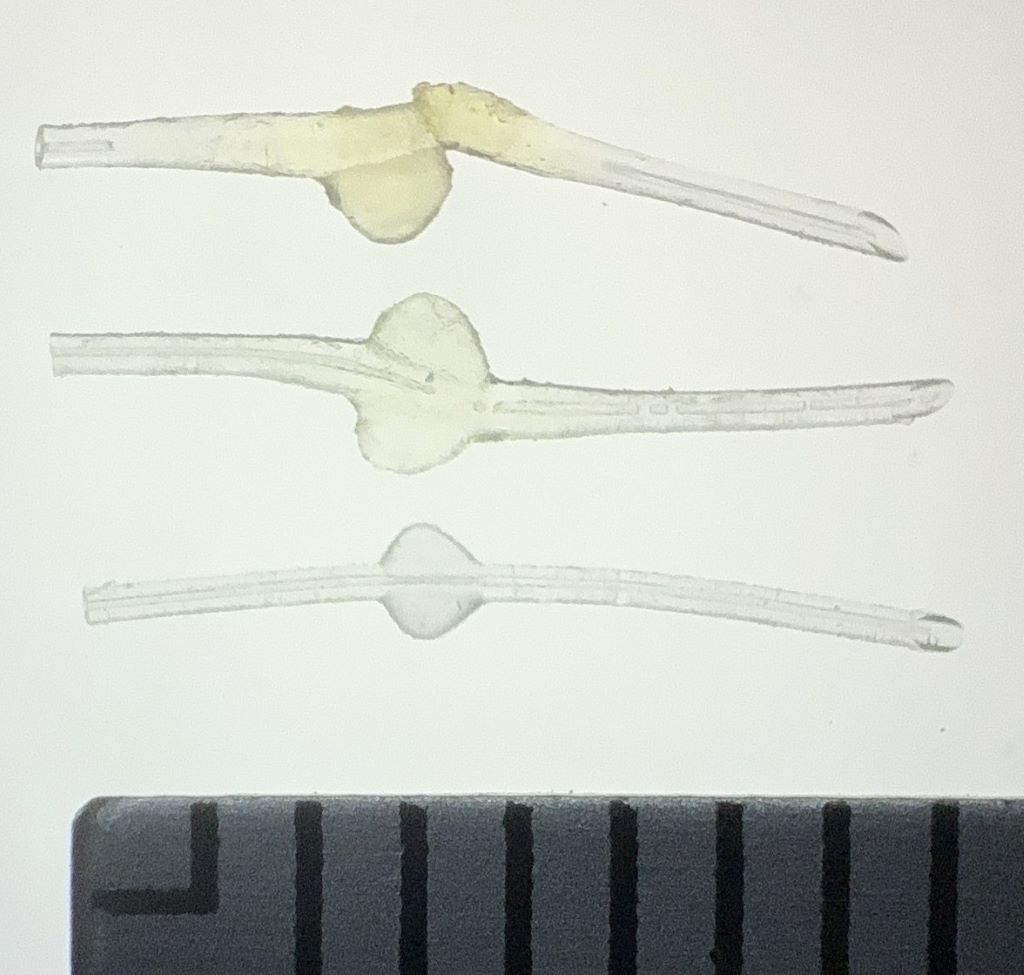
The clinical study examined seven glaucoma patients whose MicroShunt implants were later removed for different reasons. The results revealed a clear pattern. In three cases, the MicroShunt was exposed outside the conjunctiva, and patients received a petrolatum-based eye ointment. All three explanted devices showed significant swelling, and two of them ruptured.

In three other cases, the MicroShunt remained covered by the conjunctiva, and no ointment was administered. These devices retained their original structure. Crucially, in one additional case, the MicroShunt was exposed outside the conjunctiva, but no ointment was applied. The device did not swell. This indicates that direct contact with the ointment, rather than conjunctival rupture alone, is the primary cause of swelling.

Photographic comparison of MicroShunt illustrating size changes
Top: MicroShunt explanted from a patient, exhibiting diffuse swelling with fracture and loss of one fin
Middle: MicroShunt explanted from another patient, showing localized swelling around the fin
Bottom: Unused MicroShunt (control)

Scale: 1 division = 1 mm   
(Credit: Ryo Tomita)

Laboratory confirmation

Laboratory experiments confirmed the clinical findings. The team immersed unused MicroShunts in petrolatum-based eye ointment to reproduce the swelling seen in clinical cases. Microscopic measurements showed significant changes. After 24 hours in the ointment, the MicroShunt’s outer diameter increased to 1.44 times its original size, and the fin-like portion widened to 1.29 times its initial value.

Chemical analysis identified the cause of this change. After 24 hours of immersion, oil components made up approximately 45% of the MicroShunt’s total weight, rising to 73% after three months. These results confirmed the primary cause of swelling to be the absorption of oil-based ointment constituents into the material.

Clinical implications

The research team emphasises that clinicians should avoid using petrolatum-based ointments on patients with MicroShunt implants, particularly when the device is exposed outside the conjunctiva. Alternative post-operative treatments should be considered, while further research is needed to assess whether swelling impacts MicroShunt performance even when rupture does not occur.

“Our study found that commonly used medical materials can cause unexpected complications if their chemical properties and usage environments are not fully understood,” Noro stated. “From both medical and engineering perspectives, we emphasise the importance of understanding the chemical properties of medical materials and appropriately managing their usage environments.”

Paper information:

Ryo Tomita, Taiga Inooka, Takato Kajita, Hideyuki Shimizu, Ayana Suzumura, Jun Takeuchi, Tsuyoshi Matsuno, Hidekazu Inami, Koji M. Nishiguchi, Atsushi Noro, and Kenya Yuki. (2026) Petrolatum-based ointment application induces swelling of the PRESERFLO MicroShunt. Graefe’s Archive for Clinical and Experimental Ophthalmology
DOI: 10.1007/s00417-025-07075-2

Can AI Help Make Prescriptions Safer in South Africa’s Busy Clinics?

AI image created with Gencraft

By Henry Adams, Country Manager, InterSystems South Africa

Across South Africa, nurses and doctors in public clinics make hundreds of important decisions every day, often under enormous pressure. They’re short on time, juggling long queues, and sometimes working with incomplete information. In those conditions, even the most experienced professionals can make mistakes. It’s human.

The truth is, our healthcare system is stretched thin, and people can only do so much. That’s why I see real potential for AI to step in as a kind of virtual pharmacist. Not to replace anyone, but to back them up by checking prescriptions, catching errors, and helping ensure patients get the right treatment quickly and safely.

From data to decision support

I’m often asked how AI can make a real difference in healthcare right now. One area where it can have an immediate impact is in prescriptions. AI-assisted systems help doctors and nurses make safer, faster decisions by analysing medical data in real time. They can check a patient’s history, allergies, and possible drug interactions in seconds, flagging risks before they become problems.

Of course, because we’re dealing with sensitive medical information, trust and data quality are crucial. These systems only work when they’re built on accurate, connected data that healthcare professionals can rely on.

That’s where the latest health technology partnerships come in. By linking proven data platforms with smart AI tools, we’re already seeing real improvements overseas. In Europe, for example, these systems are helping clinicians catch potential drug errors early and prescribe with greater confidence.

There’s no reason South Africa can’t benefit in the same way. With clinics under pressure and resources stretched, technology that connects clean, reliable data with practical AI support could help reduce errors, save time, and make care safer for everyone.

Addressing local challenges

Medication errors can happen anywhere, but in South Africa the stakes are often higher. Our public clinics are exceptionally busy, staff are stretched, and doctors and nurses are doing their best under tough conditions. When you’re working under that kind of pressure, even a small mistake in a prescription can have serious consequences for a patient.

This is where AI can really help. Imagine a system that double-checks every prescription in real time, flagging possible drug interactions, incorrect dosages, or missing information before the medicine ever reaches the patient. It’s like having an extra set of expert eyes that never get tired. Instead of slowing things down, it speeds them up and gives clinicians peace of mind knowing they’re making the safest call for each patient.

For that to work, though, the data behind the system must be reliable and up to date. As South Africa moves toward a unified digital health record, the ability for these systems to connect to existing patient information becomes crucial. When healthcare professionals can trust the data they see on screen, AI becomes a genuine partner in care, helping them work faster, smarter, and safer.

Building confidence in AI

For AI to really work in healthcare, it must be clear and trustworthy. Doctors and nurses need to know why the system is recommending a specific drug or warning about a potential issue. If it can’t explain itself, people won’t use it, and rightly so.

That’s why transparency matters. The best AI tools don’t make decisions behind closed doors; they show their reasoning and help clinicians understand what’s happening in the background. When that’s combined with reliable, well-managed data, you start to build real confidence in the system.

It’s that trust, knowing the technology supports rather than replaces clinical judgment, that will make AI-assisted prescriptions part of everyday care, not just an interesting experiment.

A collaborative path forward

Technology on its own won’t fix South Africa’s healthcare challenges, but it can make a big difference in helping people do their jobs better. AI-assisted prescriptions are a good example of how smart tools can take some of the pressure off clinicians, reduce paperwork, and help patients get safer, faster care.

What excites me most is how practical this can be. Picture a nurse in a rural clinic who needs to prescribe medication but doesn’t have easy access to a specialist. With AI support, she can get accurate, instant guidance and know her patient is getting the right treatment. Or think about a busy hospital pharmacy, where an AI system automatically checks for drug interactions across hundreds of files in seconds, preventing errors before they happen.

This isn’t some far-off idea. The technology already exists and is being used successfully elsewhere. The goal now is to make sure it’s used in a way that supports our healthcare professionals, not replaces them. They are, and always will be, at the centre of care. If we get this right, AI can become a real partner in healthcare.

Immunometabolism Might Hold the Key to Controlling Sepsis

Image from Rawpixel

Metabolic changes that “rewire” part of the immune system can intensify sepsis, the body’s dysregulated response to infection. This discovery may lead to new ways to block metabolic changes contributing to excessive and ineffective inflammation, reset the immune system, and bring sepsis under control, researchers at Vanderbilt Health reported January 15 in the journal Nature Immunology.

“Metabolism is potentially a means by which we could intervene in immune dysfunction in ICU (intensive care unit) patients including those with sepsis,” said the paper’s first and co-corresponding author, Matthew Stier, MD, PhD, assistant professor of Medicine in the Division of Allergy, Pulmonary and Critical Care Medicine at Vanderbilt Health.

“I think we can make great progress and great strides by aligning cutting-edge basic science tools with ICU patient samples to understand these mechanisms and prioritise therapies for future interventions,” he said.

Sepsis is characterised by the massive production and release of inflammatory molecules, including cytokines, that if unchecked, can lead to tissue damage, septic shock, organ failure, and death.

Despite decades of research focused on stopping this “cytokine storm” and hyperinflammation, “we have unfortunately not been able to identify successful drug therapies in sepsis,” said Stier, a physician-scientist who focuses on immunologic and metabolic dysfunction in critical illness. Targeting the inflammatory aspect of sepsis is likely important, but by itself may not be sufficient.

“We provide antibiotics and great supportive care to weather the cytokine storm,” he said, “but that doesn’t fully resolve the problem. It keeps people alive while we wait for their bodies to fix themselves — or not.”

In critical illness, including sepsis, the body’s normal metabolic processes become impaired. This includes immunometabolism, the energy-generating processes that fuel the immune system.

At the same time, the immune system’s protective functions become exhausted, resulting in an acquired immunosuppression, which leaves patients vulnerable to secondary infections, persistent organ dysfunction, repeated hospitalisations and death.

While prior research has defined the characteristics of metabolism and immune dysfunction, this study was among the first to explore the mechanisms of immunometabolic dysfunction in sepsis and their association with immunosuppression, often called “immunoparalysis.”

Stier and his colleagues used cutting-edge technologies, including single-cell sequencing and flow cytometry, to study immune cells collected from the blood of critically ill patients.

The blood samples were collected and stored through the Sepsis Clinical Resource and Biorepository (SCARAB), a unique, highly collaborative ICU biobank developed by Julie Bastarache, MD, and Lorraine Ware, MD, professors of Medicine in the Division of Allergy, Pulmonary and Critical Care Medicine.

Two of the most important elements of the body’s immune responses are CD4+ T “helper” cells, inflammatory “foot soldiers” of the immune system that are distinguished by the CD4 surface protein they express, and regulatory T (Treg or “suppressor”) cells, which guard against over-active immune responses.

To study the impact of critical illness and sepsis on these cells, the Vanderbilt Health team used SCENITH, a flow cytometry-based method developed by French researchers that enables researchers to functionally profile energy metabolism with single-cell resolution.

“This technique allowed us to do something prior studies hadn’t done … to look at the metabolism of every single cell set on its own and identify subset-specific metabolic adaptations,” Stier said.

The key finding: Treg cells undergo metabolic “reprogramming” in patients with critical illness and sepsis, leading to altered tryptophan metabolism and response to reactive oxygen species in a way that enhances their immunosuppressive capability, at the expense of CD4+ T “helper” cells.

“The metabolic turmoil of critical illness appears to give Treg cells a survival and functional advantage, contributing to the harmful immunoparalysis seen in sepsis,” he said.

“This is very much a preclinical paper,” Stier cautioned. Yet it demonstrates the feasibility of deeply dissecting immunometabolic mechanisms using ICU patient biospecimens and highlights the importance of such insights to prioritise future therapeutic targets in critical illness and sepsis, he said.

Source: Vanderbilt University Medical Center

Switching Memories On and Off with Epigenetics

Photo by Laura Louise Grimsley on Unsplash

Our experiences leave traces in the brain, stored in small groups of cells called “engrams”. Engrams are thought to hold the information of a memory and are reactivated when we remember, which makes them very interesting to research on memory and age- or trauma-related memory loss.

At the same time, scientists know that the biology of learning is accompanied by epigenetic changes, which refers to the ways the cell regulates genes by adding chemical “post-it notes” on DNA.

But the question of whether the epigenetic state of a single gene in turn can cause a memory to change has thus far remained unanswered.

A team led by Professor Johannes Gräff at EPFL’s Laboratory of Neuroepigenetics combined CRISPR-based gene control with a technique that tags engram cells in mice. They focused on Arc, a gene that helps neurons adjust their connections to other neurons. By targeting the control region of Arc, the team asked whether flipping its epigenetic “switch” could directly change memory. They published their findings in Nature Genetics.

An “epigenetic switch”

The researchers developed specialised, CRISPR-based tools that could either dial down or boost Arc activity in memory neurons. Some, like the KRAB-MeCP2 tool, were designed to switch off gene activity by adding repressive marks that make the DNA less accessible, while others opened the DNA and turned the gene on. These tools were essentially an “epigenetic switch” for the Arc gene.

They then used harmless viruses to deliver these tools directly into the hippocampus of mice, a brain region central for storing and retrieving memory. The mice were then trained to link a specific place with a mild foot shock. By changing the epigenetic state of Arc in the neurons, the scientists could see whether the animals remembered the shock or not. They also added a “safety switch” that could undo the editing and reset the memory state.

The study showed that epigenetically silencing Arc in engram cells made the mice not learn, while boosting it made their memory stronger. These changes could be reversed in the same animal, showing that this epigenetic “switch” can dial memory expression up or down. Even memories that were already several days old, which are usually hard to change, could be modified. On the molecular level, the editing caused changes in gene activity and DNA packaging that matched the behavioural effects.

Controlling memory expression

The study is the first direct demonstration that changing the epigenetic state in memory cells is necessary and sufficient to control memory expression. It points to new ways of exploring how memories are stored and altered, which could eventually also be relevant in humans.

In the future, similar approaches could help researchers better understand conditions where memory processing goes awry, such as traumatic memories in PTSD, drug-related memories in addiction, or the memory problems that appear in neurodegenerative diseases.

Source: EPFL