

Researchers Convert Aged Blood Cells into ‘Young’ Neural Stem Cells
Study opens a window to a better understanding of cellular rejuvenation processes
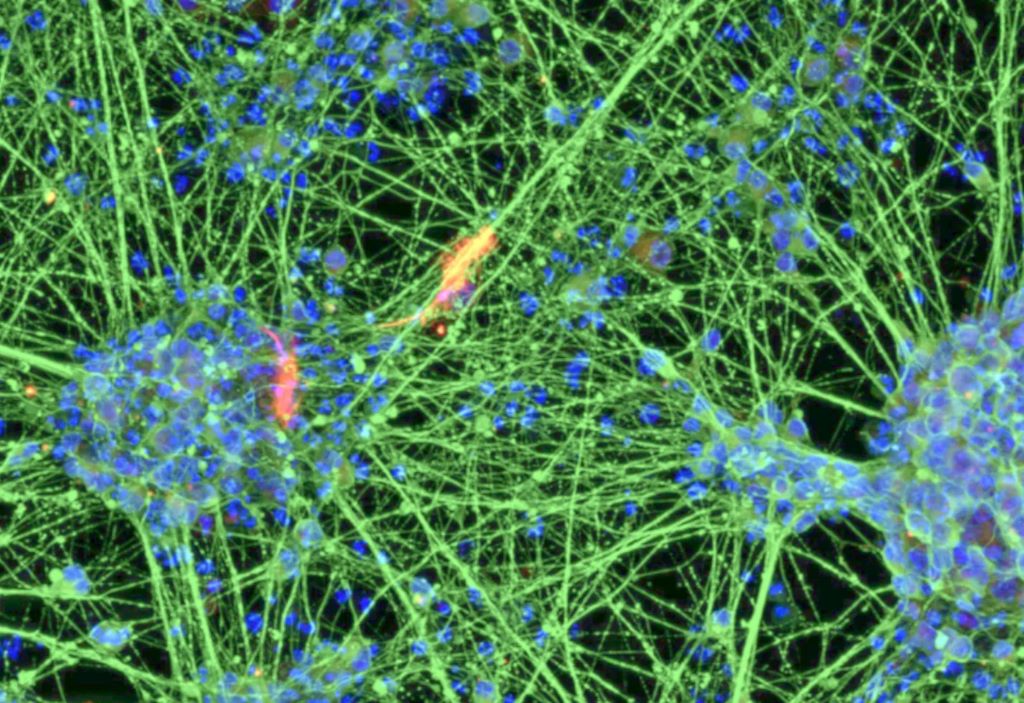
Researchers from the University Hospital of Bonn and the University of Bonn have succeeded in dramatically rejuvenating human cells in vitro. The researchers directly reprogrammed erythroid precursors into neural stem cells, resetting epigenetic clocks.
For example, blood cells from an 80-year-old were transformed into stem cells with a molecular age of less than 20 years. Since this rejuvenation occurred gradually, it is well-suited for detailed investigation of the underlying mechanisms. The results have been published in Aging Cell.
“Using this method, we have directly converted red blood cell precursors into neural stem cells,” explains Prof Oliver Brüstle (Institute of Reconstructive Neurobiology, University Hospital Bonn). In previous studies, the Bonn researchers had already shown that neurons produced in this way form connections with existing neurons after transplantation into the brains of mice.
“In our current study, however, we focused on a different phenomenon: namely, the observation that cells become significantly rejuvenated during reprogramming,” emphasises Brüstle (also TRA Life & Health, University of Bonn). To measure this, they used molecular clocks.
The cells’ epigenetic clocks were significantly reset by the reprogramming. As a result, cells from an 80-year-old subsequently exhibited a molecular age of less than 20 years. “We also know that this epigenetic rejuvenation ensures that the cells actually behave like young cells,” says Brüstle.
It was already known that a rejuvenation effect can occur during cell reprogramming. However, it had previously only been observed when reprogramming took place in two steps: conversion of a blood cell into a pluripotent stem cell, followed by differentiation into a neural stem cell.
Rejuvenation occurs very rapidly with this two-step method. “In contrast, we converted blood cells directly into neural stem cells – that is, without first passing through the pluripotent cell stage,” said Brüstle. “In our approach, rejuvenation occurred gradually and could be tracked for over 100 days.”
This opens up a unique window into a better understanding of cellular rejuvenation processes. “Rejuvenation that extends over such a long period of time is ideal as an experimental model: Since the epigenetic clocks are slowly reset over several weeks, we can use this model to investigate which factors and active substances accelerate or slow down the rejuvenation process.”
This is particularly relevant for neuroscience, says Brüstle: “After all, age is the most important risk factor for neurodegenerative diseases such as Alzheimer’s.”
Research groups from the University Hospital of Bonn, the University of Bonn, and RWTH Aachen University participated in the study. The study was funded by the EU’s Horizon 2020 programme, the German Research Foundation (DFG), and the Federal Ministry of Research, Technology, and Space (BMFRT).
Berg, L. J., Franzen, J., Buness, A., Konang, R., Sheng, C., Peitz, M., Till, A., Wagner, W., & Brüstle, O. (2026). Protracted Fate Acquisition and Epigenetic De‐Aging During Induced Neural Stem Cell Conversion of Human Blood Cells. Aging Cell, 25(10), e70751. https://doi.org/10.1111/acel.70751; https://onlinelibrary.wiley.com/doi/10.1111/acel.70751
Source: University of Bonn
