Arrhythmias From Playing Video Games in Susceptible Children

Photo by Igor Karimov on Unsplash

Video games can precipitate life-threatening cardiac arrhythmias in susceptible children whose predisposition may have been previously unrecognised, according to findings published in Heart Rhythm. The investigators documented an uncommon, but distinct pattern among children who lose consciousness while playing video games – particularly among multiplayer war gaming which can have stressful online interactions.

“Video games may represent a serious risk to some children with arrhythmic conditions; they might be lethal in patients with predisposing, but often previously unrecognized arrhythmic conditions,” explained lead investigator Claire M. Lawley, MBBS, PhD. “Children who suddenly lose consciousness while electronic gaming should be assessed by a heart specialist as this could be the first sign of a serious heart problem.”

The investigators performed a systematic review of literature and initiated a multisite international outreach effort to identify cases of children with sudden loss of consciousness while playing video games. Across the 22 cases found, multiplayer war gaming was the most frequent trigger, and some children died following a cardiac arrest. Subsequent diagnoses of several heart rhythm conditions put the children at continuing risk. Catecholaminergic polymorphic ventricular tachycardia (CPVT) and congenital long QT syndrome (LQTS) types 1 and 2 were the most common underlying causes.

There was a high incidence of potentially relevant genetic variants (63%) among the patients, which has significant implications for their families. In some cases, the investigation led to the diagnosis of familial heart problems. “Families and healthcare teams should think about safety precautions around electronic gaming in children who have a condition where dangerous fast heart rhythms are a risk,” noted Dr Lawley.

Adrenergic stimulation related to the emotionally charged electronic gaming environment was attributed as the pathophysiological basis for this phenomenon. At the time of the cardiac incidents, many of the patients were in excited states, having just won or lost games, or were engaging in conflict with companions.

“We already know that some children have heart conditions that can put them at risk when playing competitive sports, but we were shocked to discover that some patients were having life-threatening blackouts during video gaming,” added co-investigator Christian Turner, MBBS. “Video gaming was something I previously thought would be an alternative ‘safe activity.’ This is a really important discovery. We need to ensure everyone knows how important it is to get checked out when someone has had a blacking out episode in these circumstances.”

The study notes that while this phenomenon is not a common occurrence, it is becoming more prevalent. “Having looked after children with heart rhythm problems for more than 25 years, I was staggered to see how widespread this emerging presentation is, and to find that a number of children had even died from it. All of the collaborators are keen to publicize this phenomenon so our colleagues across the globe can recognize it and protect these children and their families,” noted co-investigator of the study, Jonathan Skinner, MBChB, MD, also from Sydney.

In an accompanying editorial Daniel Sohinki, MD, MSc, and coauthors pointed out that, “exertion should be understood to encompass activities outside of traditional competitive athletics. Appropriate counselling regarding the risks of intense video gameplay should be targeted in children with a pro-arrhythmic cardiac diagnosis, and in any child with a history of exertional syncope of undetermined aetiology. Further, any future screening programs aimed at identifying athletes at risk for malignant arrhythmias should encompass athletes being considered for participation in eSports.”

Source: EurekAlert!

Late Night Snacks Impact Hunger, Metabolism and Adipose Tissue

Photo by Aaron Burden on Unsplash

While popular diets discourage midnight snacking, few studies have examined the simultaneous effects of late eating on the weight gain trifecta regulation of calorie intake, the number of calories burnt, and molecular changes in fat tissue. Now, a new study published in Cell Metabolism has found that timing of food intake significantly impacts energy expenditure, appetite, and molecular pathways in adipose tissue.

“We wanted to test the mechanisms that may explain why late eating increases obesity risk,” explained senior author Frank A. J. L. Scheer, PhD, Director of the Medical Chronobiology Program in the Brigham’s Division of Sleep and Circadian Disorders. “Previous research by us and others had shown that late eating is associated with increased obesity risk, increased body fat, and impaired weight loss success. We wanted to understand why.”

“In this study, we asked, ‘Does the time that we eat matter when everything else is kept consistent?'” said first author Nina Vujovic, PhD, a researcher in the Medical Chronobiology Program in the Brigham’s Division of Sleep and Circadian Disorders. “And we found that eating four hours later makes a significant difference for our hunger levels, the way we burn calories after we eat, and the way we store fat.”

Vujovic, Scheer and their team studied 16 patients with a body mass index (BMI) in the overweight or obese range. Each participant completed two laboratory protocols: one with a strictly scheduled early meal schedule, and the other with the exact same meals, each scheduled about four hours later in the day. In the last two to three weeks before starting each of the in-laboratory protocols, participants maintained fixed sleep and wake schedules, and in the final three days before entering the laboratory, they strictly followed identical diets and meal schedules at home. In the lab, participants regularly documented their hunger and appetite, provided frequent small blood samples throughout the day, and had their body temperature and energy expenditure measured. To measure how eating time affected molecular pathways involved in adipogenesis, or how the body stores fat, investigators collected biopsies of adipose tissue from a subset of participants during laboratory testing in both the early and late eating protocols, to enable comparison of gene expression patterns/levels between these two eating conditions.

Results revealed that eating later had profound effects on hunger and appetite-regulating hormones leptin and ghrelin, which influence our drive to eat. Specifically, levels of the hormone leptin, which signals satiety, were decreased across the 24 hours in the late eating condition compared to the early eating conditions. When participants ate later, they also burned calories at a slower rate and exhibited adipose tissue gene expression towards increased adipogenesis and decreased lipolysis, which promote fat growth. Notably, these findings convey converging physiological and molecular mechanisms underlying the correlation between late eating and increased obesity risk.

Vujovic explained that these findings are not only consistent with a large body of research suggesting that eating later increases risk of developing obesity, but they shed new light on how this might occur. By using a randomised crossover study, and tightly controlling for behavioural and environmental factors such as physical activity, posture, sleep, and light exposure, investigators were able to detect changes the different control systems involved in energy balance, a marker of how our bodies use the food we consume.

Future studies will include more female participants. Despite only five female participants, the study was set up to control for menstrual phase, reducing confounding but making recruiting women more difficult. Going forward, Scheer and Vujovic are also interested in better understanding the effects of the relationship between meal time and bedtime on energy balance.

“This study shows the impact of late versus early eating. Here, we isolated these effects by controlling for confounding variables like caloric intake, physical activity, sleep, and light exposure, but in real life, many of these factors may themselves be influenced by meal timing,” said Scheer. “In larger scale studies, where tight control of all these factors is not feasible, we must at least consider how other behavioural and environmental variables alter these biological pathways underlying obesity risk. “

Source: Brigham and Women’s Hospital

Controlling Allergic Asthma without Compromising Flu Resistance

Young girl sneezing
Photo by Andrea Piacquadio on Unsplash

Blocking calcium signalling in immune cells suppresses allergic asthma, but without compromising the immune defence against flu viruses, according to the findings of a new study published in Science Advances.

The researchers showed that, in a mouse model, removing the gene for a certain calcium channel reduced asthmatic lung inflammation caused by house dust mite faeces, a common cause of allergic asthma. Blocking signals sent through this channel, the calcium release-activated calcium (CRAC) channel, with an investigational inhibitor drug had a similar effect.

The study revolved human cells’ use of signalling and switch-flipping ions, mainly calcium. When triggered by viral proteins or allergens, T cells open channels in their outer membranes, allowing calcium in to activate signalling pathways that control cell division and secretion of cytokine molecules.

Past work had found that CRAC channels in T cells regulate their ability to multiply into armies of cells designed to fight infections caused by viruses and other pathogens.

The new study showed that the CRAC channel inhibitor reduced allergic asthma and mucus build-up in mice without undermining their immune system’s ability to fight influenza, a main worry of researchers seeking to tailor immune-suppressing drugs for several applications.

“Our study provides evidence that a new class of drugs that target CRAC channels can be used safely to counter allergic asthma without creating vulnerability to infections,” said senior study author Stefan Feske, MD, a professor at NYU Langone Health. “Systemic application of a CRAC channel blocker specifically suppressed airway inflammation in response to allergen exposure.”

Allergic asthma, which is the most common form of the disease, is characterised by increased type 2 (T2) inflammation, which involves T helper (Th) 2 cells, the study authors noted. Th2 cells produce cytokines that play important roles in both normal immune defences, and in disease-causing inflammation that occurs in the wrong place and amount. In allergic asthma, cytokines promote the production of IgE antibodies and the recruitment to the lungs of inflammation-causing immune cells called eosinophils, the hallmarks of the disease.

In the new study, the research team found that deletion of the ORAI1 protein in T cells, which makes up the CRAC channel, or treating mice with the CRAC channel inhibitor CM4620, thoroughly suppressed Th2-driven airway inflammation in response to house dust mite allergens.

Treatment with CM4620 significantly reduced airway inflammation when compared to an inactive control substance, with the treated mice also showing much lower levels of Th2 cytokines and related gene expression. Without calcium entering through CRAC channels, T cells are unable to become Th2 cells and produce the cytokines that cause allergic asthma, the authors say.

Conversely, ORAI1 gene deletion, or interfering with CRAC channel function in T cells via the study drug, did not hinder T cell-driven antiviral immunity, as lung inflammation and immune responses were similar in mice with and without ORAI1.

“Our work demonstrates that Th2 cell-mediated airway inflammation is more dependent on CRAC channels than T cell-mediated antiviral immunity in the lung,” said study co-first author Yin-Hu Wang, PhD. “This suggests CRAC channel inhibition as a promising, potential future treatment approach for allergic airway disease.”

Source: NYU Langone Health via PRNewsWire

Disappointing Colorectal Cancer Screening Results with Colonoscopy

Colon cancer cells
Colon cancer cells. Source: National Cancer Institute on Unsplash

A randomised study of northern European data shows that colonoscopy screening reduces the risk of colorectal cancer by 18%, much smaller than experts previously assumed. The results of the study appear in the New England Journal of Medicine.

Colonoscopy may not even perform better than screening with faecal tests, said Louise Emilsson, docent at the Department of Medical Epidemiology and Biostatistics, Karolinska Institutet, and national Swedish principal investigator of the study.

Prior to the publication of this study, experts assumed that screening with colonoscopy had significantly better effect than screening with faecal tests. Faecal tests are used in colorectal cancer screening programs in many countries, and other countries have introduced screening with colonoscopy based on the fact that researchers via observational and modelling studies estimated that up to nine out of ten cases of colorectal cancer could be prevented with a colonoscopy screening. With faecal tests, similar models has estimated the effect to be two to three out of ten.

In the NordICC study, the researchers investigated the extent to which colonoscopy screening actually prevents colorectal cancer. Overall, 1.2% of those randomised to no screening were diagnosed with colon cancer during ten years, compared to 0.98% in those offered screening.

This translates to an 18% reduced risk of colorectal cancer among the participants who were offered colonoscopy screening. Furthermore, 455 colonoscopies were required to prevent one single case of colorectal cancer. Colonoscopy is fairly invasive and costly procedure, involving preparation, bowel prep with laxatives, and a 30-45 minute examination of the bowel with a camera inserted via the rectum. The figure of 455 procedures to prevent one case of cancer is certainly disappointing, Louise Emilsson concluded.

Colorectal cancer mortality was also found to be lower than expected in the NordICC study. Only three in a thousand died of the disease within ten years, regardless of whether they were offered screening or not, and thus, there was no significant difference between the groups in terms of mortality. The low mortality rate is however encouraging and likely caused by significantly improved treatment options over the past ten years.

Source: Karolinska Institutet

Maternity Wards at Dora Nginza Hospital ‘Chaotic’ as Nurses Down Tools

By Joseph Chirume at GroundUp

Services at the Dora Nginza Hospital in Gqeberha, Eastern Cape are under strain as the nurse’s strike entered its second day on Friday. The striking nurses are demanding that management provide more beds and staff to the maternity wards, among other demands. They claim that their previous engagements with the health department have been fruitless.

On Thursday, some patients were moved to another hospital. Dora Nginza Hospital is the centre for maternal and paediatric care for the western part of the Eastern Cape.

A pregnant woman at the hospital described the maternity ward as “chaotic”.

“Heavily pregnant women were crying for help that was not coming. Many people are sleeping on the cold floor and there is a smell of blood in the ward. The few nurses there are overwhelmed,” she said.

Vuyo Nodlawu, regional chairperson of the Democratic Nursing Organisation of South Africa (DENOSA), told GroundUp that the maternity wards do not have enough beds and resources to cope with the influx of patients since Monday. “Patients, be it prenatal or postnatal, did not have beds to sleep on. The situation has been getting worse, to the extent that patients who had given birth were removed from beds to accommodate those in labour,” he said.

Nodlawu said the hospital’s management had told medical practitioners to stop admitting patients if there were no more beds available or until the matter was resolved. “However, the doctors continued to admit patients. Nurses then decided to allocate all available beds within the maternal department to everyone who didn’t have a bed,” said Nodlawu.

A meeting was called between the maternal directorate from the head office and the hospital but it was unsuccessful.

Mzikazi Nkatha, provincial deputy secretary of the National Union of Public Service and Allied Workers (NUPSAW)’s, said, “Nurses are saying enough is enough. They can’t continue as normal when patients have to lie on the floor and not on hospital beds. This is also an overwhelming number of patients and not enough health providers to care for them.”

Health department spokesperson Yonela Dekeda said union leaders have not been willing to negotiate with officials sent by management. Dekeda said plans to “decongest” Dora Nginza Hospital are underway, with emergency cases being referred to Port Elizabeth Provincial Hospital.

She said a team from other hospitals across the district were deployed to assist. The team included Anaesthetics, Obstetrics , Gynaecology, Paediatrics, Neonatology, Nursing and non-clinical support services.

“The designated ward and theatre at the Provincial Hospital has been staffed and equipped with the relevant equipment and medication. The Emergency Medical Services is also part of the response team and will coordinate patient transfers between facilities,” she said.

Dekeda said the department considers the nurses’ action as an unprotected strike. “These essential workers are refusing to engage with senior management nor do they want to return to work. The department takes this very seriously and the administrative and legal remedies at our disposal are being deployed,” she said.

DENOSA’s deputy regional chairperson Vuyo Dlanga has vowed that nurses would continue their action until provincial government officials meet them to resolve the issues.

Republished from GroundUp under a Creative Commons Attribution-NoDerivatives 4.0 International License.

Source: GroundUp

New Laws Set to Turn the Screws on Smoking in South Africa

Cigarette butts
Source: Pawel Czerwinski on Unsplash

New legislation will soon place further curbs on tobacco smoking in South Africa – and these laws will also now extend to e-cigarettes. In South Africa, lung cancer is the third most common cancer among men and seventh for women. More than two-thirds of lung cancer patients are diagnosed at an advanced stage, resulting in poorer outcomes for treatment.

The proposed laws impose harsher penalties against smoking in smoke-free zones, being punishable with a fine or up to three months imprisonment. More areas would be designated smoke-free zones, essentially ending the smoking sections currently set aside for restaurants and bars. This would also extend to the homes of people who employ domestic workers – the employers would not be able to smoke while those workers are present.

Smoking would also be banned in homes used for teaching, tutoring and commercial childcare. Shared residences would also have smoking banned in common areas, as would smoking in vehicles with occupants under the age of 18.

Cigarette packaging will also be targeted, with a move to plain packaging with graphic health warnings. It will no longer be legal to sell cigarettes through vending machines, nor display cigarettes at the point of sale. Sweets and toys resembling cigarettes would also be banned – however, the sugar ‘cigarettes’ that many may remember from their youth are already banned.

Vaping and e-cigarette products will also be liable to the same legislation, and are also soon to have an excise tax levied upon them.

A Common Mouthwash Ingredient Suppresses SARS-CoV-2

Source: Fusion Medical Animation on Unsplash

A team of Japanese researchers have shown that low concentrations of cetylpyridinium chloride, used in certain mouthwashes, has an antiviral effect on SARS-CoV-2. Their findings were published in the journal Scientific Reports.

SARS-CoV-2 is transmitted via aerosols, which are spread from the oral and nasal cavities. In addition to infecting the cells of the respiratory tract, SARS-CoV-2 is also known to infect the cells of the lining of the mouth and the salivary glands.

Store-bought mouthwashes contain a number of antibiotic and antiviral components, such as cetylpyridinium chloride (CPC), which has been shown to reduce the oral viral load of SARS-CoV-2, chiefly by disrupting the virus’s lipid envelope. While there are other chemicals with similar effects, CPC has the advantage of being tasteless and odourless.

The researchers, led by Professor Kyoko Hida at Hokkaido University, were interested in studying the effects of CPC in Japanese mouthwashes, which typically contain a fraction of the CPC compared to previously tested mouthwashes. They tested the effects of CPC on cell cultures that express trans-membrane protease serine 2 (TMPRSS2), which is required for SARS-CoV-2 entry into the cell.

They found that, within 10 minutes of application, 30–50 µg/mL of CPC inhibited the infectivity and capability for cell entry of SARS-CoV-2. Interestingly, commercially available mouthwashes that contain CPC performed better than CPC alone. They also showed that saliva did not alter the effects of CPC. Testing with the original, alpha, beta and gamma variants of SARS-CoV-2 showed similar effetcts of CPC.

This study shows that low concentrations of CPC in commercial mouthwash suppress the infectivity of four variants of SARS-CoV-2. The authors have already begun assessing the effect on CPC-containing mouthwashes on viral loads in saliva of COVID patients. Future work will also focus on fully understanding the mechanism of effect, as lower concentrations of CPC do not disrupt lipid membranes.

Source: Hokkaido University

Adult Brains can Rewire to Recover from Inherited Blindness

Eye
Source: Daniil Kuzelev on Unsplash

A recent discovery has revealed that the adult brain has far greater potential to recover from inherited blindness than previously believed, with important implications for visually impaired people. The paper appears in Current Biology.

The research team was examining treatment for Leber congenital amaurosis (LCA), a group of inherited retinal diseases distinguished by severe visual impairment at birth. The condition, caused by mutations in any of over two dozen genes, results in degeneration or dysfunction in the retina’s photoreceptors.

Administering chemical compounds that target the retina, called synthetic retinoids, can restore a notable amount of vision in children with LCA. The UCI team wanted to find out if the treatment could make a difference for adults who have the condition.

“Frankly, we were blown away by how much the treatment rescued brain circuits involved in vision,” said corresponding author Sunil Gandhi, professor of neurobiology and behaviour. “Seeing involves more than intact and functioning retinae. It starts in the eye, which sends signals throughout the brain. It’s in the central circuits of the brain where visual perception actually arises.” Until now, scientists believed that the brain must receive those signals in childhood so that central circuits could wire themselves correctly.

The researchers were surprised by what they found in rodent models of LCA. “The central visual pathway signalling was significantly restored in adults, especially the circuits that deal with information coming from both eyes,” Prof Gandhi said. “Immediately after the treatment, the signals coming from the opposite-side eye, which is the dominant pathway in the mouse, activated two times more neurons in the brain. What was even more mind-blowing was that the signals coming from the same-side eye pathway activated five-fold more neurons in the brain after the treatment and this impressive effect was long-lasting. The restoration of visual function at the level of the brain was much greater than expected from the improvements we saw at the level of the retinae. The fact that this treatment works so well in the central visual pathway in adulthood supports a new concept, which is that there is latent potential for vision that is just waiting to be triggered.”

The finding opens exciting research possibilities. “Whenever you have a discovery that breaks with your expectations about the possibility for the brain to adapt and rewire, it teaches you a broader concept,” Prof Gandhi said. “This new paradigm could aid in the development of retinoid therapies to more completely rescue the central visual pathway of adults with this condition.”

Source: University of California – Irvine

Genes that Influence Longevity Differ Between the Sexes

DNA repair
Source: Pixabay/CC0

There is an elaborate interplay between genes, sex, the environment during growth, and age and how they influence variation in longevity, according to a study published in the journal Science. These findings are an important step in understanding why some people live longer than others and provide a basis for future studies to improve a healthy lifespan.

Robert Williams, PhD, at the University of Tennessee Health Science Center (UTHSC), along with Johan Auwerx, MD, PhD, at the École Polytechnique Fédérale de Lausanne (EPFL) in Switzerland, began a program in 2016 to define genetic factors involved in agieng and lifespan. “Finding common molecular pathways that control differences in rate of aging is critical to our understanding of how individuals differ in their health and lifespan,” Dr Williams said. “Such insights may help us work out ways to intervene rationally.”

Drs Williams and Auwerx received DNA of over 12 000 mice from the National Institute of Aging. Each of the 27 574 genetically heterogeneous mice studied is a full sibling, sharing half its genetic inheritance with each other mouse in the programme, and each has a known lifespan, making them an ideal system to study.

The research team analysed the genes of over 3 000 mice, all of them genetic brothers or sisters which were allowed to live until their natural death. Comparing their DNA to lifespan, the researchers defined stretches of DNA in genomes that affect longevity. The results show the DNA segments, or loci, associated with longevity are largely sex-specific, with females having a region in chromosome 3 that affects lifespan. When the males who died early due to non-aging-related reasons were removed from the analysis, additional genetic signals started to emerge, suggesting some genetic variations only affect lifespan after a certain age.

In addition to finding genetic determinants of longevity, the researchers explored other contributors. In general, bigger mice die younger. The researchers found that some, but not all, of the genetic effects on longevity are through effects on growth. One of the non-genetic effects may be how early access to food affects growth. They observed that mice from smaller litters tended to be heavier adults and live shorter lives. Mice from larger litters that had to share their mother’s milk with more siblings, grew more slowly and lived longer on average. The researchers corroborated these trends of early growth versus longevity in large human datasets with hundreds of thousands of participants.

Beyond characterising how longevity is affected, the researchers worked to find genes most likely to play a role in longevity determination. They measured the effect of DNA variation on how genes are expressed and compared their analyses with multiple human and non-human databases. From this they nominated a few genes likely to modulate aging rates. They then tested the effects of manipulating these genes in roundworms and found that a subset of gene perturbations did in fact affect the lifespan. The results of this study will be a rich resource of aging genes that will hopefully guide the design of therapies that not only extend lifespan, but also healthspan.

Source: University of Tennessee Health Science Center

Iron is Critical for Neutrophils as Well as Red Blood Cells

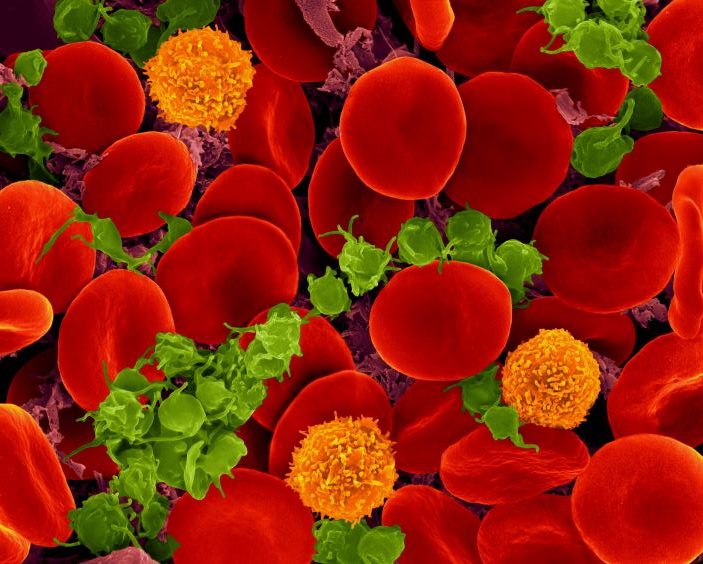
Red blood cells, platelets and T cells. Source: CC0

In a surprising discovery published in Science Advances, turning off the two proteins that regulate iron uptake results in not only anaemia but also in neutrophil levels plummeting. Iron deficiency, a known defence mechanism against infectious pathogens, can therefore a double-edged sword, as it simultaneously curbs the defensive power of this important arm of the innate immune system.

Iron is an indispensable component, needed for the blood pigment haemoglobin. The iron supply to the cells is controlled by the two proteins IRP-1 and IRP-2. If the cell lacks iron, IRP-1 and IRP-2 crank up the production of the various iron transporter proteins that take iron into the cell. IRP-1 and IRP-2 also ensure that an equally dangerous excess of iron does not occur.

IRP-1 and IRP-2 are essential for survival: mice lacking both control proteins during embryonic development die while still in the womb. But what happens when IRP-1 and IRP-2 fail in adult mice? A team led by Bruno Galy at the German Cancer Research Center (DKFZ) has now investigated this by shutting down IRP production in mice.

As the researchers had expected, the most striking change after IRPs were switched off was a pronounced decrease in red blood cells. Due to the lack of haemoglobin, these erythrocytes reached only a minimal size.

However, the researchers were surprised to see that white blood cells also decreased, mainly due to a deficiency of neutrophils, which account for up to two-thirds of white blood cells in humans.

The neutrophil decline was not caused by a mass die-off but a developmental blockade in the haematopoietic system: the precursor cells in the bone marrow no longer develop into mature neutrophils – an iron-dependent process. Other types of white blood cells, such as monocytes, were unaffected by the IRP-dependent developmental blockade.

Iron limitation is a double-edged sword

“This strong iron dependence of neutrophils was previously unknown. It possibly affects the immune defence against bacterial pathogens,” said senior author Bruno Galy. Yet iron deficiency is one of the body’s defence strategies in bacterial infections since many pathogens are dependent on iron. The body hoards the metal in certain cells to cut off access for pathogens, limiting their ability to replicate.

Galy is involved with another study also in Science Advances, which shows that iron deficiency in blood serum, as typically occurs with infections, leads to a decrease in neutrophils in mice and limits the ability of these immune cells to fight bacteria. “Iron deficiency apparently modulates the innate immune system. It suppresses the maturation of neutrophils and also throttles their defensive power,” commented Bruno Galy. “The limitation of available iron is apparently a double-edged sword: On the one hand, the body thereby prevents bacteria from spreading. On the other hand, the function of an important arm of the innate immune system suffers.”

Inflammation often leads to anaemia, as can be experienced by cancer patients. The researchers next want to investigate whether iron deficiency in chronic inflammation also impairs immune function.

Source: German Cancer Research Center (Deutsches Krebsforschungszentrum, DKFZ)