

IL-1 pathway prevents a normally harmless fungus developing into a fatal infection
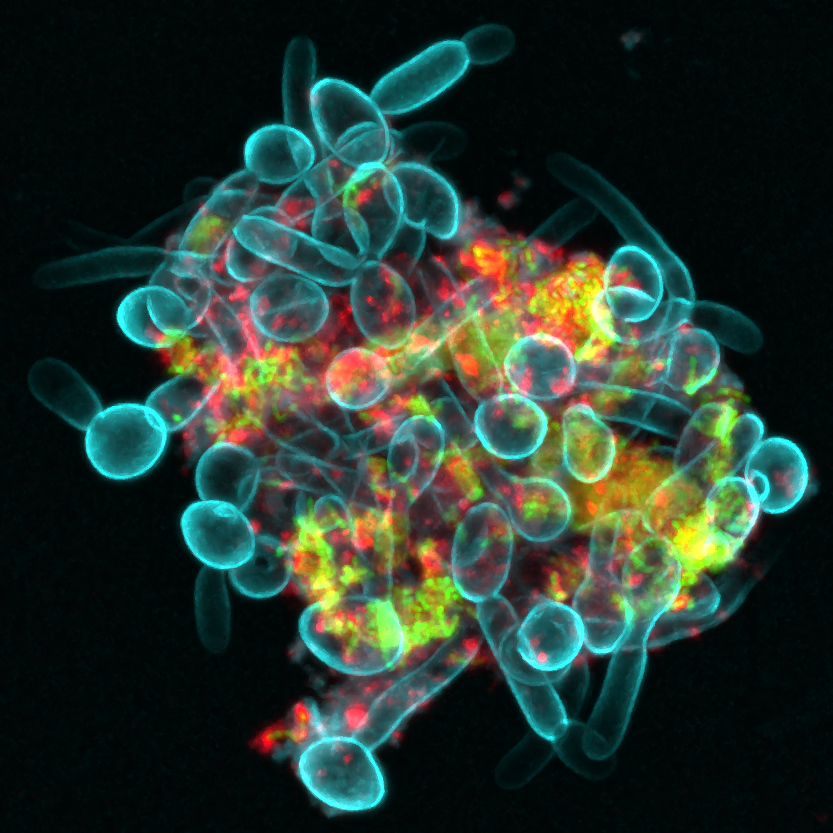
A study from King’s College London provides the first potential clue as to why only certain patients with weakened immune systems, including those undergoing chemotherapy or living with HIV, are at risk of life-threatening Candida albicans infections. Candida albicans is a fungus that normally lives harmlessly in areas such as the mouth and gut but can sometimes spread through the body and cause fatal disease. If the results, published in Nature Microbiology, are confirmed in humans, the results could provide a test to understand who is at risk of developing fatal fungal infections and represent a potential therapeutic target to reduce the risk of developing the disease.
Fungal infections kill more than 2.5 million people each year, with Candida albicans alone killing almost a million. However, until now we knew little about why fungi escape their natural location in mouths and gut and cause life-threatening disease in around 10% of patients who have a weakened immune system.
The scientists focused on a signal produced by the immune system to trigger symptoms to fight off infection, IL-1. Mice which were genetically modified not to produce IL-1 experienced severe disease when exposed to Candida albicans. The findings suggest that the IL-1 immune pathway is critical in preventing Candida albicans from spreading around the body and causing life-threatening disease.
They investigated this further by injecting IL-1-deficient mice with a drug that removes neutrophils, a type of white blood cell that is among the first to respond to infections and help fight threats such as bacteria and fungi. This allowed the researchers to mimic the weakened immune system seen in some immunocompromised patients. By then introducing Candida albicans to the mouths of those mice, they for the first time observed the fungus spread throughout the body and cause fatal disease, confirming that IL-1 is critical in preventing disease spreading.
While the study focused specifically on Candida albicans, the researchers say the IL-1 immune pathway may be a broader defence mechanism that helps keep fungi normally found in healthy microbiomes from spreading and causing fatal disease, and further research is needed to confirm whether this applies to other fungal species.
Understanding what causes fungi that are naturally present in our microbiomes, such as Candida albicans, to cause life-threatening disease could help spot at-risk patients earlier. The researchers suggest that, if confirmed in humans, the findings could lead to a test that identifies which immunocompromised patients have low levels of IL-1 and so are at risk of Candida albicans escaping their microbiomes and causing disease before it happens.
While drugs such as antibiotics are currently used to treat life-threatening fungal diseases, more targeted therapies are needed that tackle the root cause of infection. The researchers suggest future clinical studies in humans could test whether drugs targeting IL-1 could work as a personalised therapy for preventing life-threatening Candida albicans infection.
Source: King’s College London
