

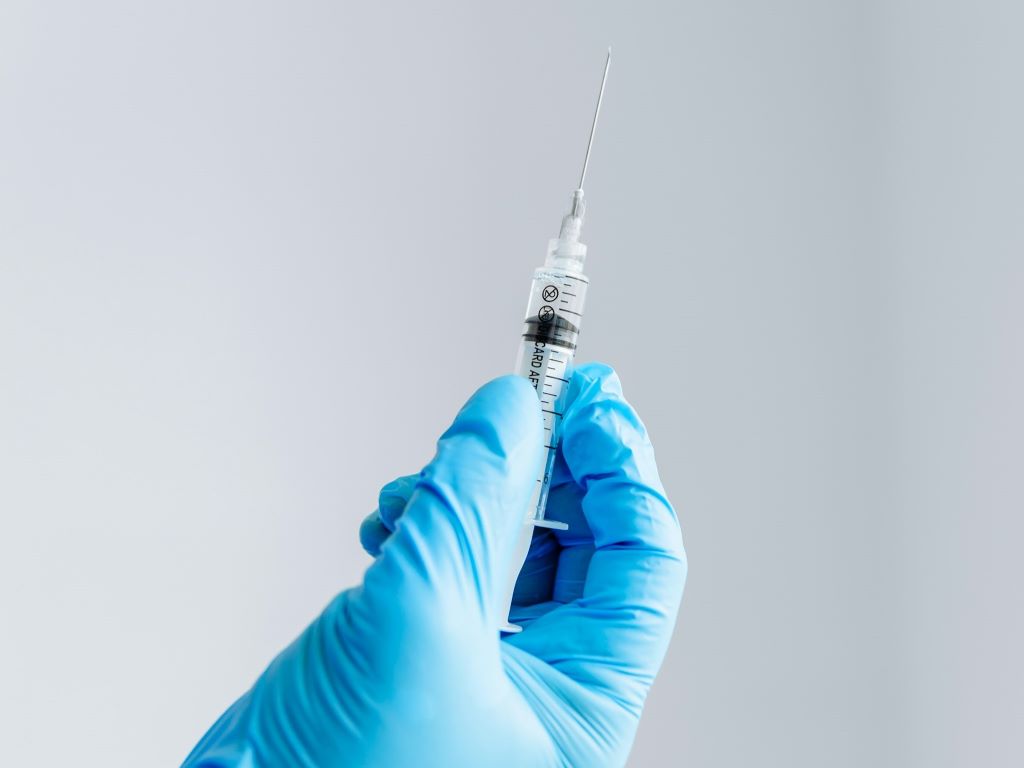
Sanofi is pleased to share that the South African Health Products Regulatory Authority (SAHPRA) has granted registration for Beyfortus® (nirsevimab), a long-acting monoclonal antibody designed to protect infants against Respiratory Syncytial Virus (RSV).
Beyfortus® is the first long-acting monoclonal antibody designed to provide protection across the RSV season for all infants, including those born at term, preterm, or with underlying conditions. It is given as a single intramuscular dose just before or during the RSV season¹ and is expected to be available before the 2026 RSV season.
RSV is one of the leading causes of Lower Respiratory Tract Infections (LRTIs) such as bronchiolitis and pneumonia in young children, and a major driver of hospitalisation in infants under one year of age.3 Globally, RSV is responsible for 20 to 40% of pneumonia and 40 to 80% of bronchiolitis hospitalised cases among infants under one year of age.2
It was estimated that in a year, RSV caused around 33 million acute lower respiratory infections in children younger than five years, resulting in 3,6 million hospitalisations and over 100 000 RSV-attributable deaths globally3. RSV-related medical costs in this age group are estimated at €4.82 billion per year, including hospital, outpatient, and follow-up care7.
In South Africa, RSV infections occur year-round with a strong seasonality from February to May4. Each year in South Africa, there are approximately 96 000 cases of RSV severe acute respiratory illnesses in children under five years of age, and among newborns under one month, about one in seven requires admission for severe RSV9. The incidence and severity of RSV LRTI are highest in infants under 6 months of age, representing 22% of all-cause hospital admissions in this age group. 41% of the LRTI-related hospitalisations are attributable to RSV.5
RSV infections also have long lasting consequences as a first episode of RSV LRTI is associated with an increased risk of subsequent LRTIs. In addition, RSV is associated with recurrent wheezing in early childhood.6
Though risk factors such as prematurity and underlying conditions will increase the probability and severity of RSV infections in children, the majority of severe RSV outcomes occur in healthy full‑term infants. They represent the majority of ICU admissions (65.8%) and mechanical ventilation cases (59.8%) among RSV‑infected infants, and globally, healthy infants account for around 57% of RSV‑related deaths.10-11 For this reason, all infants are at risk of RSV disease.
A single dose of Beyfortus® provides immediate and season-long protection, lasting for at least five months, corresponding to a typical RSV season¹. In the MELODY phase III trial*, nirsevimab reduced medically attended RSV-LRTI by 74.5% and hospitalisations by 62.1% compared with placebo,8 while the HARMONIE real-world study found an 82.7% reduction in RSV-related hospitalisations through 180 days after immunisation14. Beyfortus® demonstrated a consistent safety profile across term, preterm, and high-risk infants, with the most common adverse reactions being mild rash (0.7%), fever (0.5%), and injection-site reactions (0.3%)¹.
Beyfortus® has also demonstrated its strong public health impact in real-world settings. Following its introduction in 2024 in Chile and in 2023 in Galicia, Spain, the effectiveness of Beyfortus® against RSV-related LRTI hospitalisations was estimated to be 76.4% and 85.9%, respectively. In Chile, Beyfortus® demonstrated 49.7% effectiveness against all-cause hospitalisation. 12-13
“RSV causes a great burden on families and the healthcare systems in South Africa and worldwide,” says Diane Buron, South Africa Medical Head for Sanofi Vaccines. “It is a leading cause of infant hospitalisation during the season and Beyfortus® has the potential to change that. With only one dose, babies will be effectively protected throughout the season and thousands of cases and hospitalisations can be averted.”
“Because the majority of RSV cases are in term and healthy infants,” says Buron “proposing this innovative and effective protection to all infants will have a significant impact on the families and healthcare system.”
More than 6 million infants worldwide have now received Beyfortus®, supported by over 40 real-world studies across four continents, in both the Northern and Southern hemispheres. The introduction of Beyfortus® in South Africa is a significant advancement in paediatric respiratory protection and supports the global goal of reducing preventable infant morbidity and mortality linked to RSV8.
*The Phase 3 MELODY trial was a randomised, double-blind, placebo-controlled trial conducted across 21 countries designed to determine the safety and efficacy of Beyfortus® against medically attended LRTD caused by RSV in healthy term and late preterm infants (35 weeks gestational age or greater) entering their first RSV season, including efficacy against severe disease such as hospitalisation, through 150 days after dosing. The primary endpoint was met, reducing the incidence of medically attended RSV LRTD by 74.5% (95% CI 49.6, 87.1; P<0.001) compared to placebo. The efficacy of Beyfortus® against the secondary endpoint of hospitalization was 62.1% (-8.6, 86.8). A pre-specified pooled analysis of the Phase 3 MELODY trial showed the efficacy of Beyfortus® against medically attended RSV LRTD and medically attended RSV LRTD with hospitalisation was 79.5% (95% CI 65.9, 87.7; P<0.0001) and 77.3% (95% CI 50.3, 89.7; P<0.001), respectively.
References
1. Sanofi-Aventis South Africa (Pty) Ltd. Beyfortus® Professional Information (PI). Version E, 2025-09-18.
2. Dangor et al. (2023) – Bronchiolitis v. bronchopneumonia: Navigating antibiotic use within the lower respiratory tract infection spectrum. S Afr Med J 113(6):e709
3. Li Y et al. Global, regional, and national disease burden estimates of acute lower-respiratory infections due to respiratory syncytial virus in children younger than 5 years in 2019: a systematic analysis. Lancet. 2022; 399: 92047–64.
4. National Institute for Communicable Diseases (NICD). Respiratory Syncytial Virus (RSV). Available at: https://www.nicd.ac.za/diseases-a-z-index/respiratory-syncytial-virus-rsv/ (Accessed January 2026).
5. Wedderburn CJ et al. Risk and rates of hospitalisation in young children: A prospective study of a South African birth cohort. PLOS Glob Public Health. 2024
6. Zar HJ et al. Early-life respiratory syncytial virus lower respiratory tract infection in a South African birth cohort: epidemiology and effect on lung health. Lancet Glob Health. 2020.
7. Zhang S et al. Cost of respiratory syncytial virus-associated acute lower-respiratory infection management in young children at the regional and global level: a systematic review and meta-analysis. J Infect Dis. 2020; 222(Suppl 7): S680–S687.
8. Hammitt LL et al. Nirsevimab for prevention of RSV in healthy late-preterm and term infants. N Engl J Med. 2022; 386(9): 837–846.
9. Moyes J et al. The burden of RSV-associated illness in children aged < 5 years, South Africa, 2011 to 2016. BMC Med 21, 139 (2023).
10. Nair H, et al. Global burden of acute lower respiratory infections due to respiratory syncytial virus in young children: a systematic review and meta-analysis. Lancet. 2010;375:1545–1555.
11. Li Y, et al. Global, regional, and national disease burden estimates of RSV-associated acute lower respiratory infection in young children in 2019: a systematic analysis. Lancet. 2022;399:2047–2064
12. Razzini JL. Impact of universal nirsevimab prophylaxis in infants on hospital and primary care outcomes across two respiratory syncytial virus seasons in Galicia, Spain (NIRSE-GAL): a population-based prospective observational study. Lancet Infect Dis. 2026
13. Torres JP et al. Effectiveness and impact of nirsevimab in Chile during the first season of a national immunisation strategy against RSV (NIRSE-CL): a retrospective observational study. Lancet Infect Dis. 2025 Nov;25(11):1189-1198.
14. Munro et al. 180-day efficacy of nirsevimab against hospitalisation for respiratory syncytial virus lower respiratory tract infections in infants (HARMONIE): a randomised, controlled, phase 3b trial. Lancet Child Adolesc Health. 2025 Jun;9(6):404-412.
