

Tag: thymus

The Thymus May Be Critical for Longevity and Immunotherapy

Mass General Brigham researchers used artificial intelligence to analyse routine medical scans, uncovering how the thymus impacts aging, cardiovascular risk, cancer incidence, and response to immunotherapy.
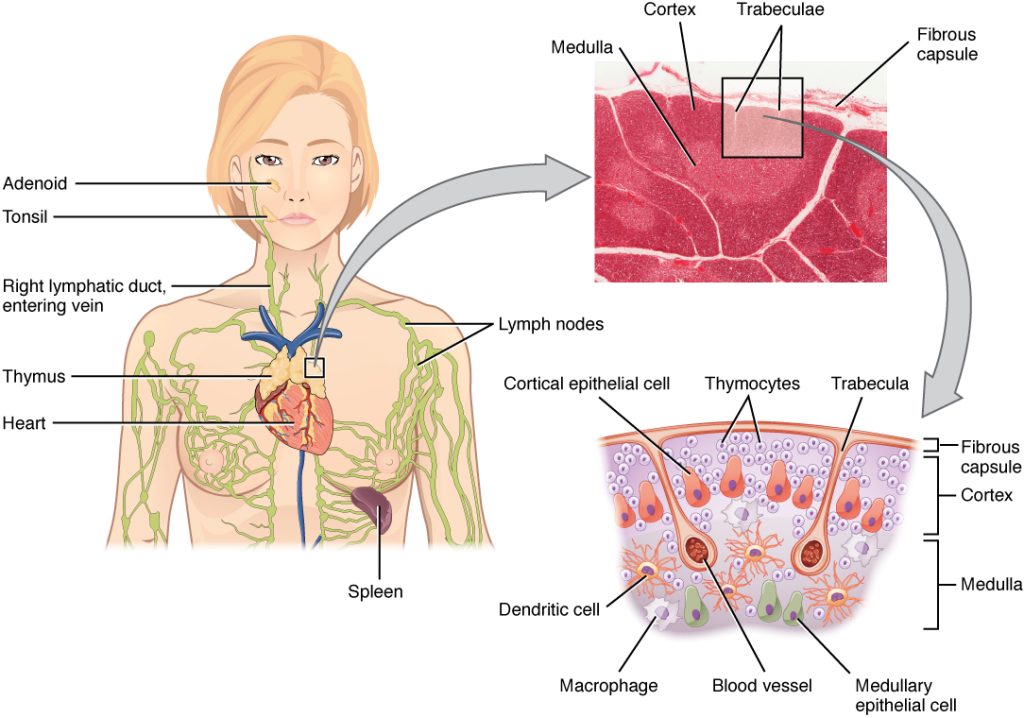
Source: Wikimedia Commons. CC3.0

Two new studies from investigators at Mass General Brigham challenge a decades-old assumption that the thymus, an organ best known for its role in establishing immune function in childhood, becomes irrelevant in adulthood. Using artificial intelligence (AI) to analyse routine CT scans, researchers uncovered that adults with a healthy thymus had increased longevity and reduced risk for cardiovascular disease and cancer. In a separate study of patients with cancer, the researchers found that thymic health may influence response to immunotherapy – a treatment that depends on the strength of a patient’s immune system.

These findings, published in two papers in the same issue of Nature, suggest the thymus plays a far more consequential role in adult health than previously understood, and might provide a new target for personalising disease prevention and cancer treatments.

“The thymus has been overlooked for decades and may be a missing piece in explaining why people age differently, and why cancer treatments fail in some patients,” said Hugo Aerts, PhD, corresponding author on the papers and director of the Artificial Intelligence in Medicine (AIM) Program at Mass General Brigham. “Our findings suggest thymic health deserves much more attention and may open new avenues for understanding how to protect the immune system as we age.”

The thymus is a small organ in the chest that helps train T cells, priming the immune system to protect the body from infections and disease. For decades, doctors believed the organ was mostly inactive after puberty because it shrinks with age and produces fewer new T cells. As a result, its role in adult health has rarely been examined in large populations.

Previous research has linked T cell diversity to aging and immune decline, but most of those studies relied on small, blood-based analyses. In contrast, the new studies examined more than 25 000 adults in a national lung cancer screening trial and over 2500 participants in the Framingham Heart Study – a large, long-running population cohort of generally healthy adults.

The team analysed the size, shape, and composition of the thymus, generating a “thymic health” score. People with high thymic health scores had about a 50% lower risk of death, 63% lower risk of cardiovascular death, and 36% lower risk of developing lung cancer compared to those with low thymic health. These associations remained significant after adjusting for age and other health factors.

The researchers theorize that when thymic health and T cell diversity decline, the immune system may become less able to respond to new threats, like cancer or other diseases. Their analysis found that chronic inflammation, smoking, and high body weight were associated with poorer thymic health, suggesting that lifestyle and systemic inflammation may influence immune resilience across the lifespan.

In a second study, the researchers analysed CT scans and outcomes from more than 1200 immunotherapy-treated patients. Patients with stronger thymic health had about a 37% lower risk of cancer progression and a 44% lower risk of death, even after accounting for other patient, tumour, and treatment factors. These findings point to a previously underappreciated role the thymus may play in shaping how well patients respond to modern cancer immunotherapies.

The researchers caution that their findings will need to be confirmed in future studies, and the imaging method is not yet ready for routine clinical use. While lifestyle factors were linked to thymic health, the studies did not test whether modifying those factors can directly improve thymic function.

The team is currently leading additional research to investigate whether other care-associated factors may impact thymic health. In one study, they are examining whether unintended radiation exposure to the thymus in patients with lung cancer may affect outcomes. 

“Improving our understanding and monitoring of thymic health could eventually help physicians better assess disease risk and guide treatment decisions,” said Aerts.

Source: Mass General Brigham

Researchers Discover Stem Cells in the Thymus

Photo by Nhia Moua on Unsplash

Researchers have identified stem cells in the human thymus for the first time. These cells represent a potential new target to understand immune diseases and cancer and how to boost the immune system. Their reported their discovery in the journal Developmental Cell.

The thymus is a gland located in the front part of the chest, the place where thymocytes (the cells in the thymus) mature into T cells, specialised immune cells crucial to fighting disease. The thymus has a unique and complex 3D structure, including an epithelium (a lining of cells able to guide T cell maturation) that forms a mesh throughout the whole organ and around the thymocytes.

Owing to its relatively inaccessible location, comparatively recent discovery and the fact that it shrinks with age, the thymus has only been investigated for a short period of time compared to other organs. Until now, scientists believed it didn’t contain ‘true’ epithelial stem cells, but only progenitors arising in foetal development.

However, these findings from researchers at the Francis Crick Institute, show for the first time the presence of self-renewing stem cells, which give rise to the thymic epithelial cells instructing thymocytes to become T cells. This suggests the thymus plays an important, regenerative role beyond childhood, which could be exploited to boost the immune system.

In the course of their experiments, the researchers examined these stem cells based on the expression of specific proteins in the human thymus. They identified stem-cell niches (areas where stem cells are clustered) in two locations in the thymus: underneath the organ capsule, or outer layer, and around blood vessels in the medulla, the central part.

They demonstrated that thymic stem cells contribute to the environment by producing proteins of the extracellular matrix, which functions as their own support system.

By using state-of-the-art techniques to map gene expression in single cells and tissue sections, they found that these stem cells, named Polykeratin cells, express a variety of genes allowing them to give rise to many cell types not previously considered to have a common origin. They can develop into epithelial as well as muscle and neuroendocrine cells, highlighting the importance of the thymus in hormonal regulation.

The researchers isolated Polykeratin stem cells in a dish and were able to show that thymus stem cells can be extensively expanded. They demonstrated that all the complex cells in the thymus epithelium could be produced from a single stem cell, highlighting a remarkable and yet untapped regenerative potential.

Roberta Ragazzini, postdoctoral research associate at the Crick and UCL, and first author, said: “It’s paradoxical that stem cells in the thymus – an organ which reduces in size as we get older – regenerate just as much as those in the skin – an organ which replaces itself every three weeks. The fact that the stem cells give rise to so many different cell types hints at more fundamental functions of the thymus into adulthood.”

It’s understood that the thymus’ activity is tightly regulated in adults, providing enough immune support to fight infections but not overshooting to the degree of attacking the body’s own cells.

However, in certain people, the thymus isn’t working properly, or their immune system has reduced capacity. Today’s findings suggest it could be helpful in these cases to stimulate the stem cells to regrow the thymus and rejuvenate their immune system.

Paola Bonfanti, senior group leader of the Epithelial Stem Cell Biology and Regenerative Medicine Laboratory at the Crick, said: “This research is a pivotal shift in our understanding of why we have a thymus capable of regeneration. There are so many important implications of stimulating the thymus to produce more T cells, like helping the immune system respond to vaccinations in the elderly or improving the immune response to cancer.”

The researchers will next study thymic stem cell properties throughout life and how to manipulate them for potential therapies.

Source: The Francis Crick Institute

Thymus has an Unexpected Role in Adults, Study Finds

Photo by Jafar Ahmed on Unsplash

The thymus gland, which produces immune T cells before birth and during childhood, is often regarded as non-functional in adults, and is sometimes removed during cardiac surgery for easier access to the heart and major blood vessels. New research led by investigators at Massachusetts General Hospital (MGH) and published in the New England Journal of Medicine has uncovered evidence that the thymus is in fact critical for adult health generally and for preventing cancer and perhaps autoimmune disease.

To determine whether the thymus provides health benefits to adults, the team evaluated the risk of death, cancer, and autoimmune disease among 1146 adults who had thymectomy during surgery and among 1146 demographically matched patients who underwent similar cardiothoracic surgery without thymectomy. The scientists also measured T cell production and blood levels of immune-related molecules in a subgroup of patients.

Five years after surgery, 8.1% of patients who had a thymectomy died compared with 2.8% of those who did not have their thymus removed, equating to a 2.9-times higher risk of death. Also during that time, 7.4% of patients in the thymectomy group developed cancer compared with 3.7% of patients in the control group, for a 2.0-times higher risk.

“By studying people who had their thymus removed, we discovered that the thymus is absolutely required for health. If it isn’t there, people’s risk of dying and risk of cancer is at least double,” says senior author David T. Scadden, MD, director of the Center for Regenerative Medicine at MGH and co-director of the Harvard Stem Cell Institute. “This indicates that the consequences of thymus removal should be carefully considered when contemplating thymectomy.”

In an additional analysis involving all patients in the thymectomy group with more than five years of follow-up, the overall mortality rate was higher in the thymectomy group than in the general U.S. population (9.0% vs 5.2%), as was mortality due to cancer (2.3% vs 1.5%).

Although Scadden and his colleagues found that the risk of autoimmune disease did not differ substantially between the thymectomy and control groups as a whole in their study, they observed a difference when patients who had infection, cancer, or autoimmune disease before surgery were excluded from the analysis. After excluding these individuals, 12.3% of patients in the thymectomy group developed autoimmune disease compared with 7.9% in the control group, for a 1.5-times higher risk.

In the subgroup of patients in whom T cell production and immune-related molecules were measured (22 in the thymectomy group and 19 in the control group, with an average follow-up of 14.2 postoperative years), those who had undergone thymectomy had consistently lower production of new T cells than controls and higher levels of pro-inflammatory molecules in the blood.

Scadden and his team now plan to assess how different levels of thymus function in adults affect individuals’ health. “We can test the relative vigour of the thymus and define whether the level of thymus activity, rather than just whether it is present, is associated with better health,” he says.

Source: Massachusetts General Hospital