
Tag: primary aldosteronism

New Scan Could Help Millions with Hard-to-treat High Blood Pressure

A speedy new scan could improve how millions of people with hypertension are treated, suggests a new study

Credit: Pixabay CC0

About a quarter of people with high blood pressure have been estimated to have primary aldosteronism, a problem with their adrenal glands producing too much of the hormone aldosterone, which regulates levels of salt in the body.

This problem is often missed, as the path to diagnosis is complex, involving multiple tests and, to guide treatment, an invasive procedure that is not always reliable.

The new 10-minute scan, developed at University College London and described in a research letter in the New England Journal of Medicine (NEJM), reveals overactivity in adrenal glands that was invisible with conventional tests, showing exactly where too much aldosterone is being made.

This, the researchers say, will make it easier to decide on the best treatment approach – either removal of an adrenal gland that is producing too much aldosterone, or the use of new medications that block aldosterone production, targeting the cause of high blood pressure in many patients.

Professor Bryan Williams, Chair of Medicine at UCL and clinical lead for the study, said: “We have been waiting for a test like this for many decades. This British innovation is going to transform the diagnosis of aldosterone excess as an important and previously hidden cause of hypertension in many of our patients. It offers huge potential to completely change the way we make this diagnosis and enable us to provide better targeted treatment for our patients.”

The over-production of aldosterone, which raises high blood pressure by causing the body to retain too much salt, can result in a condition called primary aldosteronism, which increases the risk of heart disease, stroke and kidney disease. However, many people who do not meet the threshold for this condition are thought to have excess aldosterone raising their blood pressure.

Currently the condition is screened with a blood test and confirmed with a second test*. To decide on treatment, two catheters are inserted in veins on either side of the groin to measure levels of aldosterone on each side of the body. This helps clinicians determine if the problem is only located in one adrenal gland or both – but the test is not always accurate and not often offered as few hospitals have the expertise to perform this complex procedure.

To better detect the condition, researchers at UCL used a PET-CT scan, which creates detailed 3D images of parts of the inside of the body and maps the accumulation of a tiny amount of radioactive tracer injected into a person’s vein.

They built a new tracer compound designed to bind to the aldosterone-producing enzyme, aldosterone synthase. The tracer was highly selectively taken up by the parts of the adrenal gland that were over-producing aldosterone, lighting up these areas on the scan.

In their NEJM research letter, the researchers described how 17 patients were scanned in the world’s first use of this technique at UCLH. The team found the source of over-production of aldosterone in every patient and did not see any side effects.

Professor Williams added: “This is the first time we have been able to visualise this disease. We can see it light up on the scan. The intensity of the signal reflects the level of aldosterone over-production. This might allow us, in future, to more precisely target these over-producing areas.” 

The achievement builds on more than a decade’s work by Professor Erik Arstad (UCL Division of Medicine and UCL Chemistry) and colleagues, who pioneered and patented a new method to make radioactive tracers.

Using this method, they were able to repurpose a drug-like molecule that bound to the aldosterone-producing enzyme for use as a tracer, replacing a single atom with a radioactive version of that atom – meaning this molecule would light up on a PET-CT scan.

Professor Arstad said: “It is very rewarding to be able to bring laboratory innovation into the clinic for the benefit of patients with hard-to-treat hypertension.”

The study was conducted at UCL and UCLH and was funded by the MRC and the NIHR University College London Hospitals Biomedical Research Centre.

The team is now embarking on a phase 2 clinical trial to gather sufficient data for the test to be approved for routine clinical use in the NHS.

In the UK, more than 14 million people are estimated to have high blood pressure (about one in three adults).

*For instance, a salt loading test, where a person increases their intake of salt (sodium), which would be expected to suppress aldosterone levels. If aldosterone levels are still high despite this increase, that confirms a primary hyperaldosteronism diagnosis.

Source: University College London
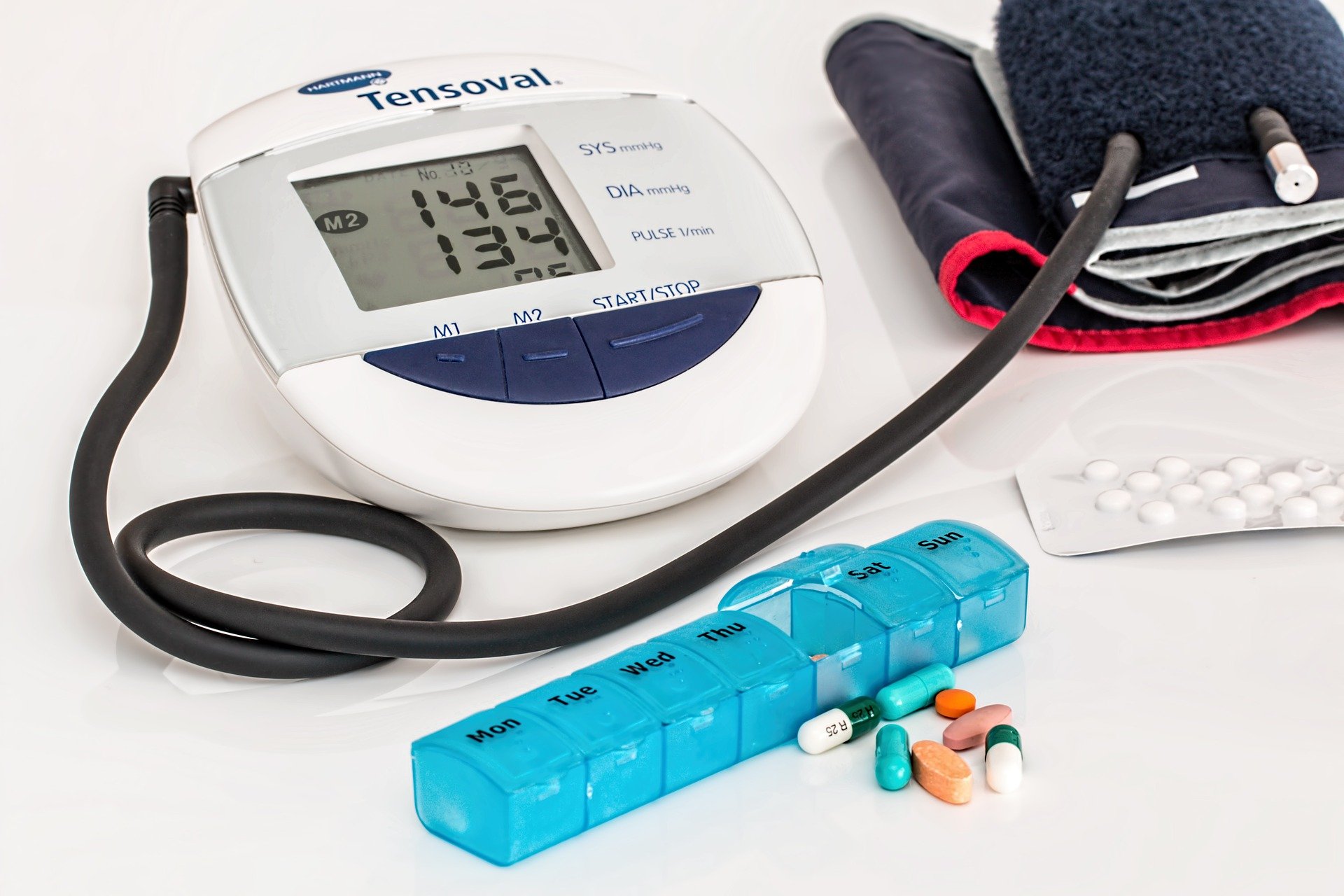
New Treatment Offers a Quick Cure for Common Cause of Hypertension

Credit: Pixabay CC0

Doctors at Queen Mary University of London, Barts Health NHS Trust and University College London have developed a groundbreaking, minimally invasive treatment, Triple T, offering hope for millions of people with high blood pressure caused by a commonly overlooked condition. 

The treatment, which could transform blood pressure management, has been published in The Lancet.

Triple T, also known as endoscopic ultrasound-guided radiofrequency ablation, is poised to change the way we address primary aldosteronism (PA) – a hormonal disorder that causes high blood pressure in one in 20 patients with blood pressure yet is often undiagnosed and untreated. This treatment has shown promising results in clinical trials and could become an accessible alternative to surgery, offering relief to those who suffer from this condition. 

The hidden cause of high blood pressure  

High blood pressure, affecting one in three adults, has several underlying causes, with PA being one of the most common yet underdiagnosed. In this condition, benign nodules in the adrenal glands produce excess aldosterone, a hormone that raises blood pressure by increasing salt levels in the body. Patients with PA often do not respond to standard medications and face increased risks of heart attacks, strokes and kidney failure. 

Until now, the only effective treatment for PA has been the surgical removal of the affected adrenal gland. However, this procedure requires general anaesthesia, a hospital stay, and weeks of recovery, causing many patients to go untreated. Triple T provides a faster, safer, and less invasive alternative by targeting and destroying the malfunctioning adrenal nodule without removing the gland.  

How Triple T works 

The procedure uses a combination of radiofrequency or microwaves and ultrasound to deliver targeted heat to the adrenal nodule. A fine needle is inserted through the stomach to the adrenal gland, guided by real-time ultrasound imaging, where short bursts of heat are used to destroy the problematic tissue. This targeted approach ensures minimal damage to surrounding healthy tissues. The entire procedure lasts only 20 minutes and requires no incision.   

Triple T’s success stems from recent advances in diagnostic scans, which use molecular dyes to accurately locate even the smallest adrenal nodules. These breakthroughs, combines with the ability to directly target nodules adjacent to the stomach, have enabled this minimally invasive approach. 

Successful trial and promising results  

The Feasibility study of radiofrequency endoscopic ABlation, with ULtrasound guidance (FABULAS) trial which tested Triple T on 28 patients with PA, showed excellent results. The procedure was found to be safe and effective, with most patients experiencing normalised hormones levels within six months. Many participants were able to stop all blood pressure medications, and the condition did not recur. 

Professor Morris Brown, co-senior author of the study and Professor of Endocrine Hypertension at Queen Mary University of London, reflected on the significance of this milestone: “It is 70 years since the discovery in London of the hormone aldosterone, and, a year later, of the first patient in USA with severe hypertension due to an aldosterone-producing tumour. This patient’s doctor, Jerome Conn, predicted, with perhaps only minor exaggeration, that 10-20% of all hypertensions might one day be traced to curable nodules in one or both glands. We are now able to realise this prospect, offering 21st-century breakthroughs in diagnosis and treatment.”  

One trial participant, Michelina Alfieri, shared her experience: “Before the study, I suffered from debilitating headaches for years despite multiple GP visits. As a full-time worker and single parent, my daily life was severely affected. This non-invasive treatment provided an immediate recovery—I was back to my normal routine straight away. I’m incredibly grateful to the team for giving me this choice.”  

What’s next?  

The success of the FABULAs trial has led to a larger study, WAVE, which will compare Triple T with traditional surgery in 120 patients. Results are expected in 2027. 

Professor Stephen Pereira, Chief Investigator of FABULAS, emphasised the potential global impact of Triple T. he said: “This less invasive technique could be widely offered in endoscopy units across the UK and internationally.”  

Clinical Endocrinology Lead at Addenbrooke’s Hospital and Professor of Clinical Endocrinology at the University of Cambridge, Professor Mark Gurnell, said: “Thanks to this work, we may finally be able to diagnose and treat more people with primary aldosteronism, lowering their risk of developing cardiovascular diseases and other complications, and reducing the number of people dependent on long-term blood pressure medication.” 

The research was primarily supported by Barts Charity, National Institute for Health and Care Research (NIHR) through the Barts and Cambridge Biomedical Research Centres (BRCs), and the British Heart Foundation.  

It is being followed by a larger randomised trial, called ‘WAVE’, which will compare TTT to traditional surgery in 120 patients. The results are expected in 2027.  

Source: Queen Mary University of London