

Tag: ischaemic stroke

About 1% of Hospitalised COVID Patients Develop Neurological Complications
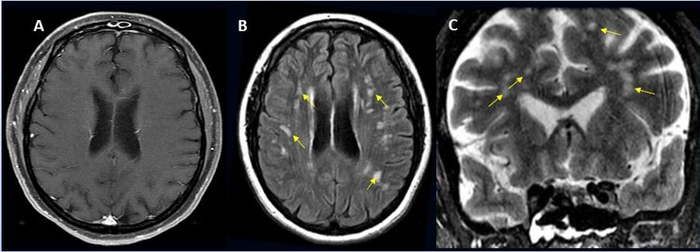
49-year-old female with past medical history of mitral valve disease and tricuspid valve regurgitation who developed headache followed by cough and fever presented to the ER with right upper eyelid ptosis (drooping). Credit: Radiological Society of North America and Scott H. Faro, M.D.

Approximately one in 100 patients hospitalised with COVID will likely develop complications of the central nervous system, according to a large international study. These can include stroke, haemorrhage, and other potentially fatal complications. The study was presented at the annual meeting of the Radiological Society of North America (RSNA).

“Much has been written about the overall pulmonary problems related to COVID, but we do not often talk about the other organs that can be affected,” said study lead author Scott H. Faro, MD, FASFNR, professor of radiology and neurology at Thomas Jefferson University. “Our study shows that central nervous system complications represent a significant cause of morbidity and mortality in this devastating pandemic.”

Dr Faro initiated the study after finding that only a small number of cases informed existing literature on central nervous system complications in hospitalised COVID patients.

To build a more complete picture, he and his colleagues analysed nearly 40 000 cases of hospitalised COVID patients, admitted between September 2019 and June 2020. Their average age was 66 years old, and two thirds were men.

Confusion and altered mental status were the most common causes of admission followed by fever. Comorbidities such as hypertension, cardiac disease and diabetes were common.

There were 442 acute neuroimaging findings most likely associated with the viral infection, with central nervous system complications in 1.2% of this large patient group.

“Of all the inpatients who had imaging such as MRI or a CT scan of the brain, the exam was positive approximately 10% of the time,” Dr Faro said. “The incidence of 1.2% means that a little more than one in 100 patients admitted to the hospital with COVID are going to have a brain problem of some sort.”

Ischaemic stroke, with an incidence of 6.2%, was the most common complication, followed by intracranial haemorrhage (3.72%) and encephalitis (0.47%).

A small percentage of unusual findings was uncovered, such as acute disseminating encephalomyelitis, an inflammation of the brain and spinal cord, and posterior reversible encephalopathy syndrome, a syndrome that mimics many of the symptoms of a stroke.

“It is important to know an accurate incidence of all the major central nervous system complications,” Dr Faro said. “There should probably be a low threshold to order brain imaging for patients with COVID.”

Source: EurekAlert!

Study Links OCD to Increased Risk of Stroke

Photo by Annie Spratt on Unsplash

Adults with obsessive-compulsive disorder (OCD) were more than three times as likely to have an ischaemic stroke later in life compared to adults who do not have OCD, according to new research.

OCD involves intrusive thoughts which may be accompanied by actions to alleviate the stress brought on by these thoughts; these are called obsessions and compulsions, respectively. Potentially debilitating, OCD typically manifests in adolescence and is under-reported and under-treated. The World Health Organization ranks OCD as one of the ten most disabling conditions worldwide, with a lifetime prevalence of 1% to 3%.

Clinical research has shown that patients with OCD often have stroke-related metabolic disorders, such as obesity and diabetes. 

While a growing body of evidence suggests an association between OCD and stroke risk, with some patients developing OCD after a stroke, OCD may also influence stroke risk. OCD raises the risk for ischaemic stroke more than 3-fold, especially among older adults
Drawing on health records from 2001-2010 from the Taiwan National Health Insurance Research Database, researchers compared stroke risk between 28 064 adults diagnosed with OCD and 28 064 adults without an OCD diagnosis. The average age at diagnosis was 37 years old, with equal representation of men and women, with a maximum data coverage of 11 years.

Analysis showed that even after controlling for factors known to increase stroke risk such obesity and high blood pressure, OCD remained an independent risk factor for ischaemic stroke. However, no differences were found when considering hemorrhagic strokes, and medications to treat OCD were linked to increased risk of stroke.
Ya-Mei Bai, MD, PhD, Professor, Department of Psychiatry, Taipei Veterans General Hospital, said: “The results of our study should encourage people with OCD to maintain a healthy lifestyle, such as quitting or not smoking, getting regular physical activity and managing a healthy weight to avoid stroke-related risk factors.”

Worldwide, stroke is the second-leading cause of death after heart disease. Cerebrovascular diseases often present complex cases, and this study was the first to consider how OCD and strokes may be associated on a longer time scale. 

Limitations include the observational nature of the study being unable to establish cause and effect, as well as the inclusion in the data of only stroke patients who sought health care. Additionally, information on disease severity and outcome was not included along with family medical history or environmental influences, which can further affect both the extent of OCD and severity of strokes.

“For decades, studies have found a relationship between stroke first and OCD later,” said Prof Bai. “Our findings remind clinicians to closely monitor blood pressure and lipid proles, which are known to be related to stroke in patients with OCD. More research is needed to understand how the mental processes connected to OCD may increase the risk of ischaemic stroke.”

Source: News-Medical.Net

Journal information: Chen, M-H., et al. (2021) Increased Risk of Stroke in Patients With Obsessive-Compulsive Disorder: A Nationwide Longitudinal Study. Stroke: Journal of the American Heart Association. doi.org/10.1161/STROKEAHA.120.032995.