The presence of food-specific IgA antibodies in the gut does not prevent peanut or egg allergies from developing in children, according to a Northwestern Medicine study published in Science Translational Medicine.
Scientists examined stool samples from more than 500 infants across the country and found that the presence of Immunoglobulin A, the most common antibody found in mucous membranes in the digestive tract, does not prevent peanut or egg allergies from developing later in life.
This discovery calls into question the role of Immunoglobulin A, or IgA, which was previously thought to be a protective factor against the development of food allergies.
While prior research had shown IgA could bind to and neutralide toxins and bacteria in the body, there was inconclusive evidence that IgA could do the same for food allergens, said Stephanie Eisenbarth, MD, PhD, senior author of the study.
“We were able to collaborate with different groups around the country to look at a number of different cohorts of children and young adults to ask: ‘Does the presence of IgA to peanut tell us that the person is tolerant to peanut?’,” said Eisenbarth. “We found that there really was no difference between kids who had peanut allergies and children who didn’t, and the same is true with egg allergies.”
The findings come as rates of allergies in children continue to climb: According to data from the Centers for Disease Control and Prevention, the number of children with allergies has more than doubled in the last 20 years.
Future directions for research will center on understanding the role IgA plays in people who have undergone immunotherapy and developed a tolerance to food allergens, Eisenbarth said.
After nearly three years of its harsh and extremely unpopular zero-COVID policy, the Chinese government announced on Wednesday the suspension of key parts of the contentious restrictions.
One of the ways some Chinese people expressed relief at the news was to go to the social media account of Dr Li Wenliang, the whistleblowing doctor who warned of the emerging coronavirus Wuhan and who was himself one of the virus’s early victims.
According to BBC News, they left messages “as if stopping by the graveside of a family elder” in which they shared their feelings.
“On the train, I suddenly remembered you and burst into tears. Dr Li, it’s over now, it’s dawn. Thank you,” read one message.
Another wrote: “I’ve come to see you and let you know – the dust has settled. We’re reopening.”
Chinese authorities punished the 33-year-old ophthalmologist for spreading “false statements”. He later died from COVID as he battled to save patients, prompting an outpouring of public grief and anger.
Xi Jinping’s campaign of zero-COVID aimed to completely eradicate the virus in China. The leadership hailed it as a success while other countries battled with surges of infections and deaths. Crucially, however, the policy made no use of Western-developed vaccines, mainly relying on the Chinese-developed and produced Sinovac.
Thus, with the lifting of the strictest parts of zero-COVID, people turned Dr Li’s page into a place to express their frustrations, hopes and grief. They also remembered his heroism in the face of authority.
“Those who blow the whistle are always worth remembering,” wrote one user. “I look forward to a more transparent society.”
China’s zero-COVID policy did appear to keep the country safe from the pandemic. There were 5200 deaths officially recorded in the pandemic while the US has recorded over one million.
The zero-COVID policy did not come without other costs. Sudden lockdowns saw people unable to get food. People testing positive for COVID were prevented from being with their families and were forced into centralised quarantine facilities. Gatherings and travel were subject to restriction.
Recently, workers broke out of a Foxconn factory which was supposed to be locked down for a quarantine. The event made international headlines as the authorities engaged in a manhunt for the escapees.
Some questioned whether the restrictions had been worth it.
“I took the subway this morning and for the first time did not have to look at the health code,” one user from Sichuan wrote.
“Some people say the epidemic has only started now after three years of hard work. So was it a waste of time? What of all those who paid a huge price, and even their lives for it?”
Others worried for China’s elderly population, many of whom are still unvaccinated.
“Dr Li, the real test of the three-year epidemic has begun. The epidemic is not as serious as yours, but I am exhausted,” one person wrote.
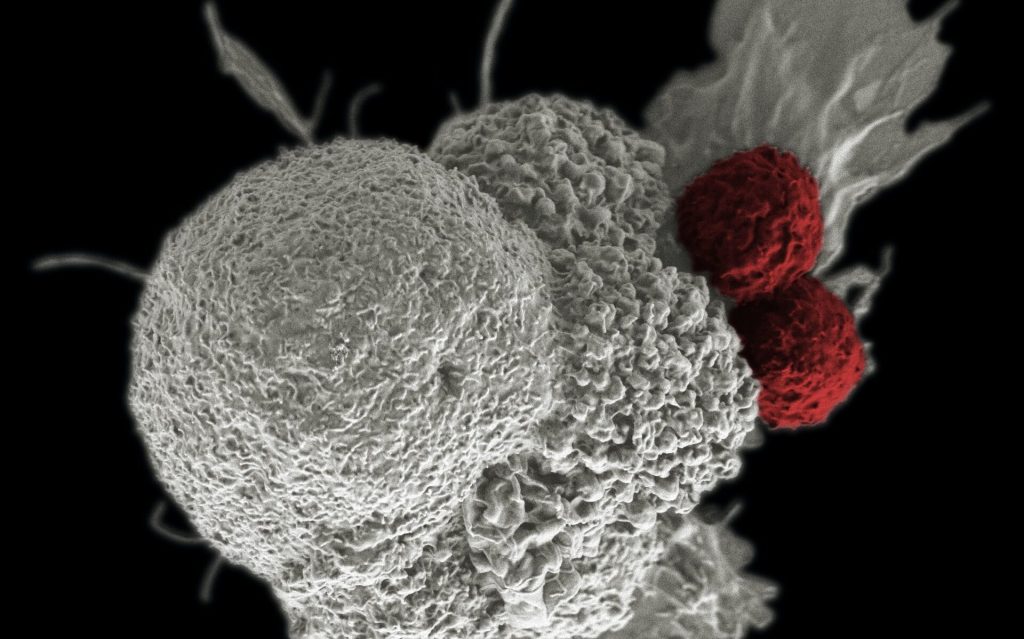
Shown here is a pseudo-colored scanning electron micrograph of an oral squamous cancer cell (white) being attacked by two cytotoxic T cells (red), part of a natural immune response. Photo by National Cancer Institute on Unsplash
Researchers have demonstrated that the daily rhythms of the immune system – and in particular that of dendritic cells, its key sentinels – have a hitherto unsuspected impact on tumour growth. These results, published in Nature, indicate that simply changing the time of administration of a treatment could boost its effectiveness.
Like pathogens, cancer cells can be identified and targeted by a specific immune response, which can be enhanced by immunotherapy treatments.
In previous studies, the team from the University of Geneva (UNIGE) and the Ludwig-Maximilians University of Munich (LMU) had shown that the activation of the immune system is modulated according to the time of day, indicating a peak of efficiency early in the morning in humans.
The immune system is no exception to the circadian rhythm. ‘‘By studying the migration of dendritic cells in the lymphatic system, one of the most essential elements of the immune response, we had highlighted the fact that immune activation oscillates throughout the day, with a peak in the late behavioural resting phase,” summarises study leader Christoph Scheiermann, professor at the University of Geneva. In the current study, the group focussed on cancer to assess how this temporal modulation affected tumours.
Temporal profiling of dendritic cells
The scientists injected groups of mice with melanoma cells at six different times of the day and then monitored tumour growth for a fortnight. ‘‘By varying only the time of injection, we observed very surprising results: tumours implanted in the afternoon grew little, while those implanted at night grew much faster, in accordance with the rhythm of activation of the mice’s immune system’’, said Chen Wang, a researcher in Christoph Scheiermann’s lab and first author of this study. The research team then reproduced the experiment with mice that had no immune system. ‘‘There was no longer any difference related to the time of day, thus confirming that the latter is indeed induced by the immune response: the first immune cells activated are the dendritic cells of the skin, which are found 24 hours later in the lymph node. The T cells are then activated and attack the tumour.” Suppressing the internal clocks of the dendritic cells causes the rhythm of activation of the immune system to disappear, confirming their key role.
Lastly, the researchers administered an immunotherapy treatment at different times of the day to mice whose tumour implantation had taken place at the same time. ‘‘This therapeutic vaccine consisted of a tumour-specific antigen, very similar to what is used to treat patients. When administered in the afternoon, the beneficial effect was again increased.’’
Findings in humans
In order to find out whether these results were repeated in humans, the scientists re-examined the data of patients treated with cancer vaccines for melanoma. Melanoma-specific T cells in these patients responded better to treatments administered early in the morning, which corresponds to the human circadian profile, reversed in comparison with mice, which are nocturnal animals. ‘‘This is very encouraging, but it is only a retrospective study of a small cohort of ten people,’’ Christoph Scheiermann points out.
The researchers now want to confirm and refine these initial findings through clinical studies. However, the very idea that a treatment can become more potent depending on the time of day opens up some surprising possibilities.
Girls are routinely being given more generous grades than boys with the same academic competences, according to a new study of tens of thousands of Italian pupils and their teachers. This reflects other European studies reflecting higher teacher grading for girls.
This bias against boys could mean the difference between a pass and a fail in subjects such as maths. The researchers warn that it could also have wider consequences in areas such as university admission, job choice and earnings.
Their study, published in British Journal of Sociology of Education, is the first to demonstrate that the problem is systemic – it is present across a variety of educational environments, regardless of teachers’ characteristics.
Gender-related gaps in educational achievement are common worldwide. However, the nature of the gap differs with different ways of measuring achievement.
When the results of standardised tests, which have a standard scoring system, are used, girls typically outperform boys in humanities, languages and reading skills, while boys do better in maths.
In contrast, when grades are awarded by teachers, females do better than males in all subjects.
To find out how teachers’ evaluations tend to favour females, the University of Trento researchers began by comparing the scores students received in standardised tests of language and maths with the grades they achieved in their classroom exams.
The 38 957 students were around 15-16 years old. The standardised tests were set nationally and marked anonymously, while the classroom exams were set in the classroom and marked non-anonymously by their teachers.
In line with previous studies, the girls performed better than the boys in the standardised tests of language, while the boys were ahead at maths.
The teachers however, put the girls in front in both subjects. The girls’ average grade in language was 6.6 (out of 10), compared to 6.2 for the boys. In maths, the average grade for the girls was 6.3, while the boys averaged 5.9 – which is below the pass mark of 6.
The analysis also showed that when a boy and a girl were similarly competent at a subject, the girl would typically receive a higher grade.
The researchers then looked whether factors, such as the type of school and the size and gender make-up of classes, were driving the gender grade gap.
They also investigated whether characteristics of teachers themselves, such as how senior or experienced they were and whether they were male or female, helped explain girls’ more generous grades.
Only two factors were found to have an effect – and only in maths. The gender gap in maths grades was greater when classes were bigger. Girls were also graded as being further ahead than boys in technical and academic schools than they were in vocational schools.
None of the other factors had any significant effect in reducing the gender grading gap.
Taken overall, the results show for the first time that higher grading of girls is systemic – rather than stemming from one particular failing, it is embedded in the whole school system.
The study’s authors say it’s possible that, in reading, teachers unconsciously reward students exhibiting traditionally female behaviour, such as quietness and neatness, which make teaching easier for the teachers. Another theory is that inflated grades in mathematics are a way of trying to encourage girls, who are often seen as weaker in this subject.
The study’s authors conclude that bias against boys in Italian schools is considerable and could have long-term consequences.
“There is a strong correlation between having higher grades and desirable educational outcomes, such as gaining admission to good colleges or having a lower probability of dropping out of school,” says researcher Ilaria Lievore, a PhD candidate in Sociology.
“Consequently, higher grades are also correlated with other outcomes, such as having higher earnings, a better job or even higher life satisfaction.”
She adds that although other European countries also grade girls more generously than boys, the reasons for this could differ from place to place and won’t necessarily mirror those in Italy.
The study’s limitations include using grades which were awarded part-way through the school year, which may have differed from differed from the students’ final grades.
Canadian singer Celine Dion has revealed that she has been diagnosed with a very rare neurological disease called Stiff Person Syndrome (SPS), BBC News reports. The disease causes muscle spasms, interfering with daily activities. Injuries can be sustained from falls caused by spasms experienced while walking.
The 54-year-old singer had been battling with muscle spasms, and since the disease interferes with her singing, she has cancelled all of her concerts scheduled for 2023, putting them off to 2024.
SPS is an extremely rare disease, thought to affect only one in a million individuals. As such, relatively little is known about it and what causes it, although it is associated with autoimmune disorders and often misdiagnosed as Parkinson’s disease.
After a hiatus from 2014 to be with her husband while he battled cancer, she returned to the stage in 2019 with her new album Courage. This tour had a number of cancellations due to the COVID pandemic.
Speaking on an Instagram post, Dion said that she had “a great team of doctors working alongside me to help me get better” and had the support of her “precious children”.
The singer explained: “I’m working hard with my sports medicine therapist every day to build back my strength and my ability to perform again, but I have to admit it’s been a struggle.
“All I know is singing. It’s what I’ve done all my life and it’s what I love to do the most.
“I miss you so much. I miss seeing all of you [and] being on the stage, performing for you.
“I always give 100 per cent when I do my show but my condition is not allowing me to give you that right now.”
What is stiff person syndrome?
According to the National Institute for Neurological Disorders, SPS is characterised by “fluctuating muscle rigidity in the trunk and limbs and a heightened sensitivity to stimuli such as noise, touch, and emotional distress, which can set off muscle spasms. Abnormal postures, often hunched over and stiffened, are characteristic of the disorder. People with SPS can be too disabled to walk or move, or they are afraid to leave the house because street noises, such as the sound of a horn, can trigger spasms and falls. SPS affects twice as many women as men.”
A definitive diagnosis can be made by measuring the level of glutamic acid decarboxylase (GAD) antibodies in the blood, which is elevated in people with SPS. GAD is the rate-limiting enzyme that catalyses the conversion of glutamate to GABA
As for management, the symptoms can be well controlled. Pharmacological treatment includes IVIg, anti-anxiety drugs, muscle relaxants, anti-convulsants, and pain relievers.
Work continues for better treatments; so far rituximab proved ineffective. At present, research is focused on aetiology and the role of anti-GAD antibodies.
People taking statins may have a lower risk of having an intracerebral haemorrhage (ICH), according to a new study published in the journal Neurology.
It has been suggested that statins increase the risk of ICH in people with a history of stroke, which has led to a precautionary principle of avoiding statins in patients with prior intracerebral haemorrhage. Recent research suggests that such prescribing reticence may be unfounded and potentially harmful when considering the well-established benefits of statins.
“While statins have been shown to reduce the risk of stroke from blood clots, there has been conflicting research on whether statin use increases or decreases the risk of a person having a first intracerebral haemorrhage,” said study author David Gaist, MD, PhD, of the University of Southern Denmark in Odense. “For our study, we looked at the lobe and non-lobe areas of the brain to see if location was a factor for statin use and the risk of a first intracerebral haemorrhage. We found that those who used a statin had a lower risk of this type of bleeding stroke in both areas of the brain. The risk was even lower with long-term statin use.”
The lobe area of the brain includes most of the cerebrum, including the frontal, parietal, temporal and occipital lobes. The non-lobe area primarily includes the basal ganglia, thalamus, cerebellum and brainstem.
For the study, researchers looked at health records in Denmark and identified 989 people, average age 76, who had an ICH in the lobe area of the brain. They were compared to 39 500 matched controls.
They also looked at 1175 people, average age of 75, who had an ICH in the non-lobe parts of the brain. They were compared to 46 755 matched controls. Prescription data was used to determine information on statin use.
Of the total participants, 6.8% who had a stroke had been taking statins for five or more years, compared to 8.6% of those who did not have a stroke.
After adjusting for factors such as hypertension, diabetes, and alcohol use, researchers found that people currently using statins had a 17% lower risk of having a stroke in the lobe areas of the brain and a 16% lower risk of stroke in the non-lobe areas of the brain.
In addition, longer use of statins was associated with a lower risk of stroke in both areas of the brain. With more than five years of statin use, people had a 33% lower risk of having a stroke in the lobe area of the brain and a 38% lower risk of stroke in the non-lobe area of the brain.
“It’s reassuring news for people taking statins that these medications seem to reduce the risk of bleeding stroke as well as the risk of stroke from blood clots,” Gaist added. “However, our research was done in only the Danish population, which is primarily people of European ancestry. More research should be conducted in other populations.”
Antiretroviral drugs almost completely reduce the risk of mothers passing on HIV infection to their children, even in a low-income country with a high HIV incidence such as Tanzania, according to a new study in The Lancet HIV.
UNAIDS estimates that 11% of children born to HIV-positive mothers in Tanzania are infected with HIV, during childbirth or via breast milk. But the new study suggests this figure is actually much lower.
The researchers, from Karolinska Institutet in Sweden, examined more than 13 000 HIV-positive, pregnant women, at several health centres in one of Africa’s largest cities, Dar es Salaam, in Tanzania. The women were offered antiviral treatment through maternity care between 2015 and 2017.
Only 159 infants were infected
The women were followed for 18 months after giving birth when most of them had stopped breastfeeding. When the researchers examined the mothers’ children, they discovered that only 159 of the more than 13 000 infants had been infected with HIV by the age of 1.5 years, translating to a risk of 1.4%, taking into account a margin of error.
The risk of infection was more than twice as high among women who sought care late in pregnancy or had advanced HIV. Conversely, the risk of infection was only 0.9% in those who had already received HIV treatment when they became pregnant.
“HIV transmission from mother to child can in principle be stopped completely with modern antiviral drugs. But so far it has not been demonstrated in low-income countries in Africa with a high incidence of HIV infection,” says Goodluck Willey Lyatuu, physician and postdoctoral researcher, also at the Department of Global Public Health at Karolinska Institutet and first author of the study.
Early diagnostics are important
The study is limited by challenges that may be typical in low-resource health systems, such as incomplete follow-up and missing data, and that risk factors such as stigma linked to HIV are rarely or never routinely investigated.
“But it is one of the largest cohort studies published from Africa on the risk of HIV transmission from mother to child where the baby is followed until the end of the breastfeeding period,” says says Anna Mia Ekström, clinical professor of global infectious disease epidemiology with a focus on HIV at the Department of Global Public Health at Karolinska Institutet and corresponding author of the study.
Potatoes have long been perceived as having negative health impacts, such as possibly increasing the likelihood of developing Type 2 diabetes. New research published in Diabetes Care has shown while spuds may not have all the same benefits as some other vegetables – such as lowering risk of Type 2 diabetes – health issues associated with potatoes may actually be due to their preparation.
In the long-term Danish Diet, Cancer and Health study, more than 54 000 people reported their dietary intake.
A recent analysis of this study led by Dr Nicola Bondonno from ECU’s Nutrition and Health Innovation Research Institute, found people who consumed the most vegetables had a 21% lower risk of developing Type 2 diabetes than those who consumed the least amount of vegetables.
PhD candidate Pratik Pokharel carried out work on the analysis and said while potatoes didn’t have the same impact on Type 2 diabetes, they also didn’t have any negative effect.
“In previous studies, potatoes have been positively linked to incidence of diabetes, regardless of how they’re prepared – but we found that’s not true,” Mr Pokharel said.
“When we separated boiled potatoes from mashed potatoes, fries or crisps, boiled potatoes were no longer associated with a higher risk of diabetes: they had a null effect.”
Mr Pokharel said underlying dietary patterns were the key.
“In our study, people who ate the most potatoes also consumed more butter, red meat and soft drink – foods known to increase your risk of Type 2 diabetes,” he said.
“When you account for that, boiled potatoes are no longer associated with diabetes. It’s only fries and mashed potatoes, the latter likely because it is usually made with butter, cream and the like.”
Eat your veggies
Mr Pokharel said findings from the study indicate vegetables could play a key role in reducing Type 2 diabetes, as people who ate a lot of leafy greens and cruciferous vegies such as spinach, lettuce, broccoli and cauliflower had a significantly lower risk of developing the condition.
He said the relationship between vegetables and diabetes should be incorporated into public dietary guidelines – as should the benefits of eating potatoes.
“The finding that vegetables lower diabetes risk is crucial for public health recommendations, and we shouldn’t ignore it,” he said.
“Regarding potatoes, we can’t say they have a benefit in terms of type 2 diabetes, but they also aren’t bad if prepared in a healthy way.
“We should separate potatoes and other vegetables in regard to messaging about disease prevention but replacing refined grains such as white rice and pasta with potatoes can improve your diet quality because of fibre and other nutrients found in potatoes.”
Putting it into practice in the kitchen
Mr Pokharel said people should be advised to increase their vegetable intake – and they could include potatoes, so long as they left out some of the unhealthy extras such as butter, cream and oil.
“Potatoes have fibre and nutrients, which are good for you,” he said.
“People talk about carbs being bad, but it’s more about the type of carbs you’re having; compared to something like white rice, boiled potatoes are a good quality of carbohydrate.”
COVID patients hospitalised for acute respiratory distress syndrome (ARDS) are less likely to need endotracheal intubation with prone positioning, but evidence is inconclusive for other outcomes such as mortality, suggests an in-depth analysis of the latest evidence published by The BMJ.
Since the 1970s, prone positioning has been standard care for patients with severe ARDS as it encourages a larger part of the lung to expand, enabling bigger breaths.
Usually, it is done for critically ill patients who are sedated and intubated. But in February 2020, reports emerged of possible benefits from prone positioning of awake COVID and it was widely adopted.
Since then, several studies have examined its effectiveness in awake COVID patients , but results have been conflicting.
To try and resolve this uncertainty, researchers trawled databases for randomised trials comparing awake prone positioning to usual care for adult COVID patients with hypoxaemic respiratory failure.
They found 17 suitable trials, 12 with no bias risk, involving 2931 non-intubated patients who were able to breathe unassisted and who spent an average of 2.8 hours per day lying prone.
The primary outcome was endotracheal intubation, and secondary outcomes included mortality, ventilator-free days, intensive care unit (ICU) and hospital length of stay, change in oxygenation and respiratory rate, and adverse events.
High certainty evidence from a pooled analysis of 14 trials showed that awake prone positioning reduced the risk of endotracheal intubation compared with usual care (24.2% with awake prone positioning vs 29.8% with usual care). On average, awake prone positioning resulted in 55 fewer intubations per 1000 patients.
However, high certainty evidence from a pooled analysis of 13 trials evaluating mortality did not show a significant difference in mortality between the two groups (15.6% with awake prone positioning vs 17.2% with usual care), but the study may have lacked statistical power to detect a difference.
Awake prone positioning did not significantly affect other secondary outcomes either, including, ventilator-free days, ICU or hospital length of stay, based on low and moderate certainty evidence.
Limitations included lack of individual patient data, differences between the targeted and achieved duration of awake prone positioning, and variation in the definition and reporting of certain outcomes across studies.
But further sensitivity analysis supported these results, suggesting a high probability of benefit for the endotracheal intubation outcome and a low probability of benefit for mortality.
As such, the researchers conclude: “Awake prone positioning compared with usual care reduces the risk of endotracheal intubation in adults with hypoxemic respiratory failure due to covid-19 but probably has little to no effect on mortality or other outcomes.”
In a linked editorial, researchers point out that the benefits of prone positioning in COVID patients may be confined to those with more severe hypoxaemia and longer duration of prone positioning, so say it may be wise to focus efforts on these particular groups.
Several unanswered questions remain, including the ideal daily duration of treatment, the level of hypoxaemia that should prompt prone positioning, and how best to improve patient comfort and encourage adherence, they write.
These questions may never be answered definitively in COVID patients as, fortunately, far fewer are experiencing hypoxaemic respiratory failure or critical illness, they explain.
“The pandemic should, however, renew interest and encourage further evaluation of awake prone positioning – an intervention that may benefit a wide range of patients with hypoxaemia,” they conclude.
The decriminalisation of cannabis for private use does not include the workplace, a Johannesburg Labour Court judge has ruled.
Judge Connie Prinsloo, in a recent ruling, said submissions by the National Union of Metalworkers of South Africa (NUMSA) that the Constitutional Court had ruled that cannabis was no longer a “drug” but just a “plant or a herb” were wrong.
She said the Concourt “Prince” judgment in 2018 did not offer any protection to employees against disciplinary action should they contravene company policies or disciplinary codes.
She said the apex court had not said cannabis was no longer a drug, as the union had argued, but had merely allowed for its personal consumption, in private, by adults.
The case before Judge Prinsloo was a review of the dismissal of two PFG Building Glass employees in October 2020 who had tested positive for cannabis while on duty. The National Bargaining Council for the Chemical Industry had found their dismissal to be fair. The union said it was unfair since cannabis was not a drug according to the Constitutional Court.
The company, through its witnesses, presented evidence that being under the influence of alcohol or drugs within the workplace was an offence for which dismissal was the prescribed sanction for the first offence.
This was because the company took workplace safety very seriously and it had a moral and legal duty to ensure that the working environment was safe.
On site, there was gas, large forklifts, extremely hot processes and dangerous chemicals used to make heavy glass which could potentially cut or crush someone.
The company followed the Occupational Health and Safety Act and had a zero-tolerance policy towards alcohol and drugs.
Referring to evidence at the bargaining council, Judge Prinsloo said it had been suggested by the employees that the company was “sticking to the old stigmatisation” of cannabis, whereas the Constitutional Court, in the Prince judgment, had said it was “just a plant … a herb” and could be legally possessed and used.
Company representatives, however, said it was still recognised as a drug and an employee was not permitted to be on site under the influence of alcohol or drugs.
One of the dismissed employees, Mr Nhlabathi, testified that he had used cannabis three days before he reported to work on the day he tested positive. He said he had been employed since 2016 and had “been smoking dagga and doing his job properly”. He disputed that the alcohol and drug policy related to cannabis but only to “alcohol and substances”.
His colleague, Mr Mthimkhulu, also relied on the Constitutional Court judgment that “dagga was a herb and not a substance”. Both claimed they were not aware that they could be fired for testing positive for cannabis.
Judge Prinsloo said the arbitrator had accepted that the company had a zero tolerance policy and that it treated cannabis as a drug because it was a “mind altering substance”.
The arbitrator had said the Prince judgment did not overrule the provisions of the Occupational Safety Act.
Judge Prinsloo said it was evident that the union and the employees had confused issues relating to the decriminalisation of the use of cannabis in private and the rights of employers to take disciplinary action against an employee who contravened a disciplinary code.
The Prince judgment declared specific provisions of the Drugs and Trafficking Act to be inconsistent with the right to privacy and therefore invalid to the extent that they made the use or possession of cannabis in private, by an adult person, a criminal offence.
The Constitutional Court had held, however, that it was common cause that cannabis was a harmful drug.
“The court did not interfere with the definition of a drug, nor did it declare dagga to be a plant or a herb,” Judge Prinsloo said.
“The applicant’s understanding of the judgment was either very limited or totally wrong,” she said.
The company was entitled to set its own standards of conduct and dismissal was an appropriate sanction, she said, dismissing the review.