

Experiments confirm anti-biotic properties of birch bark extract
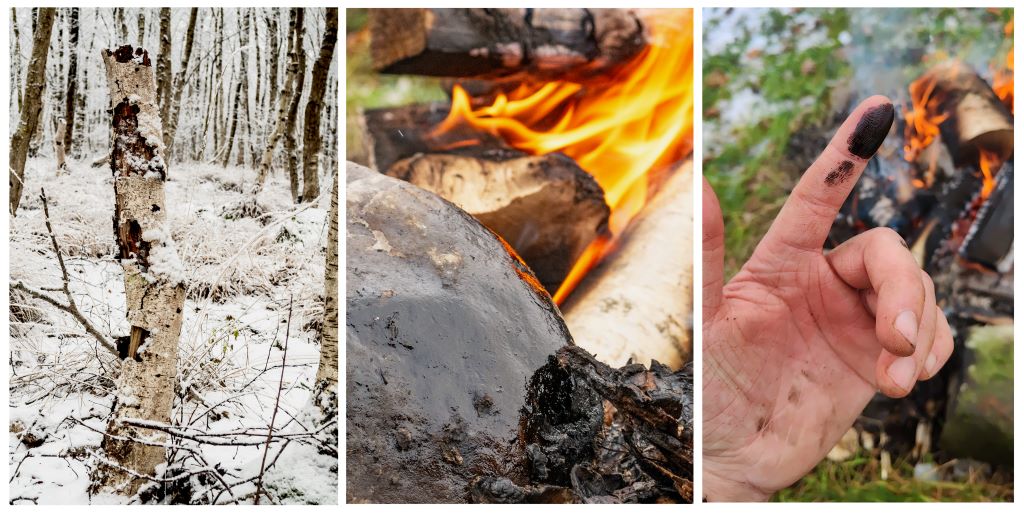
Neanderthals probably used birch tar for multiple functions, including treating their wounds, according to a study published March 18, 2026 in the open-access journal PLOS One by a team of researchers led by Tjaark Siemssen of the University of Cologne, Germany, and the University of Oxford, UK.
Birch tar is commonly found at Neanderthal archaeological sites, and in some cases this tar is known to have been used as an adhesive to assemble tools. Recently, some researchers have raised the question of whether Neanderthals had multiple uses for this substance. For instance, Indigenous communities in northern Europe and Canada use birch tar to treat wounds, and there is growing evidence that Neanderthals also employed a variety of medical practices.
To investigate the medicinal potential of birch tar, Siemssen and colleagues extracted tar from modern birch tree bark, specifically targeting species known from Neanderthal sites. They used multiple extraction methods, including distillation of tar in a clay pit and condensation of tar against a stone surface, both of which would have been methods available to Neanderthals. When exposed to different strains of bacteria, all of the tar samples were found to be effective at hindering the growth of Staphylococcus bacteria known to cause wound infections.
These experiments not only support the efficacy of Indigenous medicinal practices, but also reinforce the possibility that Neanderthals used birch tar to treat wounds. The authors note that there are other potential uses of birch tar, such as insect repellent, as well as other plants to which Neanderthals had access. Further exploration of the multiple potential uses of these natural ingredients will enable a more thorough understanding of Neanderthal culture.
The authors add: “We found that the birch tar produced by Neanderthals and early humans had antibacterial properties. This has important implications for how Neanderthals may have mitigated disease burden during the last Ice Ages, and adds to a growing set of evidence on healthcare in these early human communities.”
“By bringing together research on indigenous pharmacology and experimental archaeology, we begin to understand the medicinal practices of our distant human ancestors and their closest cousins. Additionally, this study of ‘palaeopharmacology’ can contribute to the rediscovery of antibiotic remedies whilst we face an ever more pressing antimicrobial resistance crisis.”
“The messiness of birch tar production deserves a special mention. Every step of the production is a sensory experience in itself, and getting the tar off our hands after spending hours at the fire has been a challenge every time.”
Provided by PLOS
Press preview: https://plos.io/3P6QrS5
In your coverage, please use this URL to provide access to the freely available article in PLOS One: https://plos.io/4le9beh
Contact: Tjaark Siemssen, tjaark.siemssen@arch.ox.ac.uk
Image caption: The bark of birch trees has been used to produce tar for more than 150,000 years. The centre photo shows birch bark tar condensed onto a rock that borders a hearth. When scraped off the rocks, the viscous tar can be used as both an adhesive and antibiotic.
Image credit: Tjaark Siemssen, CC-BY 4.0 (https://creativecommons.org/licenses/by/4.0/)
High-resolution image link: https://plos.io/4cteLHD
Citation: Siemssen T, Oludare A, Schemmel M, Puschmann J, Bierenstiel M (2026) Antibacterial properties of experimentally produced birch tar and its medicinal affordances in the Pleistocene. PLoS One 21(3): e0343618. https://doi.org/10.1371/journal.pone.0343618
Author countries: U.K., Canada, Belgium, Germany
Funding: Tjaark Siemssen is funded by the Boise Trust of the University of Oxford and the German Academic Scholarship Foundation (Studienstiftung). Aderonke Oludare was funded by Canadian Institutes of Health Research (CIHR) Project Grant 420598 awarded to Matthias Bierenstiel. The funders had no role in study design, data collection and analysis, decision to publish, or preparation of the manuscript.
Competing interests: The authors have declared that no competing interests exist.
