

Day: March 11, 2026

Reducing Sodium in Everyday Foods may Yield Heart-health Benefits Across Populations
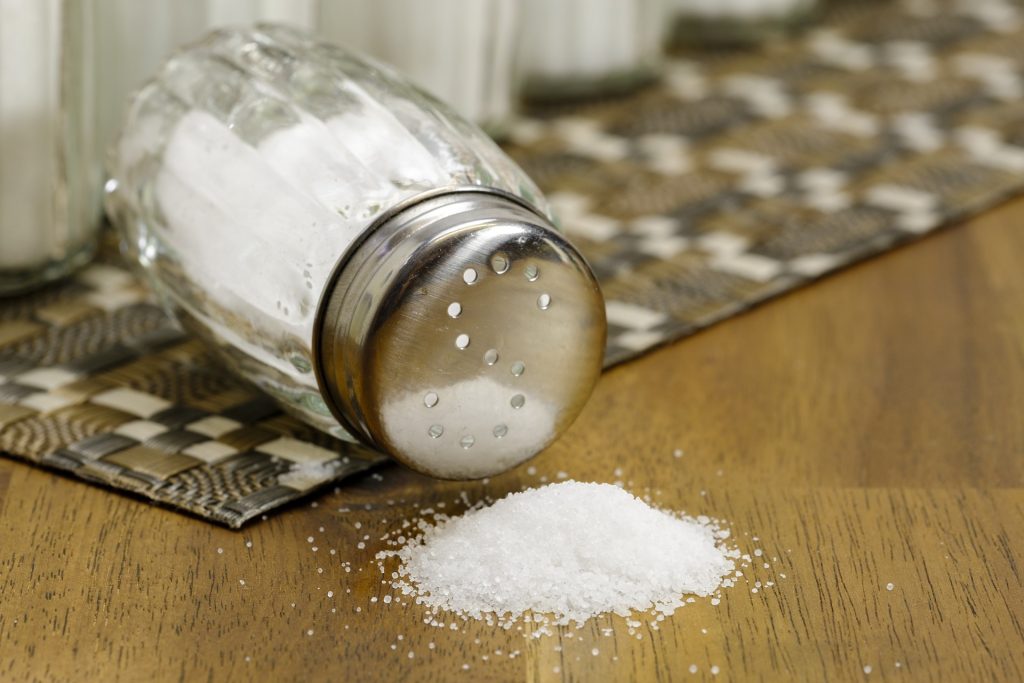
Credit: Pixabay CC0

Lowering sodium in packaged and prepared foods could significantly improve cardiovascular health and prevent many cases of heart disease, stroke and deaths in the general population in France and the U.K., according to two new research studies published in Hypertension, an American Heart Association journal.

Consuming too much sodium is a major risk factor for hypertension, also known as high blood pressure, which can lead to health complications such as heart attack, stroke, chronic kidney disease, dementia and other forms of cardiovascular disease, according to the American Heart Association.

To address the global concern about excessive sodium consumption many countries have implemented salt-reduction strategies to improve public health and reduce health costs.

Two studies – one in France involving salt-reduction targets for baguettes and other bread products in 2025, and the other in the United Kingdom focusing on 2024 goals for takeaway and packaged foods – estimated the potential impact on the general population if those salt-reduction targets were met. The projections calculated in these two studies indicate that minor adjustments in sodium content to some of the most common prepared foods in each country would require no effort from people to change their eating habits, yet may produce significant public health benefits.

“This approach is particularly powerful because it does not rely on individual behaviour change, which is often difficult to achieve and sustain. Instead, it creates a healthier food environment by default,” said Clémence Grave, M.D., lead author of the study from France and epidemiologist and public health physician at the French National Public Health Agency, headquartered in Saint-Maurice near Paris.

The World Health Organization recommends adults should consume less than 2,000 milligrams (mg) of sodium per day, however, global intake is much higher. The American Heart Association recommends daily intake of no more than 2300mg of sodium a day – equal to about 1 teaspoon of table salt; but also says the ideal limit is no higher than 1500 mg per day for most adults, especially for those with high blood pressure.

Sodium reduction in bread (France)

In 2019, France set a national public health goal to reduce salt consumption by 30%. In 2022, a voluntary agreement was signed between the government and bread producers to lower salt content by 2025. Bread, especially the baguette, is a culturally and nutritionally central food in France, yet it can be high in salt– traditionally contain about 25% of total daily recommended intake of salt. By 2023, most breads made in France already met the new sodium standards.

To understand the potential impact of the agreement on public health, researchers used national data and a mathematical model to estimate how many cases of cardio-cerebrovascular disease (conditions and diseases that affect both the heart and the brain’s blood vessels), kidney disease and dementia could be prevented if the salt-reduction targets met full compliance.

The analysis found that with bread consumption remaining the same and sodium-reduction targets fully met, less salt in baguettes and bread would decrease daily intake by 0.35 g per person, leading to slightly lower blood pressure across the population.

“This salt-reduction measure went completely unnoticed by the French population – no one realised that bread contained less salt,” Grave said. “Our findings show that reformulating food products, even with small, invisible changes, can have a significant impact on public health.”

Sodium reduction in packaged foods and take-out meals (United Kingdom)

For the study in the U.K., researchers used national survey data to estimate the amount of salt people consumed from pre-prepared packaged and take-out meals. They then estimated daily sodium intake if all relevant food categories met the 2024 sodium-reduction targets.

Sales-weighted average and maximum salt content targets were set for 84 grocery food categories – including bread, cheeses, meats, and snacks – and, for the first time, 24 out-of-home categories such as burgers, curries, and pizza. The modelling also covered how these changes could affect heart disease, stroke, quality of life and health care costs.

The research found that fully meeting the sodium reduction goals could have reduced average salt intake from about 6.1 g to 4.9g per day – translating to an estimated average of 17.5% less salt consumed per person per day. Men would experience slightly larger reductions than women because they tend to consume more salt in general.

Even this small, daily reduction in salt would lower blood pressure modestly across the population, and the improvements could add up.

Source: American Heart Association

Family Dinners May Reduce Substance Use Risk for Many Adolescents

Regular bonding over meals may help prevent kids from using alcohol, cannabis, and e-cigarettes, but those with significant stress or trauma need additional support

Photo by Vanessa Loring on Pexels

Anew study from researchers at Tufts University School of Medicine finds that regular family dinners may help prevent substance use for a majority of US adolescents, but suggests that the strategy is not effective for youth who have experienced significant childhood adversity.

The findings provide important insights for practitioners looking to help families prevent substance use, as well as for researchers aiming to develop interventions that better account for adolescents’ unique experiences.  

For the study, published January 19 in the Journal of Aggression, Maltreatment & Trauma, researchers analysed online survey data from 2090 US adolescents ages 12 to 17 and their parents. Participants from around the country were asked about the quality of their family meals – including communication, enjoyment, digital distractions, and logistics – as well as adolescents’ alcohol, e-cigarette, and cannabis use in the previous six months.

The researchers then examined how these patterns differed based on adolescents’ experiences of household stressors and exposure to violence, as reported by both the children and parents. Instead of counting each adverse experience equally, the researchers created a weighted score based on how strongly the different experiences are linked to substance use in prior research and this national sample.

Higher family dinner quality was associated with a 22% to 34% lower prevalence of substance use among adolescents who had either no or low to moderate levels of adverse childhood experiences. 

“These findings build on what we already knew about the value of family meals as a practical and widely accessible way to reduce the risk of adolescent substance use,” said Margie Skeer, the study’s lead author, professor and chair of the Department of Public Health and Community Medicine at the School of Medicine.  

“Routinely connecting over meals – which can be as simple as a caregiver and child standing at a counter having a snack together – can help establish open and routine parent-child communication and parental monitoring to support more positive long-term outcomes for the majority of children,” added Skeer. “It’s not about the food, timing, or setting; it’s the parent-child relationship and interactions it helps cultivate that matter.”

Adverse childhood experiences reported by participants in the study included parents being divorced; a family member being diagnosed with a substance-use disorder; someone in the family having a mental-health disorder; the adolescent witnessing violence; the adolescent often being teased about their weight; a parent using non-prescribed drugs daily; or the adolescent experiencing sexual or physical dating violence.  

The study found that family meals offered little protection for adolescents whose adversity score reached the equivalent of four or more experiences – a population that encompasses nearly one in five U.S. high school students younger than 18, according to a study of the most recent Youth Risk Behavior Survey data.  

“While our research suggests that adolescents who have experienced more severe stressors may not see the same benefits from family meals, they may benefit from more targeted and trauma-informed approaches, such as mental health support and alternative forms of family engagement,” said Skeer.  

She added that future research should explore whether other supportive routines – beyond shared meals or outside the family environment – can help protect adolescents exposed to highly stressful or traumatic childhood experiences. 

Source: Tufts University

Revealing How Transplanted Neural Stem Cells Preserve Vision

Photoreceptor cells in the retina. Credit: Scientific Animations

Cedars-Sinai investigators working to optimise a cell-based treatment for retinitis pigmentosa have uncovered how transplanted neural stem cells interact with host retinal cells to preserve vision. The findings, published in Nature Communications, may guide future research toward strategies to treat degenerative eye disease.

“We used single-cell analysis to show that neural stem cells can protect vision in several ways, including providing protective proteins, restoring retinal cells to a healthier state, reducing cellular stress, and maintaining retinal integrity,” said Clive Svendsen, PhD, executive director of the Board of Governors Regenerative Medicine Institute and co-corresponding author of the study.

Investigators transplanted neural stem cells into the retinas of laboratory rats with retinal degeneration. Previous studies have shown the transplants significantly reduced vision loss in the animals for up to 180 days, the equivalent of about 20 years in humans. In this study the team examined interactions between the transplanted cells and diseased retinal cells to better understand the neural stem cells’ protective effects.

“Our study reveals that the interaction between neural stem cells and host retinal cells dynamically changes over time,” said Shaomei Wang, MD, PhD, professor of Biomedical Sciences and co-corresponding author of the study.  “Through a better understanding of this process, we may be able to develop more powerful approaches to treat eye diseases in the future.”

Investigators are now evaluating the use of neural stem cells engineered to express key protective proteins identified in this study to further improve the host retinal environment. 

Additional Cedars-Sinai authors include Saba Shahin, Shaughn Bell, Bin Lu, Hui Xu, Jason Chetsawang, Stephany Ramirez, Jorge S. Alfaro, Alexander Laperle and Soshana Svendsen.

Other authors include Somanshu Banerjee and Vivek Swarup.

Source: Cedars-Sinai Medical Center