Day: March 5, 2026

Kaitlin and Lihle’s Fight Against a Rare Blood Disease
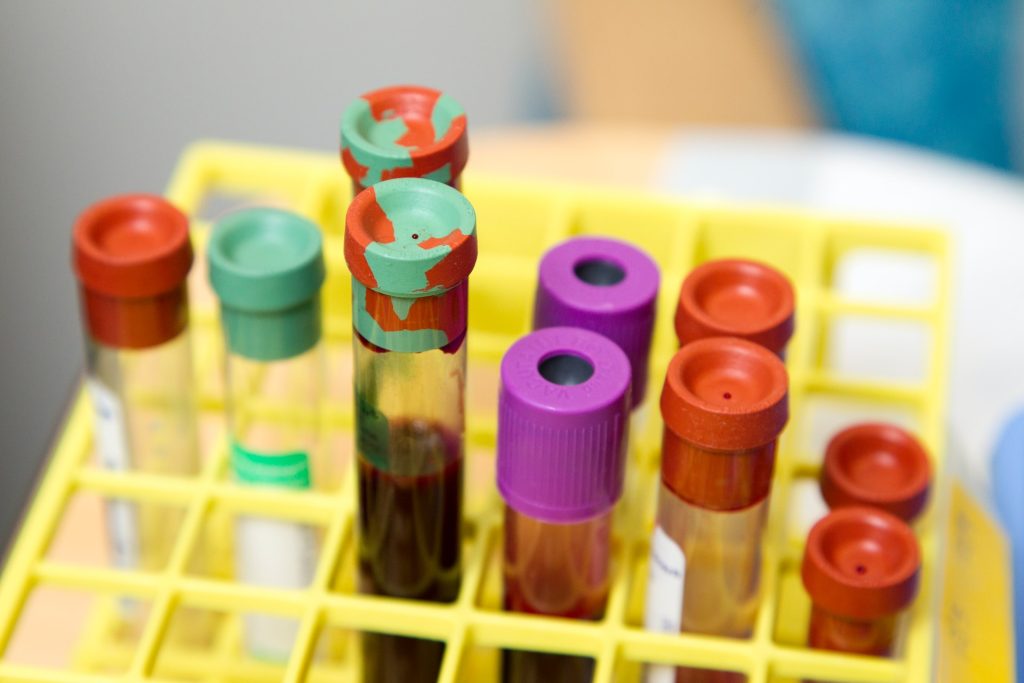
Photo by National Cancer Institute on Unsplash

At 25, Kaitlin should be living independently. At 18, Lihle should be finishing school. Instead, both are fighting for their lives against aplastic anaemia (AA), a rare blood disease that leaves patients vulnerable to infections, uncontrolled bleeding, and severe anaemia. A stem cell transplant gives approximately 80% of patients a real chance at recovery, but for around 70% of those patients, that match will not come from within their family. It will come from a generous stranger.

“AA strikes hardest between 15 and 25 – the years nobody expects to spend fighting for their life,” says Palesa Mokomele, Head of Community Engagement and Communication at DKMS Africa. “We want South Africans to understand that registering as a stem cell donor is a simple act that could give someone like Kaitlin or Lihle their life back. Every person who registers increases their chances of finding a match.”

A long road to the right diagnosis: Kaitlin’s story

For years, nobody could tell Kaitlin from KwaZulu-Natal what was wrong. She experienced prolonged and excessive bleeding and severe fatigue, which was repeatedly misattributed to gynaecological issues. She kept going back to the hospital and kept being sent home. It was only in August 2025, when her condition deteriorated dramatically, and the bleeding would not stop despite ongoing treatment, that she was finally referred to a haematologist. A bone marrow biopsy told them what years of tests had missed: Kaitlin had AA.

Before this, she was working full-time and living independently. Today, she cannot work. She cannot manage basic daily tasks. She requires weekly blood transfusions simply to stay alive. Medication trials have yielded no response, and her doctors have been clear: a stem cell transplant is her only path to recovery.

Through it all, Kaitlin has held on. “I draw strength from my faith and from the people I love most – my nephews and siblings, who show up for me even on the hardest hospital days. I just want my life back, and a matching donor could make that possible.”

Sudden illness, endless resilience: Lihle’s story

Lihle was 14 years old when his life changed overnight. It started with severe nosebleeds in November 2021. Then one night, the bleeding became uncontrollable. He lost consciousness. After two months in hospital, the diagnosis came: Severe Aplastic Anaemia (SAA). That same year, his father passed away.

The eldest of four children, Lihle grew up fast. Hailing from Butterworth in the Eastern Cape and raised in Carletonville, Gauteng, he has always felt the weight of being the firstborn – the one his younger siblings look up to. Their mother cares for them all – while also carrying the emotional weight of losing her husband and watching her son fight for his life.

Lihle shares that he is determined to finish his education, set an example, and one day return to the football pitch. Like Kaitlin, all he needs is a matching donor to make that possible.”

How you can help

“No family should have to face what Kaitlin’s and Lihle’s are going through – knowing that a cure exists, but that the donor hasn’t been found yet. For patients from Black, Coloured and Indian/Asian backgrounds, that search is even harder, because the registry does not yet reflect the diversity of our population. We are calling on all South Africans to register. It costs nothing. It takes minutes. And it could mean everything,” concludes Mokomele.

Signing up could be the most important thing you ever do. If you are aged 17 – 55 and in good health, please register today at: https://www.dkms-africa.org/save-lives
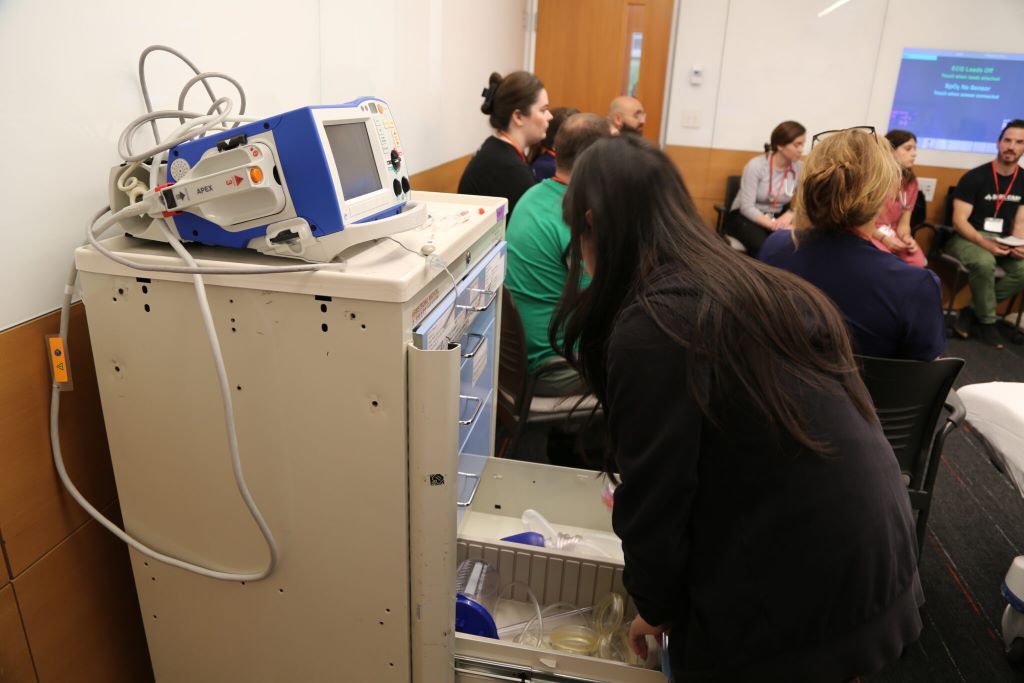
Robotic Medical Crash Cart Eases Workload for Healthcare Teams

Researcher demo-ing an early prototype of the robotic medical crash cart. Credit: Cornell Tech

Healthcare workers have an intense workload and often experience mental distress during resuscitation and other critical care procedures. Although researchers have studied whether robots can support human teams in other high-stakes, high-risk settings such as disaster response and military operations, the role of robots in emergency medicine has not been explored.

Enter Angelique Taylor, the Andrew H. and Ann R. Tisch Assistant Professor at Cornell Tech and the Cornell Ann S. Bowers College of Computing and Information Science. She is also an assistant professor in emergency medicine at Weill Cornell Medicine and director of the Artificial Intelligence and Robotics Lab (AIRLab) at Cornell Tech.

In a pair of articles published at the Institute of Electrical and Electronics Engineers (IEEE) conference on Robot and Human Interactive Communication (RO-MAN) in August 2025, Taylor and her collaborators at Weill Cornell Medicine, associate professor Kevin Ching and assistant professor Jonathan St. George, described research on their new robotic crash cart (RCC) — a robotic version of the mobile drawer unit that holds supplies and equipment needed for a range of medical procedures.

“Healthcare workers may not know or may forget where all the various supplies are located in the cart drawers, and often they’re kind of shuffling through the cart,” Taylor said. This can cause delays during emergency procedures that require iterative tasks with precise timing, exacerbating medical errors and putting patients at risk, she noted.

To create the RCC, Taylor and her team outfitted a standard cart with LED light strips, a speaker, and a touchscreen tablet integrated with the Robot Operating System. This middleware connects computer programs to robot hardware, enabling them to work together to provide users with verbal and nonverbal cues.

During an emergency procedure, a user can request the location of a supply on the tablet. Then the lights around the drawer with that supply blink, or a spoken instruction plays through the speaker. Users can also receive prompts to remind them about necessary medications and recommend supplies.

In their article, “Help or Hindrance: Understanding the Impact of Robot Communication in Action Teams,” Taylor’s team conducted pilot studies of the RCC. One pilot involved 84 participants, aged 21 to 79, about half of whom had a clinical background. Working in groups of 3 to 4, they conducted a series of simulated resuscitation procedures with a manikin patient using three different carts: a RCC with blinking lights for object search and spoken task reminders, a RCC with blinking lights for task reminders and spoken language for object search, or a standard cart.

The team found that participants preferred the RCC that provided verbal and nonverbal cues over no cues with the standard cart — rating it lower in terms of workload and higher in usefulness and ease of use.

“These results were exciting and achieved statistical significance, suggesting that the use of a robot is beneficial,” said Taylor. The article, by Taylor, Ph.D. student Tauhid Tanjim, and colleagues at Weill Cornell, was a Kazuo-Tanie Paper Award finalist, an honor given to the top three papers in their category at the conference.

In the second article, “Human-Robot Teaming Field Deployments: A Comparison Between Verbal and Non-verbal Communication,” the research team began testing the RCC under more realistic conditions. Participants were healthcare workers from across the United States, and actors played frantic family members during the simulations.

Similar to the pilot studies, Taylor, along with colleagues at Cornell and Michigan State University, found that the RCC reduced participant workload, depending on whether the robot provided verbal or non-verbal cues. However, they evaluated robots with only one type of cue, not both, and identified room for improvement, particularly in the robot’s visual cues. They are now studying healthcare workers’ impressions of an RCC with multimodal communication.

Taylor hopes that other research teams will start exploring how robots can support healthcare teams in critical care settings. To that end, Taylor and her colleague presented an article at the February 2025 Association for Computing Machinery/IEEE International Conference that offers a toolkit for researchers to build their own RCC.

By Carina Storrs, freelance writer for Cornell Tech.

Source: Cornell Tech

Study Challenges Notion that Ageing Means Decline – Many Older Adults Improve over Time

Photo by Ravi Patel on Unsplash

Ageing in later life is often portrayed as a steady slide toward physical and cognitive decline. But a new study by scientists at Yale University suggests an alternate narrative – that older individuals can and do improve over time and their mindset toward ageing plays a major part in their success.

Analysing more than a decade of data from a large, nationally representative study of older Americans, lead author Becca R. Levy, a professor of social and behavioural sciences at the Yale School of Public Health (YSPH), found that nearly half of adults aged 65 and older showed measurable improvement in cognitive function, physical function, or both, over time.

The improvements were not limited to a small group of exceptional individuals and, notably, were linked to a powerful but often overlooked factor: how people think about ageing itself.

“Many people equate ageing with an inevitable and continuous loss of physical and cognitive abilities,” said Levy, an international expert on psychosocial determinants of ageing health. “What we found is that improvement in later life is not rare, it’s common, and it should be included in our understanding of the ageing process.”

The findings are published in the journal Geriatrics.

For the study, the researchers followed more than 11 000 participants in the Health and Retirement Study, a federally supported longitudinal survey of older Americans. The research team tracked changes in cognition using a global performance assessment, and physical function using walking speed — often described by geriatricians as a “vital sign” because of its strong links to disability, hospitalisation, and mortality.

Over a follow-up period of up to 12 years, 45% of participants improved in at least one of the two domains, according to the study. About 32% improved cognitively, 28% improved physically, and many experienced gains that exceeded thresholds considered clinically meaningful. When participants whose cognitive scores remained stable over that period (rather than declining) were included, more than half defied the stereotype of inevitable deterioration in cognition.

“What’s striking is that these gains disappear when you only look at averages,” said Levy, author of the book “Breaking the Age Code: How Your Beliefs About Aging Determine How Long & How Well You Live.” “If you average everyone together, you see decline. But when you look at individual trajectories, you uncover a very different story. A meaningful percentage of the older participants that we studied got better.”

The authors also examined potential reasons for why some people improve and some do not. They hypothesized that an important factor could be participants’ baseline age beliefs — or, specifically, whether they had assimilated more positive or more negative views about ageing by the start of the study. In support of this hypothesis, they found that those with more positive age beliefs were significantly more likely to show improvements in both cognition and walking speed, even after accounting for factors such as age, sex, education, chronic disease, depression, and length of follow-up.

The findings build on Levy’s stereotype embodiment theory, which posits that age stereotypes absorbed from culture – through a range of domains including social media and advertisements – eventually become self-relevant and biologically consequential. Levy’s prior studies have found negative age beliefs predict poorer memory, slower walking speed, higher cardiovascular risk, and biomarkers associated with Alzheimer’s disease.

The current study shows that those who have assimilated more positive age beliefs often show improvement, Levy said.

“Our findings suggest there is often a reserve capacity for improvement in later life,” she said. “And because age beliefs are modifiable, this opens the door to interventions at both the individual and societal level.”

The improvements were not limited to people who started out with impairments. Even among participants who had normal cognitive or physical function at baseline, a substantial proportion improved over time. That challenges the assumption that later-life gains reflect only people getting better after being sick or rebounding from earlier setbacks, the authors said.

The authors hope their findings will reverse the popular perception that continuous decline is inevitable and encourage policy makers to increase their support for preventive care, rehabilitation, and other health-promoting programs for older persons that draw on their potential resilience.

Source: EurekAlert!

Why People With Autism May Be More Likely To Get Parkinson’s Disease

Dopamine transporters in the brain could be early biomarkers for the potential development of Parkinson’s disease

Photo by Peter Burdon on Unsplash

Researchers at the University of Missouri may have uncovered a clue explaining why young adults with autism are roughly six times more likely to develop Parkinson’s disease later in life.

In a recent study, the researchers found that some young adults with autism show abnormalities in dopamine transporters, tiny molecules in the brain that recycle unused dopamine, on brain scans that are typically used to diagnose older adults with Parkinson’s disease.

Future research could help determine whether the health of dopamine transporters could be an early warning sign of Parkinson’s disease developing later in life.

“While the loss of these dopamine transporters can be biomarkers for Parkinson’s disease, no one had ever thought to look at them in the context of young adults with autism, so hopefully this work can help us explore if there is a potential link going forward,” David Beversdorf, a professor in the School of Medicine and College of Arts and Science, said. “There has been previous work looking into the total amount of dopamine in the brains of people with autism, but we took a new approach by looking at abnormalities in terms of how dopamine is processed in a specific part of the brain called the basal ganglia via these dopamine transporters.”

Dopamine under the spotlight

Dopamine is a neurotransmitter involved in numerous body functions, such as memory, pleasure, motivation, behaviour and attention. Of particular interest to Beversdorf, a clinician at the Thompson Center for Autism and Neurodevelopment, is that dopamine also helps control muscle movement as well as cognition.

Beversdorf, who collaborated with lead author Nanan Nuraini on the study, originally wanted to know whether certain repetitive behaviors common in some young adults with autism, such as hand-flapping or rocking back and forth, were linked with abnormalities in dopamine transporters.

While he did not notice patterns in that regard, what he found surprised him.

Beversdorf looked at Dopamine Transporter (DaT) brain scans of 12 young adults with autism.

Four different nuclear medicine specialists examined the scans. All of them agreed that two of the 12 young adults had abnormal dopamine transporters and that eight appeared normal. They disagreed on the remaining two.

“Since these DaT scans are typically used to diagnose or evaluate older adults with Parkinson’s disease, the appearance of abnormalities in some young adults with autism was very surprising, so we should look into this topic more going forward,” Beversdorf said. “While it’s too early to jump to conclusions, hopefully our work raises awareness about the importance of monitoring the brain health of young adults with autism as they age.”

Next, Beversdorf hopes to study a broader range of people with autism by conducting more DaT scans across different age groups.

“The earlier we can identify those who might be at greater risk for getting Parkinson’s disease down the road, the sooner we can discuss preventative measures, including whether certain medications could potentially slow down the progression of disease,” Beversdorf said.

Source: University of Missouri

COVID Lockdowns Found to Set Back Children’s Development by Years

Even when controlling for age and family background, COVID’s impact was evident

Photo by Kelly Sikkema on Unsplash

The COVID pandemic disrupted children’s ability to self-regulate, according to research from three UK universities just published in the journal Child Development.

The study by Lancaster University, East Anglia and Durham reveals that the pandemic hampered children’s ability to regulate their behaviour, stay focused and adapt to new situations – skills known collectively as executive functions.

The greatest impact was seen among pupils who were in reception when the first lockdowns began – a crucial stage at four or five when youngsters normally learn to socialise, follow routines and navigate the busy world of the classroom. Primary school in the UK then begins at Grade 1, starting at age five or six.

These children showed less growth in their self-regulatory and cognitive flexibility scores over time compared to a second group of children who were in preschool when the pandemic started.

The research team say these children may still be feeling the effects years later.

How the research happened

Scientists were already running a long-term study tracking youngsters from toddlerhood to early school years when the COVID pandemic hit.

They followed 139 children aged between two-and-a-half and six-and-a-half years old over several years, including 94 families who joined the study before Covid struck.

This meant that they had a rare baseline of children’s abilities before the pandemic began, which allowed them to track exactly how development changed during and after the lockdowns.

Using a standardised assessment called the Minnesota Executive Function Scale, they were able to measure the same cognitive skills at regular intervals.

Dr Eleanor Johns from Lancaster University’s Department of Psychology said: “We began this study to understand how children’s executive function develops across early childhood, and we saw clear, steady growth between 2.5 and 6.5 years of age. However, because our longitudinal study spanned the COVID-19 pandemic, we also had a unique opportunity to examine how this unprecedented disruption affected the children we were already following.

“We found that children who had just started school when the first lockdown began showed a slower rate of growth in executive function compared to those who were preschool age. Starting school is a major developmental transition, as children learn new routines, adapt to classroom rules, and develop self-regulation alongside their peers. When schools closed almost overnight, those opportunities were suddenly removed.”

The research revealed that:

  • Individual differences in executive function abilities were remarkably stable. Children who had stronger skills at two-and-a-half years old tended to remain ahead at six-and-a-half years.
  • Children from lower socio-economic households consistently scored lower, echoing long-standing research on the impact of maternal education and home environment.
  • Even when controlling for age and family background, COVID’s impact was evident. Children who were in reception at the start of the pandemic made more modest improvements in executive function compared to those still in preschool.

Dr Johns said: “Our findings suggest that the structured school environment and regular interaction with peers play a crucial role in supporting the development of executive function. When those experiences were disrupted, children’s executive function developed more slowly than that of younger children who were still in preschool.”

The researchers say their work highlights a generation of children who may need more support from teachers, schools and health services in coming years.

Sources: Lancaster University and University of East Anglia