
Tag: hydrogen sulfide

Hydrogen Sulphide Could be the Answer to Treating Nail Infections

Scientists at Bath and King’s College London have discovered that a common chemical could be used to develop a new treatment for difficult-to-treat nail infections.
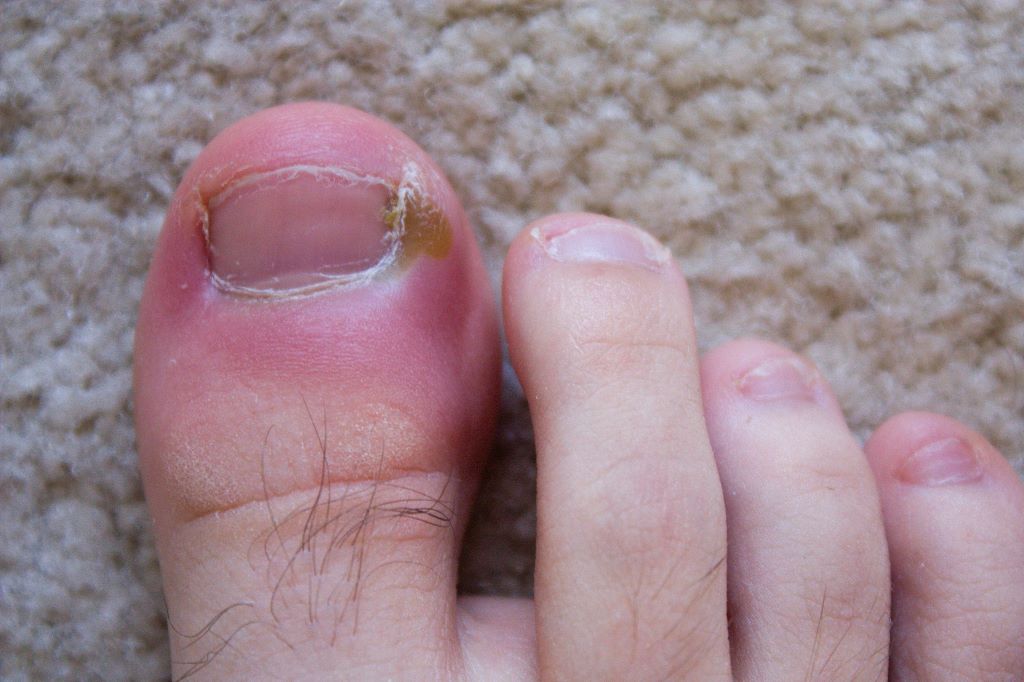
Paronychia. Source: Wikimedia Commons CC0

Hydrogen sulphide, the volcanic gas that smells of rotten eggs, could be used in a new treatment for tricky nail infections that acts faster but with fewer side effects, according to scientists at the University of Bath and King’s College London (KCL).

Nail infections are mostly caused by fungi and occasionally by bacteria. They are very common, affecting between 4-10% of the global population, rising to nearly half those aged 70 or over.

These infections can lead to complications, particularly in vulnerable groups such as diabetics and the elderly, but are notoriously difficult to treat.

Current treatments include oral antifungals taken in pill form, and topical treatments which are applied directly to the nail.

Oral antifungals take around 2-4 months to act and are reasonably effective, but they carry risks of side effects, especially in patients with other medical conditions.

Treatments applied directly to the nail are safer, but they often take much longer to work, sometimes taking even years to work, and they frequently relapse or fail.

This is largely because it’s very difficult to get the drug to penetrate through the nail to where the infection resides.

Even the most effective topical treatments have relatively low cure rates, so there is a clear need for new therapeutic approaches that are safe, effective, and capable of reaching microbes embedded deep within the nail.

A team from the University of Bath and King’s College London has now found that hydrogen sulphide (H₂S), a small, naturally occurring gas, could be developed into a promising new treatment.

Previous work has shown that it penetrates the nail plate far more efficiently than existing topical drugs, and now the team has demonstrated that it has strong antimicrobial activity against a wide range of nail pathogens, including fungi that are resistant to common antifungal treatments.

In laboratory tests, the team used a chemical that breaks down to release the H₂S gas and found that it acts in a unique way, disrupting microbial energy production and triggering irreversible damage, ultimately killing the fungi.

The research is published in Scientific Reports.

Dr Albert Bolhuis, from the University of Bath’s Department of Life Sciences, said: “Thanks to its ability to efficiently reach the site of infection and its novel mode of action, we believe that a topically applied medicine containing hydrogen sulphide could become a highly effective new treatment for nail infections, which avoids the limitations of current therapies.

“Our research lays the foundation for a compelling alternative to existing treatments, with the potential to improve outcomes for patients suffering from persistent and drug-resistant fungal nail infections.”

Hydrogen sulphide is known for its pungent smell of rotten eggs, and has some toxicity, however researchers believe the amounts required are well below toxicity levels and the correct formulation will limit any unpleasant odours.

The research has so far only been done in vitro, but the team hopes to develop a treatment that could be used in patients in the next five years.

Professor Stuart Jones, Director of the Centre for Pharmaceutical Medicine Research at KCL said: “We are looking forward to translating these findings into an innovative topical product that can treat nail infection.”

Source: University of Bath

Silent but Violent: Taurine-consuming Bacteria Protects the Gut with Toxic Gas

Photo by Pablo Stanic on Unsplash

Researchers have discovered a new intestinal bacterim that feeds exclusively on taurine and produces the foul-smelling gas hydrogen sulfide. The results, currently published in Nature Communications, show that Taurinivorans muris protects against Klebsiella and Salmonella, two important pathogens.

Chemical warfare in the gut

One of the ways the gut microbiome helps regulated health is in contributing to the levels of hydrogen sulfide – the toxic gas responsible for foul-smelling farts. Having small amounts of hydrogen sulfide in the gut is a good thing; in fact, it’s essential for a number of physiological processes, and can even protect against pathogens. Hydrogen sulfide-producing microbes in the gut may help “choke out” oxygen-dependent pathogens such as Klebsiella, making it harder for them to colonise. However, excessive levels can have negative consequences and have been associated with gut inflammation and damage to the intestinal lining.

Taurine plays yet another a role

The bacterium Bilophila wadsworthia is one of the most important taurine utilizers in humans. In the current study, researchers led by Alexander Loy at CeMESS, the Centre for Microbiology and Environmental Systems Science of the University of Vienna, have discovered a new genus of hydrogen sulfide-producing bacteria in the mouse intestine. “The bacterium we described has a rather unbalanced diet,” explains Loy, “it specialises in consuming taurine.” Taurine is a semi-essential amino acid, synthesised in small amounts in the liver but mostly obtained through the diet – especially meat, dairy and seafood. 

Like hydrogen sulfide, taurine is implicated in a plethora of physiological processes. Recent studies have found a link between taurine and healthy ageing – it seems this nutrient may stave away age-related disease. In light of these findings, the discovery of a new gut microbe that feeds exclusively on taurine (aptly named Taurinivorans muris) is another piece of an exciting puzzle. “By isolating the first taurine degrader in the mouse gut, we’re one step closer to understanding how these gut microbes mediate animal and human health” explains Huimin Ye, lead author of the study. 

To access sufficient taurine in the gut, however, Taurinivorans muris needs the help of other gut microbes to release it from bile acids. Taurine-containing bile acids are produced in the liver and are increasingly released into the intestine during a high-fat diet to help our body digest fats. The activities of the bacteria in the intestine in turn influence the bile acid metabolism in the liver. The results of the Viennese researchers therefore also contribute to a better understanding of these complex interactions in bile acid metabolism, which has an impact on processes and diseases throughout the body.

Taurine-degrading microbes choke out pathogens

One of the most important functions of the symbiotic microbes in the gut is to defend against pathogens. The microbiome has a versatile arsenal of protective mechanisms – and utilising taurine to create hydrogen sulfide is one of them. “Hydrogen sulfide may suppress the oxygen-dependent metabolism of some pathogens,” explains Ye. In the present study, the researchers found that Taurinivorans muris has a protective role against Klebsiella and Salmonella, two important gut pathogens. “The protective mechanism of Taurinivorans muris against pathogens may be via hydrogen sulfide but is essentially not yet fully understood” adds Alexander Loy. Taurine is one of the most important sources of hydrogen sulfide production in the gut. The study thus generates basic knowledge on the physiological interactions between the different gut microbes and their hosts, which is necessary to develop new microbiome-based therapies.

Source: EurekAlert!