

A groundbreaking new treatment using genome-edited immune cells, developed by scientists at University College London and Great Ormond Street Hospital (GOSH), has shown promising results in helping children and adults fight a rare and aggressive form of blood cancer.
Using base-editing technology, the pioneering gene therapy (BE-CAR7), has been used to treat a previously untreatable type of blood cancer called T-cell acute lymphoblastic leukaemia (T-ALL). Base-editing is an advanced version of CRISPR technology, that can precisely change single letters of DNA code inside living cells.
BE-CAR7 was designed and developed by a team of researchers, led by Professor Waseem Qasim (UCL Great Ormond Street Institute of Child Health), who is also an Honorary Consultant at Great Ormond Street Hospital (GOSH), and the treatment is the first in-human application of base-edited cells.
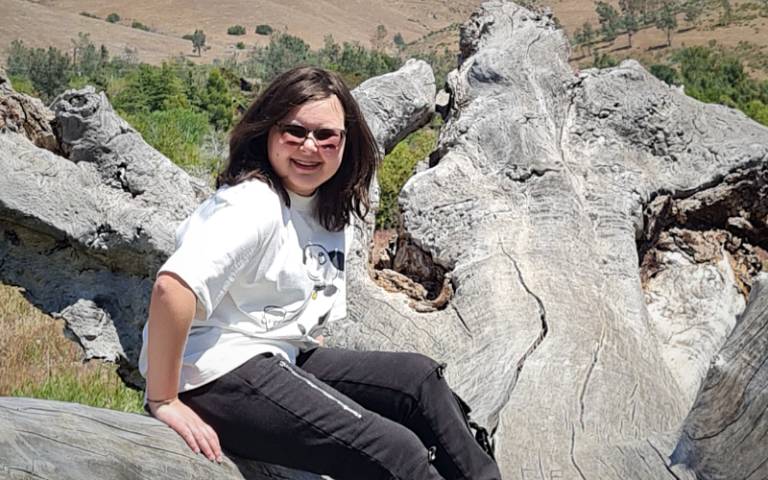
In 2022, Alyssa Tapley, from Leicestershire, (then aged 13) became the first person in the world to receive the treatment as part of a clinical trial at GOSH. Doctors had exhausted all other treatments for her and she and her family say the innovative therapy saved her life.
Now, a further eight children and two adults have undergone the treatment as part of the trial.
The trial’s results have now been published in the New England Journal of Medicine. Key findings from the study include:
- 82% of patients achieved very deep remissions after BE-CAR7, enabling them to proceed to stem cell transplant without disease
- 64% remain disease-free, with the first patients now three years disease-free and off treatment
- Anticipated side effects including low blood counts, cytokine release syndrome and rashes were tolerable, with the greatest risks arising from virus infections until immunity recovered
Professor Qasim, a Professor of Cell and Gene Therapy at UCL, who led the research, said: “A few years ago this would have been science fiction. Now we can take white blood cells from a healthy donor and change a single letter of DNA code in those cells and given them back to patients to try to tackle this hard-to-treat leukaemia.
“We designed and developed the treatment from lab to clinic and are now trialling it on children from across the UK – in a unique bench-to-bedside approach.”
Alyssa, now aged 16, who has a brother, said: “It is incredible how much my life has changed. I went from four months straight in GOSH to now only coming back for medical appointments once a year. It is amazing how much freedom I have now.
“I am really grateful for all the opportunities the gene therapy treatment has given me. I feel like I have been able to help everyone else who went on the clinical trial after me.
“I’ve now been able to do some of the things I thought earlier in my life it would be impossible for me to do. I really did think I was going to die and that I wouldn’t be able to grow up and do everything that every child deserves to be able to do.”
That has included going sailing and spending time away from home doing her Duke of Edinburgh Award.
Her dad, James, said: “We are eternally grateful. We’ve gone from being completely hopeless to where we are now. We could never have imagined that then.
“Back then we were at the point where we thought we were going to be a three-person family. Now we’re all making the most of family life. It is the little things you don’t take for granted anymore. Alyssa is amazing.
“The scientists at UCL and GOSH have been incredible. It has been really powerful seeing them in the laboratory developing the treatment and hearing the stories including about the difficulties they faced in getting this far.
“In terms of the timing of the trial, it aligned perfectly for us. Other families weren’t so lucky.”
New technology
Immunotherapy using CAR-T cells has recently become available to treat several types of blood cancer. This therapy uses immune cells, called T-cells, and modifies them to have specific proteins on their surface called chimeric antigen receptors (CARs).
The CARs can recognise and target specific ‘flags’ on the surface of cancer cells, and the T-cell can then destroy that cancer cell. Developing CAR T-cell therapy for leukaemia which itself has arisen from abnormal T-cells has been challenging.
BE-CAR7 T-cells are engineered using base editing, a new-generation of genome editing that avoids cutting DNA, reducing the risk of chromosomal damage.
Very precise chemical reactions were carried out using CRISPR guidance systems to change single letters of DNA code in order to modify the T cells. These complex DNA changes generate storable banks of ‘universal’ CAR T-cells that can find and attack T-cell leukaemia when given to patients.
The ‘universal’ CAR T-cells in this study were made from healthy donor white blood cells and engineering steps were undertaken in a clean room facility using custom made RNA, mRNA and a lentiviral vector in an automated process previously developed by the research team.
These steps were:
1. Removing existing receptors so that T-cells from a donor can be banked and used without matching the recipient– making them ‘universal’.
2. Removing a ‘flag’ called CD7 that identifies them as T-cells (CD7 T-cell marker). Without this step, T-cells programmed to kill T-cells would simply end up destroying the product through ‘friendly-fire’.
3. Removing a second ‘flag’ called CD52. This makes the edited cells invisible to one of the strong antibody drugs given to patients to subdue their immune system.
4. Adding a Chimeric Antigen Receptor (CAR) which recognises the CD7 T-cell flag on leukemic T-cells. A disabled virus added extra DNA code into the cells so they become armed against CD7 and recognise and fight T-cell leukaemia.
When base-edited CAR T-cells are given to the patient they rapidly find and destroy all T-cells in the body, including leukemic T-cells.
If the leukaemia is eradicated within four weeks, the patient’s immune system is then rebuilt from a bone marrow transplant over a period of several months.
Professor Qasim added: “Many teams were involved across the hospital & university and everyone is delighted for patients clearing their disease, but at the same time, deeply mindful that outcomes were not as hoped for some children. These are intense and difficult treatments – patients and families have been generous in recognising the importance of learning as much as possible from each experience.”
Dr Rob Chiesa, Study investigator and Bone Marrow Transplant consultant at GOSH said: “Although most children with T-cell leukaemia will respond well to standard treatments, around 20% may not. It’s these patients who desperately need better options and this research provides hope for a better prognosis for everyone diagnosed with this rare but aggressive form of blood cancer.
“Seeing Alyssa go from strength-to-strength is incredible and a testament to her tenacity and the dedication of an array of small army of people at GOSH. Team working between bone marrow transplant, haematology, ward staff, teachers, play workers, physiotherapists, lab and research teams, among others, is essential for supporting our patients.”
Dr Deborah Yallop, consultant Haematologist at KCH said “We’ve seen impressive responses in clearing leukaemia that seemed incurable – it’s a very powerful approach.”
Source: University College London
